Wildfires rage, force evacuations in western U.S., Canada amid drought
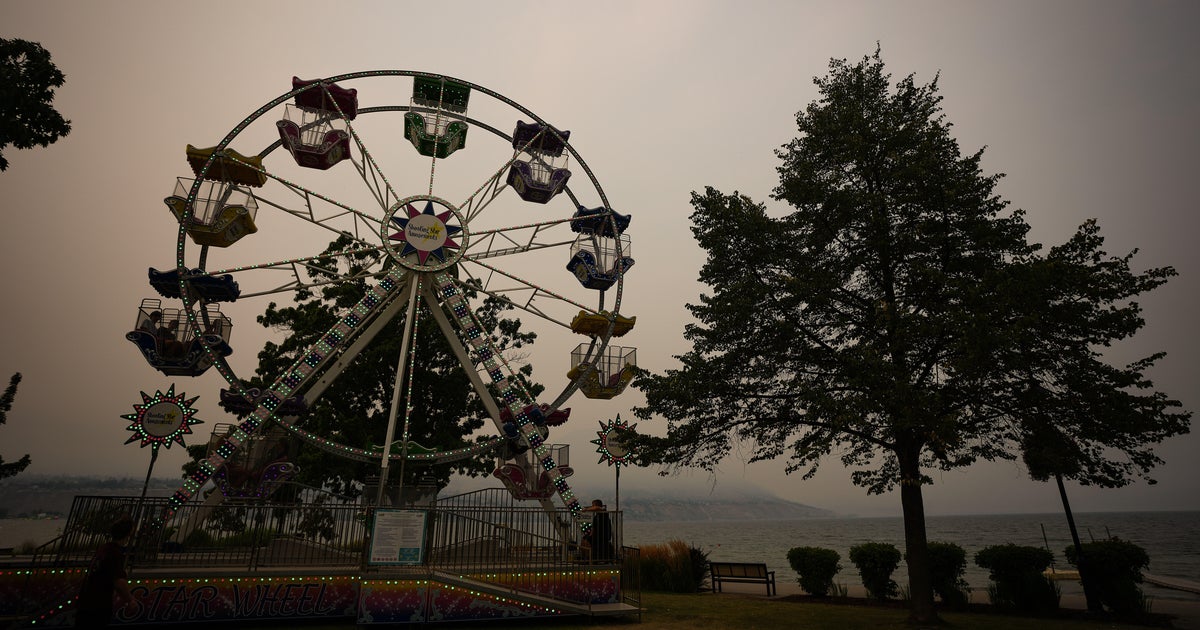
More than 40 large wildfires are burning in the West, fueled by severe drought, as over 100 blazes scorch parts of western Canada.
Places named in this report: Washington, Vancouver
Exact coordinates
washington: 38.910, -77.040
vancouver: 49.280, -123.120
Read it at CBS News See this on the map
What might happen next? AI-generated
These scenarios are written by an AI language model from the headline and summary above. They are not predictions from the newsroom, and they are not evidence of anything. Every one is given a deadline and checked against later coverage, and the score is published on the ledger — including the ones that miss.
-
Unresolved 45% Coordinated Resource Mobilization
Federal and provincial governments quickly coordinate cross-border firefighting efforts, leading to a unified response structure. This cooperation allows for the temporary suppression or containment of the most dangerous mega-fires.
Watch for: The U.S. Bureau of Land Management (BLM) issues a joint press release with Environment Canada detailing a shared operational command structure. · A specific, named emergency management official from both nations participates in a joint press conference regarding resource allocation.
-
Unresolved 30% Localized Crisis Management
The severity remains high, but governmental focus shifts purely to localized, tactical response rather than large-scale regional intervention. Evacuations continue but are managed by state/provincial authorities without major inter-jurisdictional agreements.
Watch for: The Governor of a specific U.S. state issues a formal 'State of Emergency' declaration for the third consecutive day. · A private insurance company releases an updated risk assessment citing localized containment success in specific counties.
-
Unresolved 15% Climate Policy Backlash
The immediate crisis acts as a catalyst, causing a sudden, highly publicized surge in political pressure regarding climate change accountability. Major political figures pivot to demanding federal infrastructure investment related to fire prevention.
Watch for: A major political party releases a new policy platform document explicitly targeting drought mitigation funding. · A prominent climate scientist is invited to testify before a legislative committee regarding wildfire trends within the next week.
-
Unresolved 10% Unprecedented Environmental Retreat (Counter-Intuitive)
Due to sustained extreme weather patterns, governmental response shifts from suppression to strategic, controlled abandonment of certain high-risk areas. This involves preemptively decommissioning infrastructure in the most heavily impacted zones.
Watch for: A major utility provider announces the voluntary, strategic shutdown of power lines in a specific, non-populated burn zone. · Local municipal council in a threatened township votes to formally designate specific properties as permanently uninhabitable.
Generated by gemma-4-E4B-it-qat-UD-Q4_K_XL.gguf
on 2026-08-10. Checked against later coverage after 2026-08-17.
See how these forecasts score.
ForecastGeo shows the headline and summary published by the newsroom and places the story on a map. The full article lives at the source.