Why the Rhine drought is bad news for Germany’s recovery
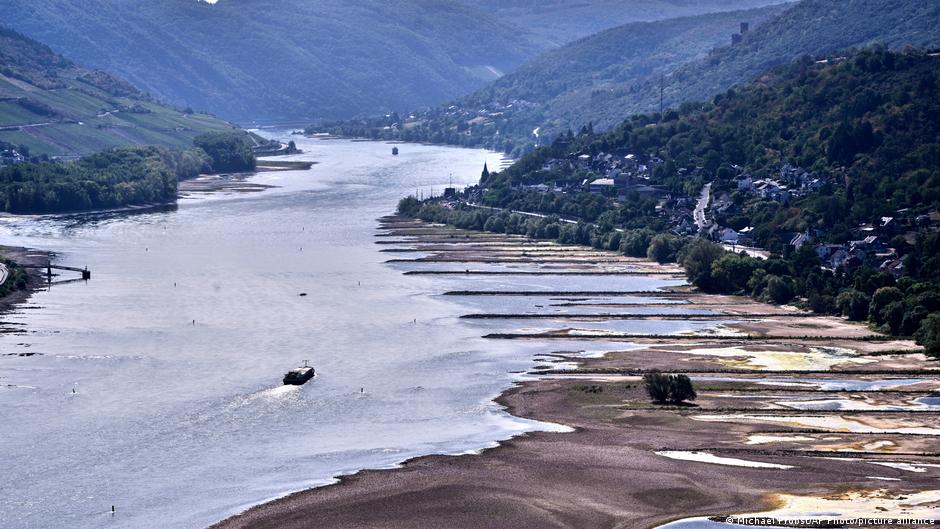
Germany’s inland waterways still move around 5% of the nation’s goods. With the Rhine at a critically low level, DW explores how the drought is hitting the economy where it hurts most.
Places named in this report: Amsterdam
Exact coordinates
amsterdam: 52.370, 4.900
Read it at Deutsche Welle See this on the map
What might happen next? AI-generated
These scenarios are written by an AI language model from the headline and summary above. They are not predictions from the newsroom, and they are not evidence of anything. Every one is given a deadline and checked against later coverage, and the score is published on the ledger — including the ones that miss.
-
Unresolved 45% Logistics Pivot & Market Adjustment
Faced with severe Rhine restrictions, major freight companies accelerate contingency plans by shifting cargo to rail and road networks, absorbing higher immediate transport costs. This temporary spike in logistics costs forces some industrial clients to issue short-term production slowdown advisories. The German government announces a coordinated emergency subsidy package for affected transport sectors.
Watch for: Federal Ministry of Transport announces emergency rail freight capacity expansion · Major shipping firm publishes revised Q3 operational cost projections citing inland waterway disruption
-
Unresolved 25% International Water Diplomacy Breakthrough
As upstream water management agencies from neighboring countries (e.g., Switzerland/Netherlands) coordinate their releases, a temporary, minor increase in Rhine flow allows for a slight, controlled easing of berthing restrictions. This allows vital raw materials to move just enough to prevent a full-scale economic lockdown in the immediate term.
Watch for: A joint statement is released by the Rhine River Commission regarding revised flow quotas · Port authorities in Rotterdam or Duisburg announce a 5% increase in container handling capacity
-
Unresolved 15% Government Intervention & Price Control
To prevent sharp inflation driven by transport bottlenecks, the German government implements targeted, temporary price caps or mandates for essential goods whose supply chains are primarily dependent on Rhine transit. This move is highly controversial and leads to immediate protests from industry lobbies.
Watch for: Bundestag passes a temporary decree regarding 'Essential Goods Transport Rates' · A major consumer advocacy group issues a public statement condemning the new price regulations
-
Unresolved 15% Counter-Intuitive Investment Boom (The Counter-Trajectory)
Instead of viewing the drought as a purely negative shock, German infrastructure funds aggressively acquire distressed assets in inland logistics firms that are forced into distress sales. This influx of capital rapidly modernizes the remaining rail/road capacity, positioning the country to dominate alternative land transport solutions once the drought ends.
Watch for: A major German pension fund announces a strategic, high-volume acquisition of a non-Rhine logistics operator · Stock indices show a temporary surge in infrastructure technology stocks despite drought news
Generated by gemma-4-E4B-it-qat-UD-Q4_K_XL.gguf
on 2026-08-10. Checked against later coverage after 2026-08-20.
See how these forecasts score.
ForecastGeo shows the headline and summary published by the newsroom and places the story on a map. The full article lives at the source.