Why India may need a third aircraft carrier as China expands its fleet
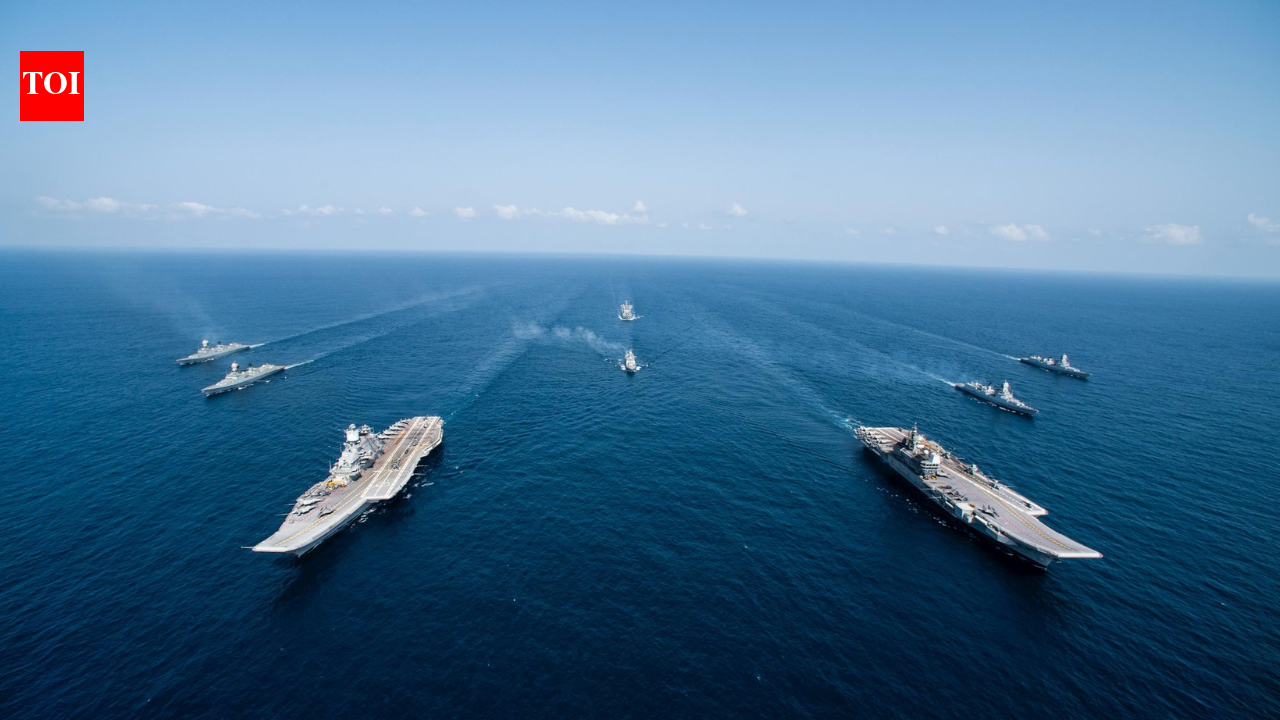
Navies worldwide face challenges with aircraft carrier availability due to maintenance schedules. The US Navy currently has four carriers deployed and others undergoing essential upkeep. India operates two carriers and seeks a third to maintain optimal operational readiness. China is expanding its carrier fleet, posing a growing strategic challenge. Maintaining sufficient carrier numbers is crucial for projecting power in contested regions.
Places named in this report: India, China
Exact coordinates
india: 20.590, 78.960
china: 35.860, 104.200
Read it at The Times of India See this on the map
What might happen next? AI-generated
These scenarios are written by an AI language model from the headline and summary above. They are not predictions from the newsroom, and they are not evidence of anything. Every one is given a deadline and checked against later coverage, and the score is published on the ledger — including the ones that miss.
-
Did not happen 35% India accelerates indigenous build
Facing immediate pressure from China's expanding fleet and operational gaps, India fast-tracks a domestic shipbuilding contract for a third carrier, prioritizing speed over traditional bureaucratic timelines. This move signals a shift toward immediate, sovereign power projection. Diplomatic talks with China stall while military modernization accelerates.
Watch for: The Ministry of Defence announces a new milestone for a specific, named shipyard's carrier construction contract. · Indian defense officials publicly confirm an accelerated delivery timeline for the third carrier.
-
Did not happen 30% Bilateral naval cooperation increases
To offset the strain of maintenance and procurement cycles, India solidifies a new defense pact with a third-party naval power (e.g., France or Japan). This partnership involves joint carrier maintenance exercises, effectively pooling operational readiness resources and providing immediate strategic depth without an immediate third ship.
Watch for: India and a non-NATO partner sign a new Memorandum of Understanding for joint naval drills. · A specific, named naval official from a partner nation conducts a high-profile visit to India.
-
Did not happen 20% Strategic de-escalation via dialogue
Despite military buildup, high-level diplomatic channels open between New Delhi and Beijing to manage territorial disputes and carrier deployments. A temporary understanding is reached allowing both navies to maintain current postures without immediate escalation or further drastic fleet expansion, focusing instead on maritime security cooperation in specific zones.
Watch for: The Ministry of External Affairs announces a formal, high-level maritime security consultation between Indian and Chinese diplomats. · A joint statement is released by both governments emphasizing 'freedom of navigation' without specific military commitments.
-
Confirmed 15% Accelerated acquisition from international market (Counter-Intuitive)
Instead of building domestically, India surprisingly pivots to purchasing a proven, surplus carrier platform from a Western or allied navy undergoing restructuring. This unexpected move bypasses domestic delays and provides immediate operational capacity to counter the Chinese buildup.
Watch for: An Indian defense publication confirms the evaluation of a specific, named decommissioned foreign aircraft carrier. · The Indian defense budget receives a sudden, significant, and publicly detailed allocation for foreign military acquisition.
Generated by gemma-4-E4B-it-qat-UD-Q4_K_XL.gguf
on 2026-08-21. Checked against later coverage after 2026-09-04.
See how these forecasts score.
ForecastGeo shows the headline and summary published by the newsroom and places the story on a map. The full article lives at the source.