What the China-Nepal floods teach us about crisis communication
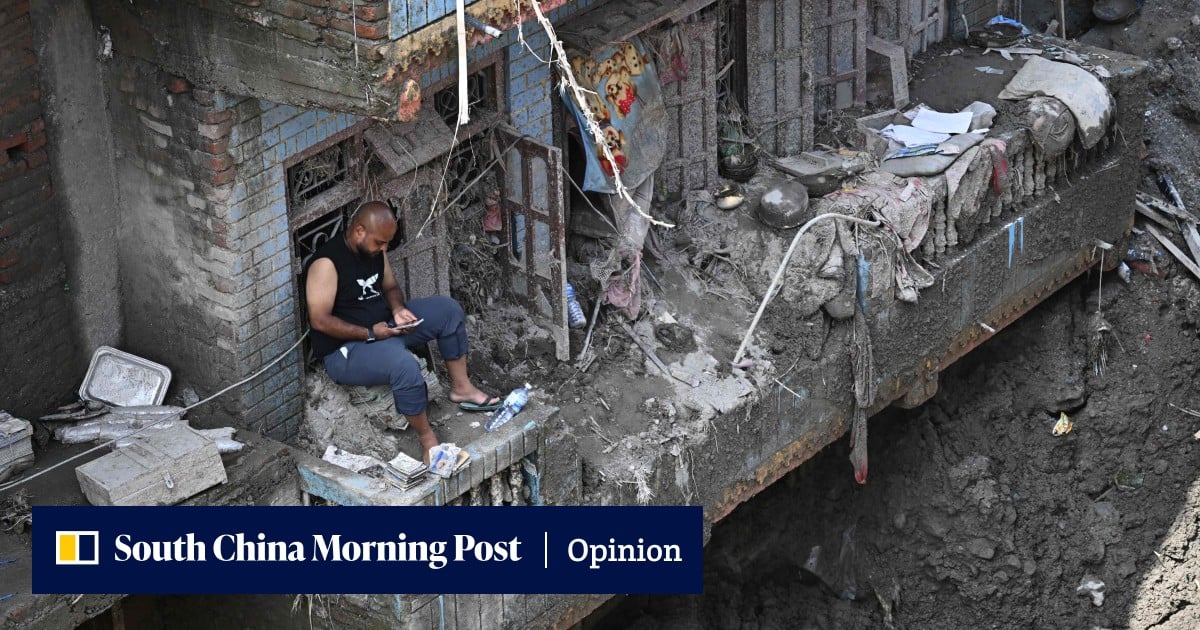
The Himalayan disaster that tore through the China-Nepal border last month was a human calamity before it became a media story. A torrent of ice, rock, mud and debris swept through valleys, destroying key infrastructure, severing roads and communications, and leaving families desperate for news. In Gyirong county in the Tibet autonomous region, the disaster hit a major border crossing and created a rescue environment as physically difficult as any imaginable. The human toll extends beyond the...
Where: China
Exact coordinates
china: 35.860, 104.200
Read it at South China Morning Post See this on the map
What might happen next? AI-generated
These scenarios are written by an AI language model from the headline and summary above. They are not predictions from the newsroom, and they are not evidence of anything. Every one is given a deadline and checked against later coverage, and the score is published on the ledger — including the ones that miss.
-
Awaiting deadline 35% Cooperative Disaster Response Mobilization
Both Chinese and Nepalese authorities bypass political friction to establish a joint, cross-border aid coordination hub within 72 hours of the latest flood assessment. This initial successful coordination provides a template for future cooperation.
Watch for: A joint press conference is held by officials from China and Nepal in Gyirong County. · A shared logistical manifest showing the movement of Chinese heavy machinery into Nepalese territory is published.
-
Awaiting deadline 30% Bureaucratic Gridlock and Humanitarian Crisis Deepening
The complexity of the disaster exacerbates existing border tensions, leading to slow, silo-based responses from both Beijing and Kathmandu. Critical supply chains remain disrupted, and the lack of cross-border communication prevents timely evacuation for stranded residents.
Watch for: A statement from the Nepalese Prime Minister criticizing the speed of Chinese border clearance for aid. · Local reports surface of a specific, named checkpoint remaining completely closed despite the disaster.
-
Awaiting deadline 20% Unexpected Bilateral Diplomatic Breakthrough (Counter-Intuitive)
In an attempt to manage international criticism regarding the slow relief effort, a mid-level diplomat from one nation proposes a secret, high-level delegation visit to the affected border area, leading to an immediate, high-level thaw in relations.
Watch for: The release of a joint official statement acknowledging the 'humanitarian crisis' by both nations, not just the 'disaster'. · A specific, non-political senior official (e.g., a foreign ministry deputy) is photographed meeting in Gyirong.
-
Awaiting deadline 15% Local Instability and External Intervention Pressure
The failure of national governments to communicate effectively in the immediate aftermath leads to organized local groups and NGOs bypassing official channels to manage local relief, which draws the attention of regional powers who then pressure both nations to open the border.
Watch for: A specific, named international NGO (e.g., Red Cross) announces a temporary, localized 'humanitarian corridor' outside of official government sanction. · A diplomatic note is lodged by a third country (e.g., India) referencing the need for unimpeded aid.
Generated by llama
on 2026-09-18. Checked against later coverage after 2026-09-23.
See how these forecasts score.
ForecastGeo shows the headline and summary published by the newsroom and places the story on a map. The full article lives at the source.