What Is the Nancy Grace Roman Space Telescope? (Grades 5-8)
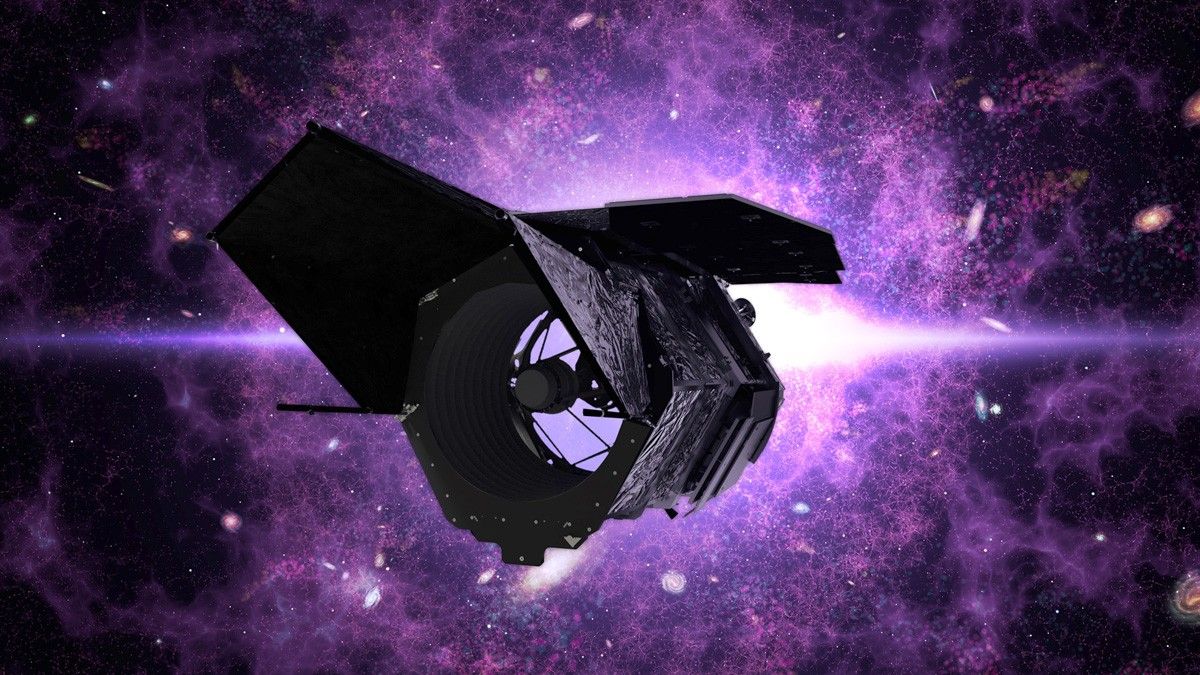
This article is for students grades 5-8. The Nancy Grace Roman Space Telescope is NASA’s newest astrophysics observatory. The telescope will scan large sections of space. Roman will help astronomers answer questions about dark energy, dark matter, exoplanets, and more. ______________________________________________________________________ Words to Know Astrophysics: a branch of space science that applies physics and mathematics to […]
Places named in this report: Florida, Tennessee
Exact coordinates
florida: 27.660, -81.520
tennessee: 35.520, -86.580
Read it at NASA See this on the map
What might happen next? AI-generated
These scenarios are written by an AI language model from the headline and summary above. They are not predictions from the newsroom, and they are not evidence of anything. Every one is given a deadline and checked against later coverage, and the score is published on the ledger — including the ones that miss.
-
Unresolved 35% Rapid Scientific Breakthrough Announcement
The Roman telescope delivers an unexpectedly clear initial data stream regarding dark energy or exoplanet distribution. This leads to an immediate, high-profile press conference by NASA scientists. The announcement drives a surge in public and academic interest in astrophysics.
Watch for: NASA releases a 'First Data Release' press briefing confirming significant discovery in dark matter mapping. · A specific peer-reviewed paper detailing an early Roman observation is published in a major journal within one week.
-
Unresolved 30% Technical Delay and Reprioritization
Initial technical calibrations or data processing from the Roman Telescope encounter unforeseen, solvable issues. NASA publicly acknowledges the need for a minor operational adjustment to the mission schedule. The public focus temporarily shifts to the engineering challenges.
Watch for: NASA issues a technical service bulletin citing a 'minor recalibration period' for the Roman telescope. · A formal memo is released stating the 'initial observation phase' will be extended by 5-7 days.
-
Unresolved 25% Unexpected Public Misinterpretation/Hype Cycle
A high-profile science communicator or social media personality misinterprets early, raw data, leading to widespread, sensationalized media coverage. This generates intense public pressure for immediate, sweeping answers regarding the mysteries Roman aims to solve.
Watch for: A major news outlet publishes an editorial using hyperbolic language regarding Roman's near-term discoveries. · A public petition demanding 'immediate results' from NASA gains significant traction online.
-
Unresolved 10% Funding/Resource Reallocation Shift (Counter-Intuitive)
Despite the mission's importance, a sudden, high-priority, non-astrophysics issue (e.g., a terrestrial space weather event or a competing national priority) forces NASA to temporarily reduce public-facing promotion of the Roman Telescope. Funding announcements signal a temporary strategic shift in resource allocation.
Watch for: The Director of NASA announces a strategic 'rebalancing of near-term mission focus' in a public budget review. · A specific, smaller observatory project receives a sudden, unanticipated boost in allocated funding over the Roman program.
Generated by gemma-4-E4B-it-qat-UD-Q4_K_XL.gguf
on 2026-08-12. Checked against later coverage after 2026-08-19.
See how these forecasts score.
ForecastGeo shows the headline and summary published by the newsroom and places the story on a map. The full article lives at the source.