What China really means when it says it’s being ‘strategic’
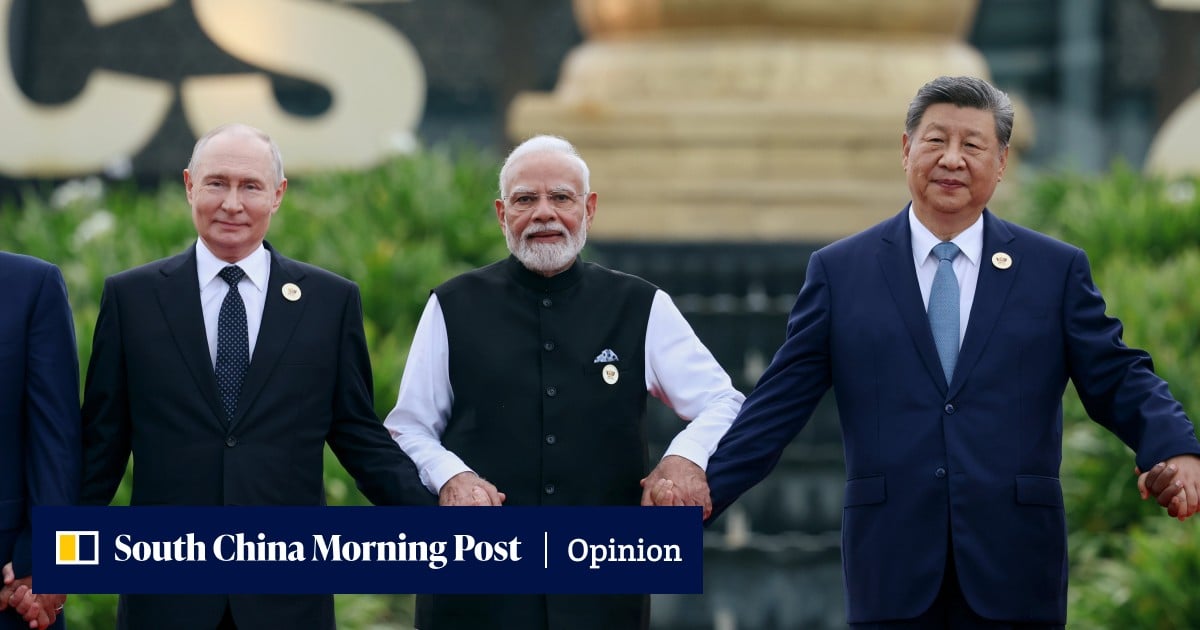
On September 12, Chinese President Xi Jinping met Indian Prime Minister Narendra Modi on the sidelines of the Brics summit in New Delhi. In their talks, Xi said China approached the relationship “from a strategic and long-term perspective”. He called for an objective and rational “strategic” perception. That means the two sides should treat each other as partners rather than rivals, and as opportunities rather than threats. In Chinese official and diplomatic language, the term “strategic” is...
Exact coordinates
delhi: 28.700, 77.100
china: 35.860, 104.200
Read it at South China Morning Post See this on the map
What might happen next? AI-generated
These scenarios are written by an AI language model from the headline and summary above. They are not predictions from the newsroom, and they are not evidence of anything. Every one is given a deadline and checked against later coverage, and the score is published on the ledger — including the ones that miss.
-
Awaiting deadline 30% Immediate joint statement
Following the high-level meeting, both Beijing and New Delhi issue a joint press release affirming the 'strategic partnership' rhetoric, cooling immediate diplomatic friction. This suggests a strong intent to move past the rhetoric into concrete alignment on regional issues.
Watch for: A joint communiqué from the Ministry of Foreign Affairs of China and India is issued. · Both nations agree on a specific joint initiative regarding Belt and Road infrastructure in the Indian Ocean.
-
Awaiting deadline 40% Skepticism and status quo
Both sides accept the strategic talk but revert to standard diplomatic procedure, with no immediate changes to existing policies or high-level visits. The rhetoric is treated as good faith but remains untested against current flashpoints.
Watch for: Indian defense officials publicly state that strategic partnership discussions are 'complementary' to existing bilateral security agreements. · China maintains its current level of diplomatic engagement without announcing any new high-level visits.
-
Awaiting deadline 20% Subtle economic probe
China uses the goodwill to push for a targeted, non-military economic concession from India. This might involve a request for preferential access to a specific Indian market sector or a probe into Indian policy alignment on US technology.
Watch for: Chinese state-owned enterprises announce a new major investment proposal targeting a specific Indian industry (e.g., green energy or pharmaceuticals). · Indian government releases a statement clarifying its independent regulatory stance on foreign investment.
-
Awaiting deadline 10% Sudden regional divergence (Counter-intuitive)
Instead of strategic alignment, a disagreement surfaces within the broader BRICS bloc or a third-party nation challenges the China-India rapport, leading to a sudden public cooling of the relationship. This would contradict the stated goal of partnership.
Watch for: A member of BRICS (e.g., Brazil or Russia) publicly criticizes the China-India strategic alignment during a public forum. · A named Indian minister makes a public statement expressing reservations about the 'strategic' designation in relation to regional geopolitical competitors.
Generated by llama
on 2026-09-19. Checked against later coverage after 2026-09-26.
See how these forecasts score.
ForecastGeo shows the headline and summary published by the newsroom and places the story on a map. The full article lives at the source.