What caused a near miss between 2 jets near Tokyo – and what can China learn?
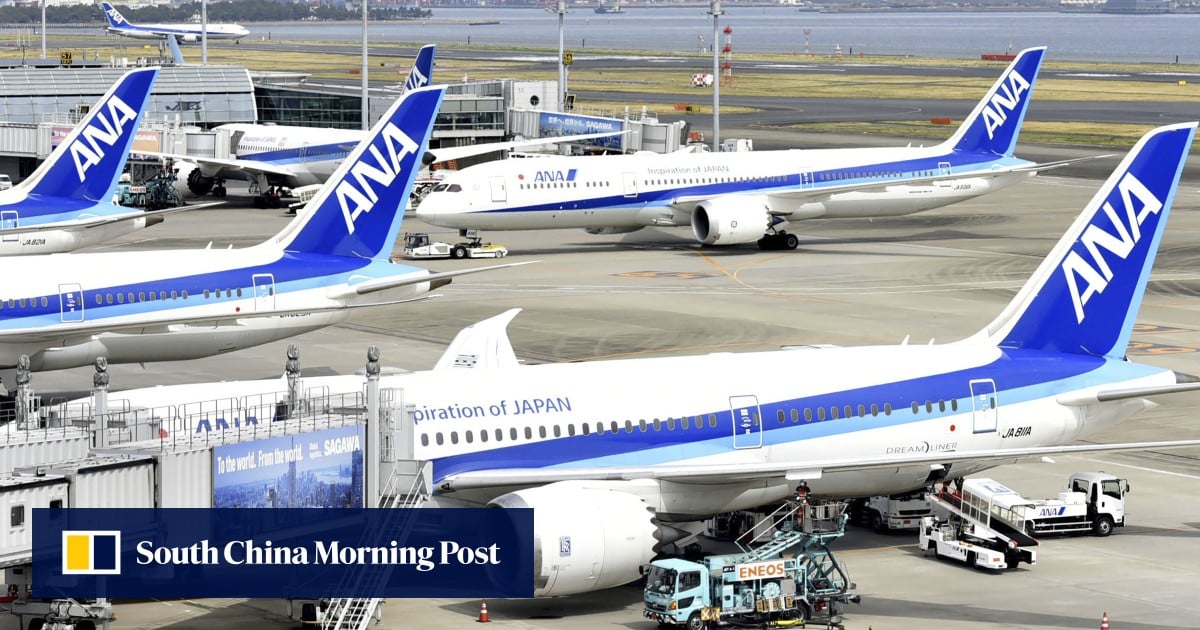
A near-miss on Tuesday involving an All Nippon Airways (ANA) plane coming dangerously close to another jet while approaching Tokyo’s Haneda Airport from Shanghai has thrown aviation safety back into focus – particularly, anti-collision technology and protocols – according to industry professionals based in China. While the intervention of one jet’s traffic collision avoidance system (TCAS) prevented contact between the two planes, analysts said there were lessons China could learn from the...
Places named in this report: Shanghai, Tokyo, Beijing
Exact coordinates
shanghai: 31.230, 121.470
tokyo: 35.680, 139.690
beijing: 39.900, 116.400
Read it at South China Morning Post See this on the map
What might happen next? AI-generated
These scenarios are written by an AI language model from the headline and summary above. They are not predictions from the newsroom, and they are not evidence of anything. Every one is given a deadline and checked against later coverage, and the score is published on the ledger — including the ones that miss.
-
Unresolved 50% Regulatory crackdown and technical upgrades
The incident sparks an immediate and intense review of air traffic control and aviation safety protocols in the region. Both Chinese and Japanese authorities push for mandatory upgrades to TCAS systems across their commercial fleets. This leads to increased cross-border operational standardization.
Watch for: Ministry of Transport of China issues a mandatory directive for TCAS system software updates on all domestic and international carriers. · A joint working group involving Japan's Ministry of Land, Infrastructure, Transport and Tourism and Chinese aviation regulators is announced.
-
Unresolved 30% Heightened operational friction and 'de-risking'
The incident is framed by geopolitical hawks as evidence of deliberate operational recklessness on one side. This leads to a temporary tightening of flight corridors and stricter pre-clearance requirements for flights near sensitive areas, leading to minor schedule disruptions.
Watch for: ANA issues a public statement citing increased security protocols for all flights transiting the East China Sea. · Chinese Civil Aviation Administration announces temporary restrictions on high-density air traffic sequencing in specific Tokyo approach zones.
-
Unresolved 15% International mediation and technical exchange
External international bodies or third-party aviation safety experts are brought in to mediate the dispute over operational standards. This leads to a technical dialogue focused purely on mitigating future risks without assigning blame.
Watch for: The International Civil Aviation Organization (ICAO) hosts a special symposium dedicated to East Asian air traffic management. · A formal bilateral agreement is signed between Japan and China outlining enhanced data-sharing protocols for near-miss reporting.
-
Unresolved 5% Geopolitical deflection and incident dismissal
Both governments and carriers quickly downplay the event as a statistical anomaly or a routine operational error. Focus remains entirely on domestic performance metrics, and no new regulatory frameworks are introduced.
Watch for: The primary carrier involved issues a brief internal memo regarding the event, providing no external comment on the cause. · Chinese state media reports on unrelated national economic achievements, effectively burying the near-miss in news cycles.
Generated by gemma-4-E4B-it-qat-UD-Q4_K_XL.gguf
on 2026-08-06. Checked against later coverage after 2026-08-20.
See how these forecasts score.
ForecastGeo shows the headline and summary published by the newsroom and places the story on a map. The full article lives at the source.