Washington Warns US Companies Over Dealing With Taliban-Ruled Afghanistan
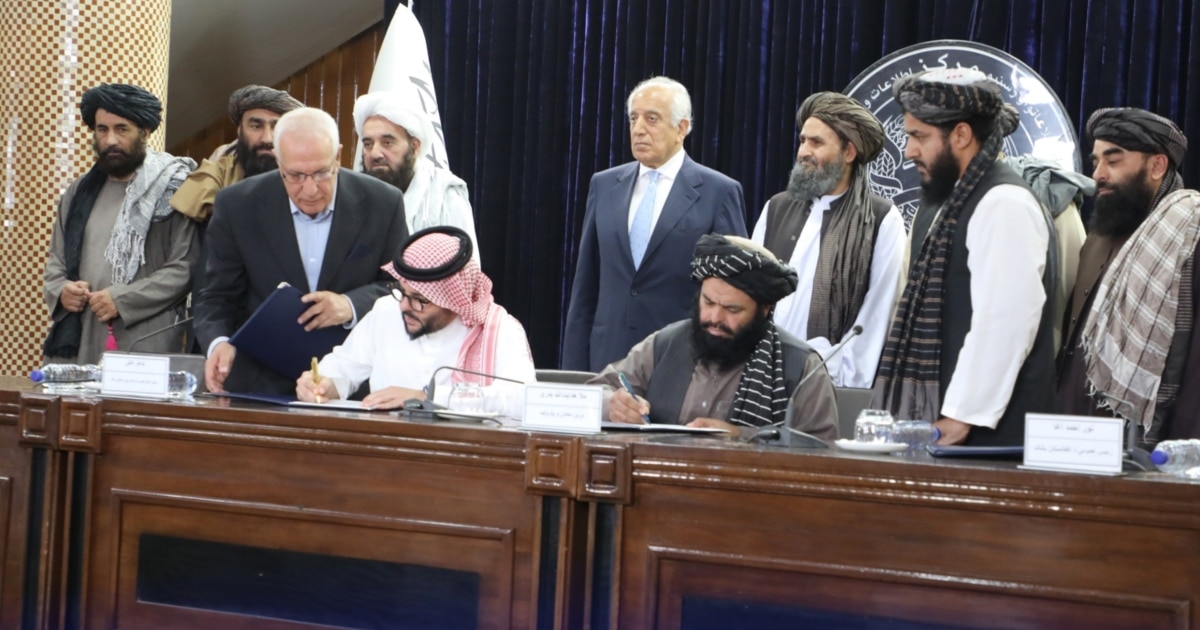
The US State Department has urged American companies to exercise extreme caution when considering business transactions with Taliban-ruled Afghanistan after a former US official attended the signing of a deal between a Saudi energy group and the hard-line authorities.
Places named in this report: Washington, Brussels
Exact coordinates
washington: 38.910, -77.040
brussels: 50.850, 4.350
Read it at RFE/RL See this on the map
What might happen next? AI-generated
These scenarios are written by an AI language model from the headline and summary above. They are not predictions from the newsroom, and they are not evidence of anything. Every one is given a deadline and checked against later coverage, and the score is published on the ledger — including the ones that miss.
-
Confirmed 40% Heightened Scrutiny and Retreat
The US State Department's warning prompts immediate, proactive risk aversion. Major US corporations, fearing regulatory backlash or reputational damage, will publicly announce a voluntary pause or complete halt to any new business ventures in Afghanistan. This effectively shutters the door on significant foreign investment for the near term.
Watch for: A major US investment bank issues a formal advisory citing increased geopolitical risk in Afghanistan. · The US State Department issues a formal 'Advisory Update' specifically referencing the Saudi energy deal as a cautionary example. · The US Department of Treasury issues a guidance memo on transaction compliance related to the Taliban.
-
Did not happen 30% Backchannel De-escalation Attempt
In response to Washington's public warning, key regional or international players (like Saudi Arabia) press for a localized, pragmatic off-ramp. A senior representative from a third-party government or international body is dispatched to Kabul to initiate high-level discussions aimed at clarifying regulatory parameters for foreign actors.
Watch for: A non-US government envoy announces a bilateral meeting with Taliban leadership regarding 'business facilitation'. · A major international financial institution announces a new, conditional 'safe-harbor' for select Afghan financial transactions. · A US State Department official is photographed meeting with a representative from a neighboring country's embassy in Kabul.
-
Did not happen 15% Counter-Intuitive Commercial Breach
Ignoring the State Department's explicit warnings, a highly motivated, smaller US-based tech firm decides to proceed with a targeted, low-risk digital transaction. This small breach serves as a test case for the US government's enforcement capability, potentially triggering a swift, low-profile investigation.
Watch for: A specific US-based tech company announces a new pilot program in Afghanistan, despite the warnings. · The US Department of Commerce announces a 'Targeted Enforcement' inquiry into a specific Afghan transaction. · A small, targeted financial penalty is levied against a US entity for a violation related to the recent Saudi deal.
-
Did not happen 15% Sustained Ambiguity and Status Quo
Neither the State Department nor the Taliban reacts decisively to the warning. The situation remains in a state of 'wait and see' ambiguity. Major companies continue to operate under extreme caution, maintaining existing low-volume contracts but avoiding any major new capital commitments as they await further official clarity.
Watch for: No new official warnings or policy guidance is issued by the US State Department within two weeks. · The Saudi energy group's initial deal proceeds without public controversy or immediate US retaliation. · Major global news outlets report a consistent lack of change in the business environment in Kabul.
Generated by llama
on 2026-09-12. Checked against later coverage after 2026-09-19.
See how these forecasts score.
ForecastGeo shows the headline and summary published by the newsroom and places the story on a map. The full article lives at the source.