Vietnam’s warship project signals modernisation, bamboo diplomacy balance
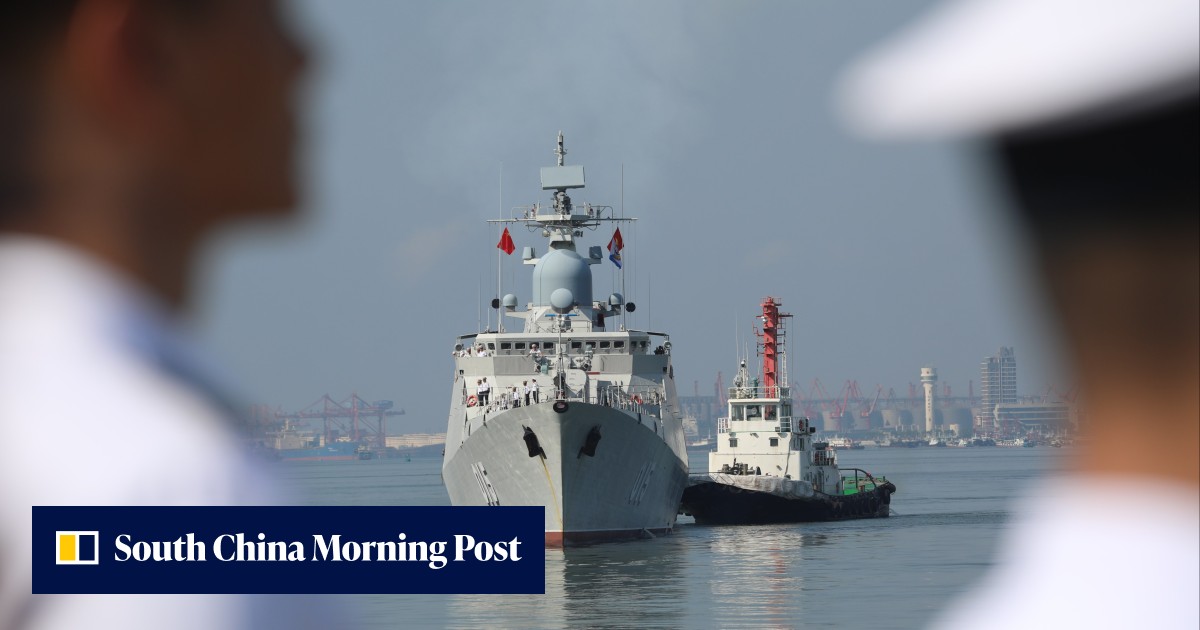
Vietnam’s construction of its most ambitious warship to date signals its ambition to develop a self-sufficient defence industry and assert its maritime interests. However, the country is expected to remain dependent on foreign technology for high-end engines, sensors and other critical systems even as it builds its defence manufacturing capabilities, according to analysts. The frigate is being built at the Vietnamese defence ministry’s Song Thu shipyard in Da Nang City, the military newspaper...
Places named in this report: Vietnam
Exact coordinates
vietnam: 14.060, 108.280
Read it at South China Morning Post See this on the map
What might happen next? AI-generated
These scenarios are written by an AI language model from the headline and summary above. They are not predictions from the newsroom, and they are not evidence of anything. Every one is given a deadline and checked against later coverage, and the score is published on the ledger — including the ones that miss.
-
Unresolved 40% Accelerated Foreign Tech Integration
The project faces immediate hurdles in high-end component sourcing, prompting the Vietnamese government to expedite a partnership deal with a specific foreign defense contractor to secure necessary engines or sensors. This bypasses long-term self-sufficiency goals for immediate operational readiness.
Watch for: Vietnamese Ministry of Defense announces a Memorandum of Understanding (MOU) with a European or South Korean defense firm regarding sensor integration for the new frigate. · A specific foreign technology firm announces an expedited delivery timeline for Vietnamese defense components.
-
Unresolved 35% Domestic Production Pivot
In a show of national industrial will, the project experiences a major breakthrough in local R&D, allowing the Song Thu shipyard to successfully integrate a domestically produced engine prototype into a sub-assembly of the frigate.
Watch for: A state-run Vietnamese defense media outlet publishes a technical schematic showing the integration of a domestically manufactured propulsion system onto the frigate hull. · A provincial governor issues a decree announcing increased state funding allocation for the Song Thu shipyard's local R&D wing.
-
Unresolved 15% Diplomatic Friction over Resource Competition
The development sparks localized maritime tension, as regional powers view the advanced warship as a direct challenge to existing sea lanes. This forces Vietnam into immediate, high-level diplomatic engagement to de-escalate potential confrontations.
Watch for: A high-level Vietnamese diplomatic envoy visits a key regional capital to engage in emergency bilateral talks regarding maritime security in the South China Sea. · A regional maritime patrol vessel from a neighboring power is reported near the Song Thu shipyard during the final integration phase.
-
Unresolved 10% Stagnation/Internal Review
The sheer complexity of integrating foreign and domestic systems leads to significant technical delays. The Ministry of Defense pauses the public rollout of the project to conduct an internal audit on supply chain vulnerabilities.
Watch for: A government spokesperson issues a formal statement citing 'unforeseen logistical complexities' leading to a temporary hold on the frigate's public testing schedule. · A specific government official is reported to have been appointed to head an ad-hoc 'Defense Industry Review Board'.
Generated by gemma-4-E4B-it-qat-UD-Q4_K_XL.gguf
on 2026-08-13. Checked against later coverage after 2026-08-20.
See how these forecasts score.
ForecastGeo shows the headline and summary published by the newsroom and places the story on a map. The full article lives at the source.