US Targets Russia's A7 Network In New Iran Sanctions Push
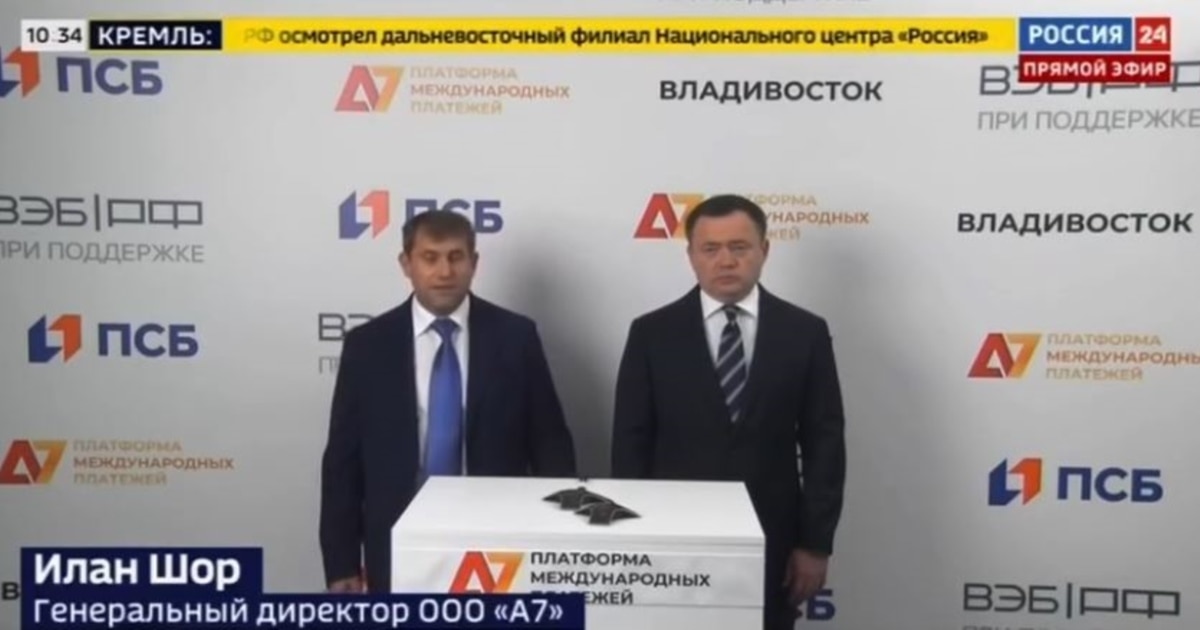
US authorities designated the A7 financial network as a "significant transnational criminal organization," the latest in a series of steps by Western authorities to try and choke the sprawling Kremlin-backed sanctions-evading scheme.
Where: Indonesia, Hong Kong, United Arab Emirates, Iran, China, Washington, Turkey, Russia
Exact coordinates
indonesia: -0.790, 113.920
hong kong: 22.400, 114.110
united arab emirates: 23.420, 53.850
iran: 32.430, 53.690
china: 35.860, 104.200
washington: 38.910, -77.040
turkey: 38.960, 35.240
russia: 61.520, 105.320
Read it at RFE/RL See this on the map
What might happen next? AI-generated
These scenarios are written by an AI language model from the headline and summary above. They are not predictions from the newsroom, and they are not evidence of anything. Every one is given a deadline and checked against later coverage, and the score is published on the ledger — including the ones that miss.
-
Awaiting deadline 35% Immediate Compliance & Operational Disruption
The A7 network, facing immediate pressure from new sanctions, is forced to partially halt or reroute its primary digital transactions. Russian financial authorities begin implementing 'red flag' protocols on specific US-linked digital transfers. This results in minor, localized operational hiccups for the network rather than a total collapse.
Watch for: A Russian central bank official issues a statement acknowledging the sanctions' impact on specific transaction types. · The US Treasury Department issues a follow-up directive detailing technical enforcement actions against A7 assets.
-
Awaiting deadline 30% Aggressive Counter-Designation & Diplomatic Friction
Moscow views the sanctions as an act of economic aggression and responds by rapidly designating several key Western financial institutions or individuals as hostile. This immediately creates a parallel, hostile financial ecosystem that bypasses the US-led efforts, making enforcement harder. Diplomatic channels become strained by the week's end.
Watch for: Russia announces new retaliatory sanctions against a specific European technology firm or US financial institution. · The US State Department issues a public advisory warning about increased financial risks from newly designated Russian entities.
-
Awaiting deadline 20% Internal Network Adaptation & Resilience
The A7 network, leveraging its deep connections, does not buckle. Instead, key internal nodes activate pre-planned, decentralized contingency protocols. They successfully shift transactions to alternative, less visible regional crypto-exchanges, effectively 'going dark' on US oversight within the 14-day window.
Watch for: A prominent blockchain analyst publishes a report detailing a sudden shift in transaction volume from sanctioned channels to specific offshore exchanges. · A Russian state-affiliated media outlet runs a report praising the 'resilience' of domestic financial infrastructure.
-
Awaiting deadline 15% Unforeseen De-escalation via Third-Party Mediation
Counter to the obvious trajectory, a non-aligned global power, such as China or India, pressures both the US and Russia to maintain 'economic stability' for global trade. This external pressure compels a quiet, informal technical dialogue between the relevant financial regulators, leading to a temporary, targeted suspension of specific A7 sanctions for 'stabilization purposes'.
Watch for: An official from the People's Bank of China or the RBI hosts a closed-door economic summit in a neutral city. · A joint statement from US and Russian financial advisors is leaked to the press suggesting a temporary pause in sanction implementation.
Generated by llama
on 2026-10-02. Checked against later coverage after 2026-10-09.
See how these forecasts score.
ForecastGeo shows the headline and summary published by the newsroom and places the story on a map. The full article lives at the source.