US military says Iran war has led to munitions shortfall
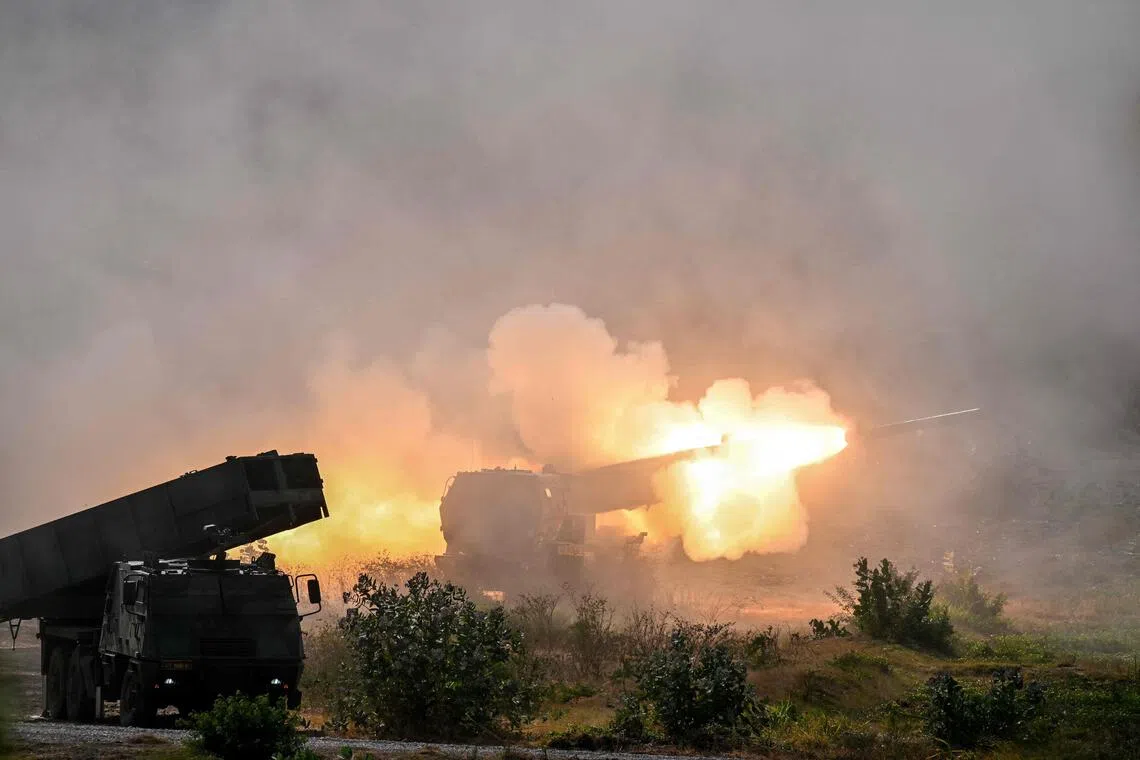
The war had an estimated cost of US$33.4 billion (S$42.47 billion), with US$22.3 billion of that spent on expended munitions alone.
Where: Iran
Exact coordinates
iran: 32.430, 53.690
Read it at The Straits Times See this on the map
17 outlets covered this story — see how their framing differs
What might happen next? AI-generated
These scenarios are written by an AI language model from the headline and summary above. They are not predictions from the newsroom, and they are not evidence of anything. Every one is given a deadline and checked against later coverage, and the score is published on the ledger — including the ones that miss.
-
Awaiting deadline 40% Immediate Procurement Surge
Faced with the critical munitions shortfall, the US government bypasses standard procurement channels to issue emergency contracts to domestic defense contractors. This rapid influx of spending aims to replenish stockpiles quickly, prioritizing high-demand munitions.
Watch for: The Department of Defense announces a $XX billion emergency procurement package for munitions. · Stock levels of a specific weapon system (e.g., Patriot missiles) show a measurable increase in government inventory reports.
-
Awaiting deadline 30% International Stockpile Reallocation
The US, under pressure from allies concerned about their own defensive needs, publicly requests emergency munitions transfers from allied nations. Key allies agree to ship limited quantities, providing a temporary buffer against the shortfall.
Watch for: The US Secretary of Defense meets with the Defense Ministers of NATO nations to discuss munitions sharing. · A specific bilateral transfer agreement (e.g., US-UK) for munitions is publicly signed.
-
Awaiting deadline 20% Domestic Military Drawdown
Recognizing the immediate logistical bottleneck, the US military issues internal directives to temporarily suspend non-essential forward deployments or reduce readiness levels in lower-priority theaters. This frees up existing munitions for high-priority frontline assets.
Watch for: A specific base or deployment in a low-priority theater is announced as undergoing a 'readiness reduction phase'. · A named general issues a directive to prioritize munition allocation for specific theaters.
-
Awaiting deadline 10% Diplomatic De-escalation & Negotiation
Despite the massive financial expenditure, the scale of the war itself becomes a political liability, leading the US to push for a sudden, intense diplomatic initiative. A key negotiation is initiated to halt the conflict, arguing that the ongoing cost is unsustainable.
Watch for: The US President announces a 72-hour summit with a high-ranking Iranian official. · The US Treasury announces a temporary, highly conditional pause on sanctions in exchange for immediate cessation of hostilities.
Generated by llama
on 2026-09-15. Checked against later coverage after 2026-09-29.
See how these forecasts score.
ForecastGeo shows the headline and summary published by the newsroom and places the story on a map. The full article lives at the source.