US launches more strikes on Iran as conflict spreads across region
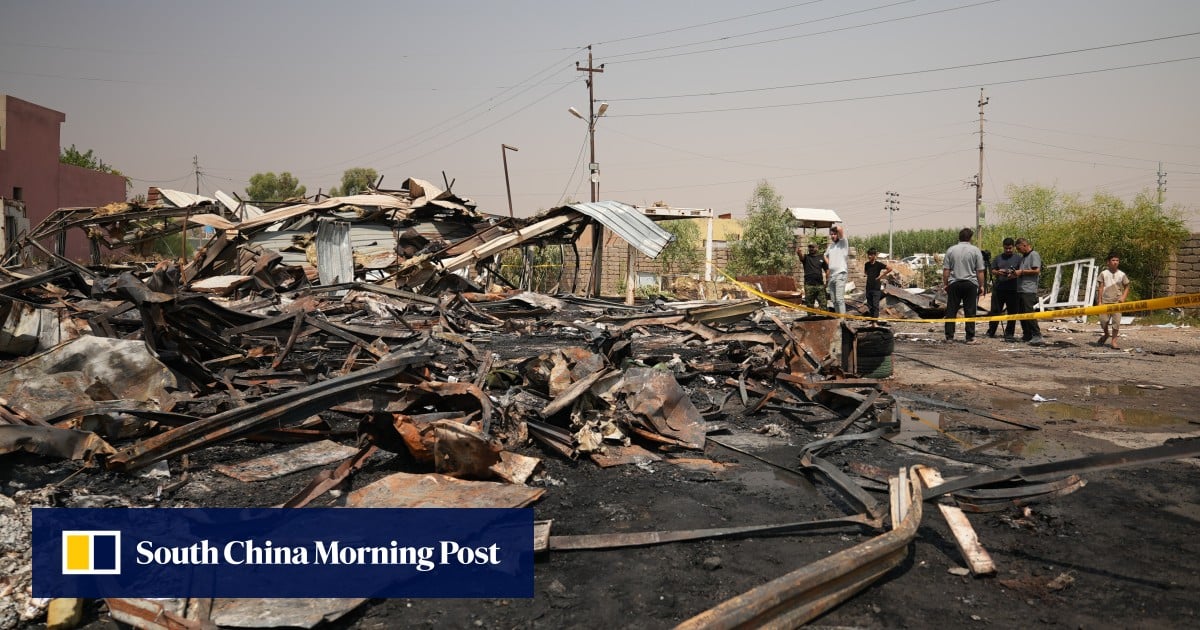
The US carried out fresh strikes in Iran on Wednesday, the US military said, further intensifying a five-month-old war that was already expanding beyond its main fronts to embroil additional countries in the region. “US forces began launching strikes against Iran at 8pm ET today,” US Central Command said in a statement. “The strikes are a powerful response to yesterday’s attempted Iranian attacks on US forces based in the Middle East.” Earlier on Wednesday, a drone hit a US-owned gas storage...
Where: Saudi Arabia, Egypt, Iran, Iraq
Exact coordinates
saudi arabia: 23.890, 45.080
egypt: 26.820, 30.800
iran: 32.430, 53.690
iraq: 33.220, 43.680
Read it at South China Morning Post See this on the map
3 outlets covered this story — see how their framing differs
What might happen next? AI-generated
These scenarios are written by an AI language model from the headline and summary above. They are not predictions from the newsroom, and they are not evidence of anything. Every one is given a deadline and checked against later coverage, and the score is published on the ledger — including the ones that miss.
-
Unresolved 35% Rapid Regional Entanglement
The strikes trigger immediate retaliatory escalations from proxies in neighboring states, pulling regional actors directly into the kinetic conflict. The US and its allies face an immediate dilemma as the conflict shifts from Iran-centric to broader regional instability.
Watch for: A statement from Saudi Arabia explicitly condemning US military action. · A UN Security Council resolution is introduced calling for an immediate ceasefire. · An Iranian drone is publicly identified as originating from a specific non-Iranian state.
-
Unresolved 30% De-escalation via External Pressure
The escalation prompts significant diplomatic efforts led by a global power broker, such as China or Russia. This external pressure forces a temporary de-escalation to prevent a wider war, leading to a negotiated, albeit fragile, pause in hostilities.
Watch for: A high-level meeting is announced between the US and a regional mediator in a neutral capital like Geneva. · An official joint statement is released by Iran and a third party affirming a temporary halt to strikes. · The US Central Command issues a public declaration stating 'all military operations have been suspended'.
-
Unresolved 25% Sustained, Low-Intensity Conflict
Instead of a massive military escalation, the strikes establish a new, highly volatile status quo of low-level, persistent attacks and counter-strikes. The conflict remains simmering, draining resources without triggering a full-scale war.
Watch for: An international body releases a report detailing increased insurance premiums for shipping in the Gulf region. · The US Treasury announces new sanctions targeting Iranian financial infrastructure specifically related to the strikes. · A specific Iranian military spokesperson denies responsibility for a subsequent, minor US strike.
-
Unresolved 10% Unlikely Domestic Pivot (Counter-Trajectory)
Contrary to the expectation of further military action, the US decides to pivot its focus internally, citing domestic political shifts or economic necessity. The external military pressure is suddenly withdrawn to consolidate political support at home.
Watch for: The US Secretary of Defense announces a 'strategic pause' in Middle East operations. · A major US legislative body passes a bill imposing stricter internal oversight on foreign military engagements. · The Pentagon issues a public statement shifting its primary operational focus away from the Iranian theater.
Generated by gemma-4-E4B-it-qat-UD-Q4_K_XL.gguf
on 2026-07-30. Checked against later coverage after 2026-08-13.
See how these forecasts score.
ForecastGeo shows the headline and summary published by the newsroom and places the story on a map. The full article lives at the source.