The trade-off between te reo Māori and big tech companies
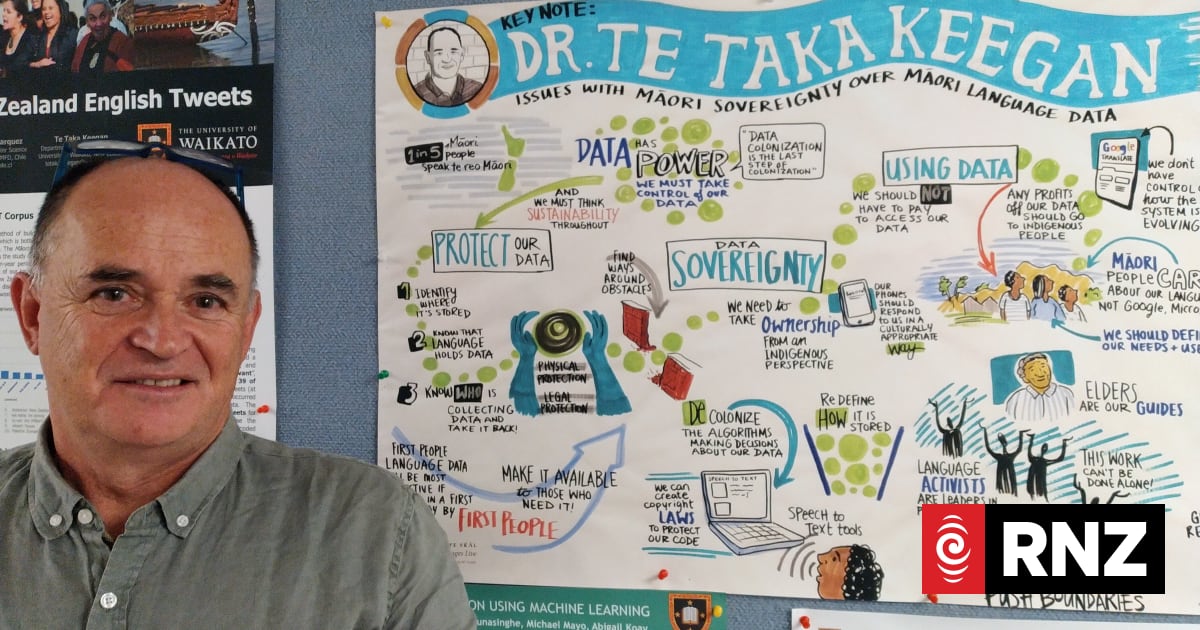
One professor says Māori place names have been "bastardised" for years, and AI tools may start correcting that.
Places named in this report: New Zealand
Exact coordinates
new zealand: -40.900, 174.890
Read it at RNZ See this on the map
What might happen next? AI-generated
These scenarios are written by an AI language model from the headline and summary above. They are not predictions from the newsroom, and they are not evidence of anything. Every one is given a deadline and checked against later coverage, and the score is published on the ledger — including the ones that miss.
-
Unresolved 45% Industry Adoption and Correction
Big tech companies, driven by cultural sensitivity initiatives and evolving global branding standards, begin integrating indigenous language validation tools. Initial friction occurs as users encounter AI corrections to 'bastardised' names, but major platforms adopt standardized Māori orthography as a best practice.
Watch for: Google announces a major update to its search API requiring validated indigenous place names. · A specific major social media platform launches a dedicated 'Māori Language Integration' roadmap.
-
Unresolved 30% Legal Mandate and Standardization
Growing public and cultural pressure forces governmental or regulatory bodies to mandate the use of accurate place names, effectively forcing technology companies to comply. This leads to the creation of a national digital registry of Māori to ensure universal accuracy.
Watch for: The New Zealand Ministry of Business, Innovation and Enterprise (MBIE) publishes new digital standards for geographical data. · A case is brought before the High Court challenging the historical inaccuracies of a major mapping service.
-
Unresolved 15% Technological Resistance and Fragmentation (Counter-Intuitive)
Instead of widespread correction, the complexity of linguistic nuances leads to tech companies adopting a 'localization silo' approach. Different apps or services end up using varying, uncoordinated spellings based on the specific dialect or community input they received, leading to increased confusion rather than standardization.
Watch for: A tech company issues a statement admitting that AI algorithms cannot reliably map all Māori place names without human oversight. · A localized app receives negative reviews specifically criticizing inconsistent spelling of Te Reo terms.
-
Unresolved 10% Cultural Activism and Tech Boycott
If early attempts at AI correction are perceived as superficial or culturally tone-deaf, Māori advocacy groups organize a significant digital protest. This results in targeted boycotts of major tech platforms until meaningful, community-led consultation processes are implemented.
Watch for: A prominent Māori cultural leader issues a public statement calling for a moratorium on AI-driven name changes. · A specific, high-profile tech partnership in New Zealand is publicly announced as 'under review' by a community board.
Generated by gemma-4-E4B-it-qat-UD-Q4_K_XL.gguf
on 2026-08-06. Checked against later coverage after 2026-08-20.
See how these forecasts score.
ForecastGeo shows the headline and summary published by the newsroom and places the story on a map. The full article lives at the source.