Stem cells reverse stroke damage and restore movement in mice
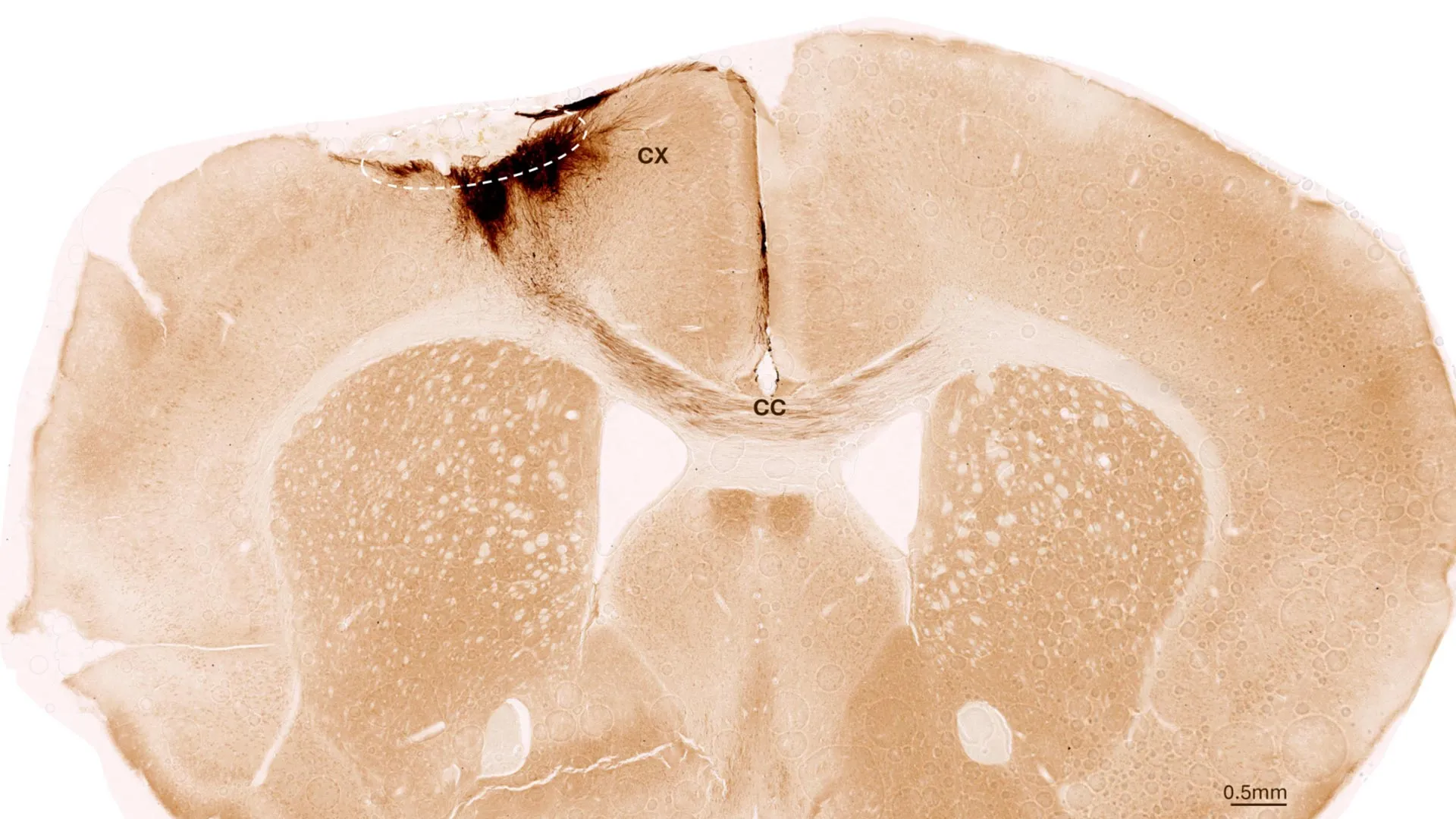
Stem cell transplants helped regenerate stroke-damaged brain tissue in mice, producing new neurons and restoring lost motor function. The treatment also improved blood vessels, inflammation, and the blood-brain barrier, raising hopes that a similar approach could eventually help repair the human brain after stroke.
Places named in this report: Zurich
Exact coordinates
zurich: 47.380, 8.540
Read it at ScienceDaily See this on the map
What might happen next? AI-generated
These scenarios are written by an AI language model from the headline and summary above. They are not predictions from the newsroom, and they are not evidence of anything. Every one is given a deadline and checked against later coverage, and the score is published on the ledger — including the ones that miss.
-
Unresolved 30% Accelerated Clinical Validation
The research team secures immediate, high-level funding from a major biomedical foundation. They announce an accelerated pilot study plan for a limited number of human volunteers, bypassing some typical preclinical bureaucratic hurdles. This generates massive positive press, framing the technology as an imminent breakthrough.
Watch for: The research institute announces a partnership with a major global health organization (e.g., WHO or NIH) · The lead scientist releases a public statement detailing an expedited clinical trial roadmap for human subjects within 30 days
-
Unresolved 40% Skepticism and Regulatory Review
The scientific community responds with necessary caution, highlighting the massive leap from murine models to human applications. A major regulatory body, such as the FDA, issues a formal 'Hold' on further large-scale application until more longitudinal data is provided on long-term tissue integration and safety.
Watch for: The FDA publishes a notice regarding the classification and review of novel stem cell therapies · A prominent, established neurologist publishes a peer-reviewed critique questioning the translatability of mouse stroke models to human cortical regeneration
-
Unresolved 15% The Funding Stall (Counter-Intuitive)
Despite the scientific excitement, the research group hits an unexpected hurdle in scaling the complex stem cell culturing process. This leads to a temporary halt in high-level grant applications while engineers redesign the delivery mechanism. The news cycle shifts from 'miracle cure' to 'engineering bottleneck,' delaying immediate human trials indefinitely.
Watch for: The research lab announces a temporary pause in grant applications to focus on manufacturing process optimization · A major biotech investor pulls their early-stage investment citing 'unforeseen manufacturing scalability risks'
-
Unresolved 15% Academic Replication Initiative
Other independent research labs worldwide receive the paper and immediately begin attempts to replicate the findings using identical protocols. If successful, this provides a robust, third-party validation of the technique, significantly boosting its credibility before any large-scale clinical investment.
Watch for: The Journal of Neuroscience announces a 'special issue' dedicated to confirming the stem cell stroke model · Three independent research institutions (outside the original lab) publish preliminary replication data using the same murine model
Generated by llama
on 2026-09-22. Checked against later coverage after 2026-09-29.
See how these forecasts score.
ForecastGeo shows the headline and summary published by the newsroom and places the story on a map. The full article lives at the source.