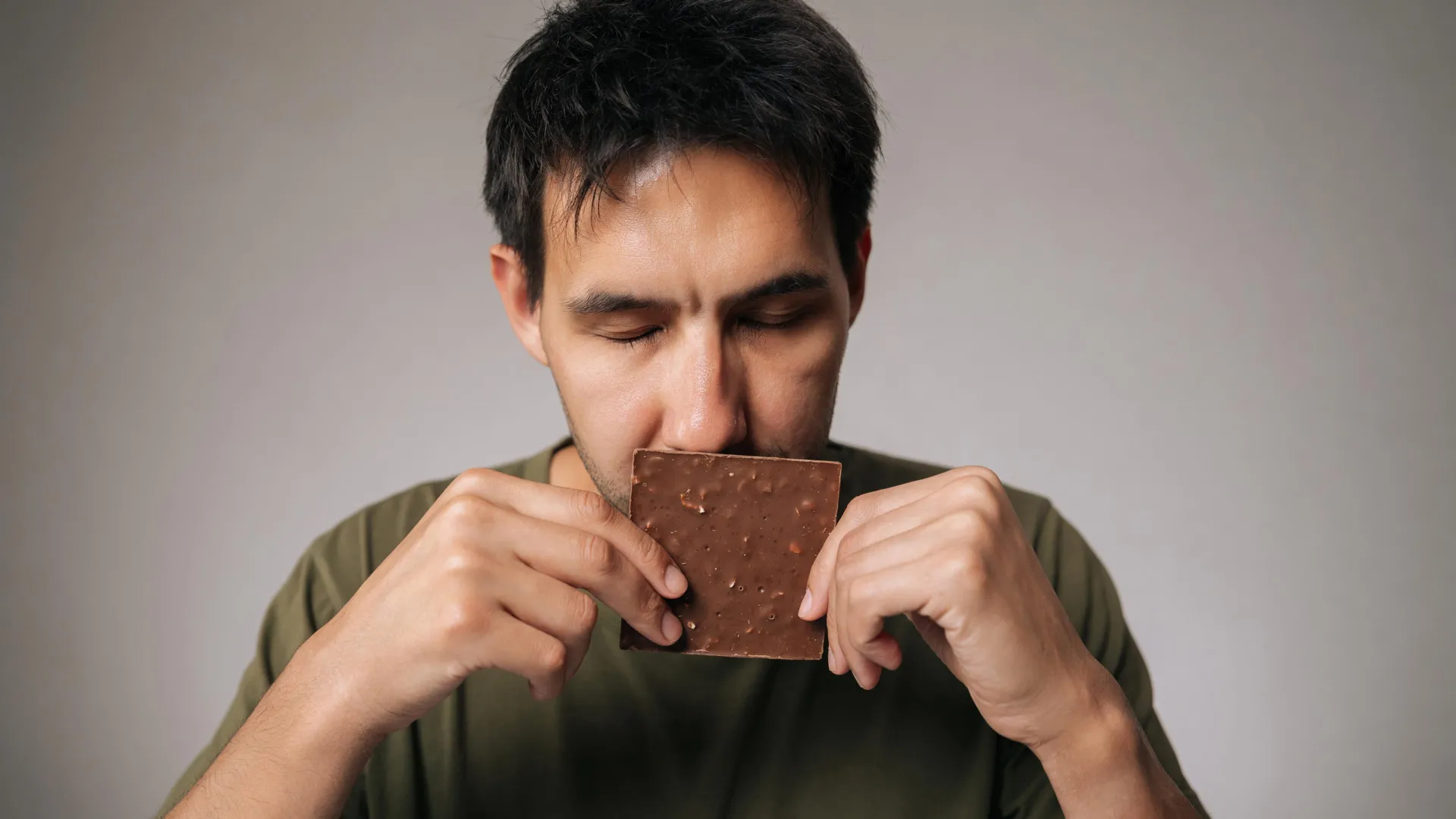
Smelling chocolate helped men complete more reps without feeling more tired
Simply smelling chocolate helped men complete more leg extension repetitions without making the workout feel harder, with dark chocolate producing the strongest effect. The researchers think familiar food aromas may influence appetite and motivation by making the brain anticipate eating.
Places named in this report: Japan
Exact coordinates
japan: 36.200, 138.250
Read it at ScienceDaily See this on the map
What might happen next? AI-generated
These scenarios are written by an AI language model from the headline and summary above. They are not predictions from the newsroom, and they are not evidence of anything. Every one is given a deadline and checked against later coverage, and the score is published on the ledger — including the ones that miss.
-
Unresolved 50% Immediate scientific replication and mainstream adoption
A major fitness publication runs a human trial mirroring the findings, confirming the efficacy of dark chocolate aroma in endurance activities. This leads to immediate inclusion of the finding in commercial fitness product development. A major supplement brand announces a new 'Endurance Aroma' line.
Watch for: A major fitness publication publishes a follow-up study titled 'Aroma vs. Reps: Human Trials Confirm Chocolate Effect' · A leading supplement brand announces the launch of a product incorporating 'chocolate aroma for workout performance' within 7 days.
-
Unresolved 30% Skepticism and the 'Placebo Effect' narrative
Industry critics and rival research teams question the validity of the results, attributing the findings purely to suggestion or the placebo effect. A high-profile sports science podcast dedicates an episode to debunking the study, labeling it 'pseudoscience' and demanding larger trials.
Watch for: A prominent sports science influencer posts a detailed critique on social media questioning the study's methodology. · A leading university's kinesiology department issues a public statement expressing caution regarding the study's interpretation.
-
Unresolved 10% Regulatory investigation and safety review
Given the link to food and physiological performance, food safety regulators become interested in the implications of using food aromas as performance enhancers. A minor food safety agency issues a preliminary inquiry to the original research team regarding the consistency and safety of aroma extraction methods.
Watch for: The FDA or a local food safety agency issues a public press release announcing a review of 'Aroma-based dietary supplements.' · The original researchers receive a formal information request letter from a regulatory body.
-
Unresolved 10% Counter-intuitive pivot to sensory distraction theory
Instead of focusing on motivation, a new study suggests the aroma acts as a specific, non-caloric distraction that temporarily redirects prefrontal cortex activity away from perceived exertion. This shifts the narrative entirely from 'appetite anticipation' to 'cognitive load management.' A new niche science blog publishes this reinterpretation.
Watch for: A new academic preprint titled 'Olfactory Distraction and Exertion Threshold' is uploaded to a repository like arXiv within the 5-day window. · A specialist media outlet runs a feature on 'How Smell Rewires Pain Perception' focusing on the neurological aspect.
Generated by llama
on 2026-09-15. Checked against later coverage after 2026-09-22.
See how these forecasts score.
ForecastGeo shows the headline and summary published by the newsroom and places the story on a map. The full article lives at the source.