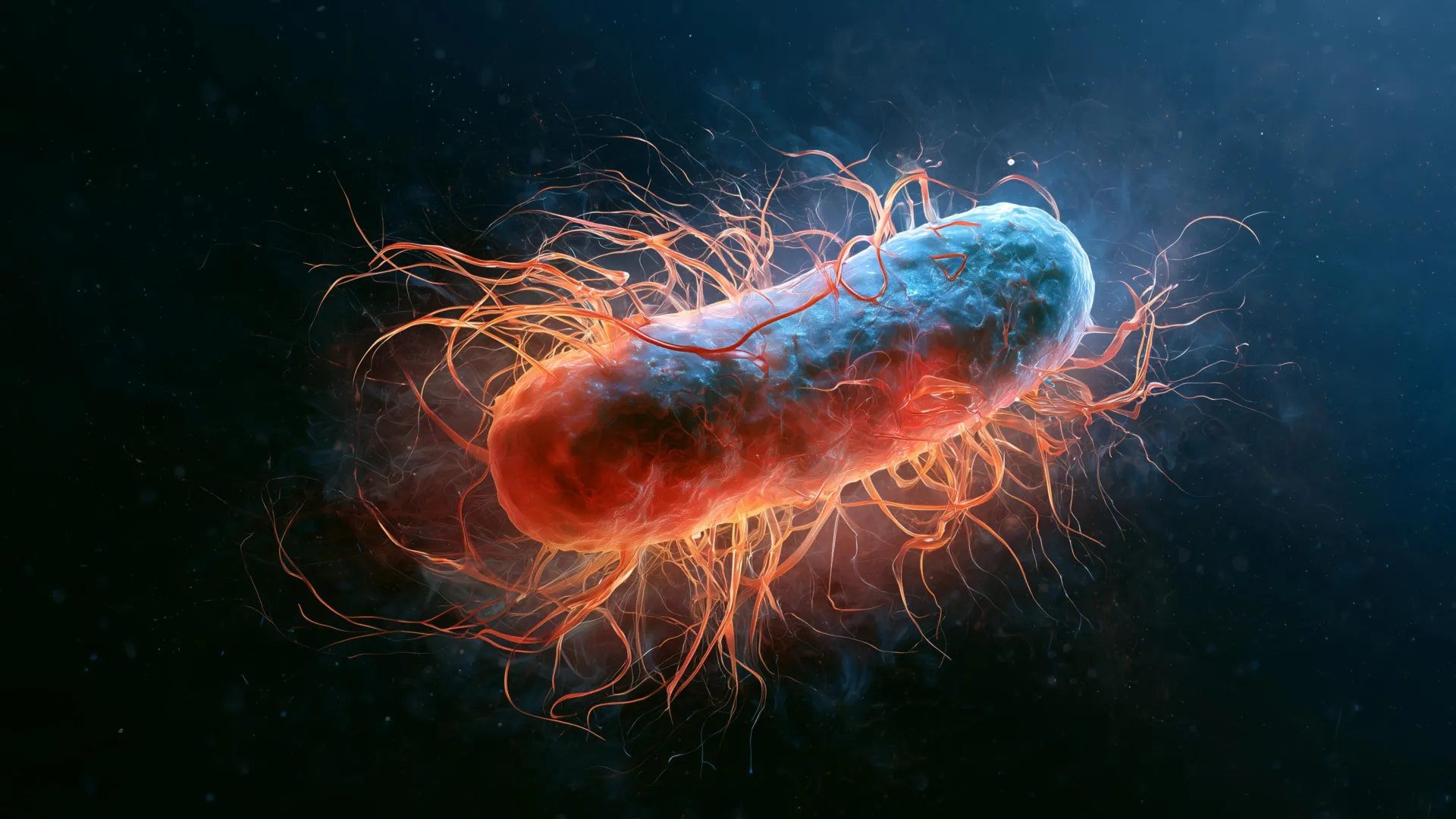
Scientists gave worms magnetic bacteria. They lived 43% longer
A magnet-producing bacterium extended the average lifespan of C. elegans worms by more than 43% while helping protect their neurological and intestinal health. Researchers traced much of the effect to suppression of ferroptosis, a damaging form of cell death linked to iron buildup and oxidative stress.
Where: Canada
Exact coordinates
canada: 56.130, -106.350
Read it at ScienceDaily See this on the map
What might happen next? AI-generated
These scenarios are written by an AI language model from the headline and summary above. They are not predictions from the newsroom, and they are not evidence of anything. Every one is given a deadline and checked against later coverage, and the score is published on the ledger — including the ones that miss.
-
Awaiting deadline 45% Immediate Scientific Replication & Hype
The initial findings are rapidly replicated by a major independent lab, generating massive media attention. This immediate validation drives a frenzy of investment and speculation in 'magnet-health' startups. A major tech/pharma company announces a high-profile partnership with the research team.
Watch for: A headline announces a multi-million dollar funding round for the associated research project. · A major pharmaceutical company issues a press release announcing preliminary partnership discussions.
-
Awaiting deadline 30% Regulatory Skepticism and Slow Adoption
Major health bodies issue a cautious advisory, stating that the results are too preliminary for immediate medical translation. Patent disputes arise between the lead university and private investors. The focus shifts to safety concerns rather than longevity gains.
Watch for: A regulatory body (e.g., FDA equivalent) publishes a statement requesting further pre-clinical safety data. · The patent office announces a contested filing regarding the core methodology.
-
Awaiting deadline 15% Viral Bio-Hacking Trend
The research leaks into the bio-hacking community online before formal peer review is complete. Small, unverified labs begin attempting to replicate the results using DIY methods. This sparks a public debate on the ethics of accessible, non-FDA-approved 'longevity hacks'.
Watch for: A major online bio-hacking forum posts a user-uploaded, unverified replication video. · A news outlet publishes an exposé on 'DIY magnetic bacteria' health claims.
-
Awaiting deadline 10% The Counter-Intuitive 'Negative Feedback' Loop (Counter-Trajectory)
The magnetic bacteria, while extending life, inadvertently causes an unexpected metabolic imbalance in the host. Early lab observations show that the increased iron sequestration leads to secondary, localized toxicity. The scientific community is forced to halt further experiments until the mechanism is fully understood.
Watch for: A peer-reviewed paper is published detailing an adverse metabolic marker in the worm samples. · The original research team issues a formal 'hold' on all subsequent experiments.
Generated by llama
on 2026-09-25. Checked against later coverage after 2026-10-02.
See how these forecasts score.
ForecastGeo shows the headline and summary published by the newsroom and places the story on a map. The full article lives at the source.