Scientists find water was fueling volcanoes 3 billion years ago
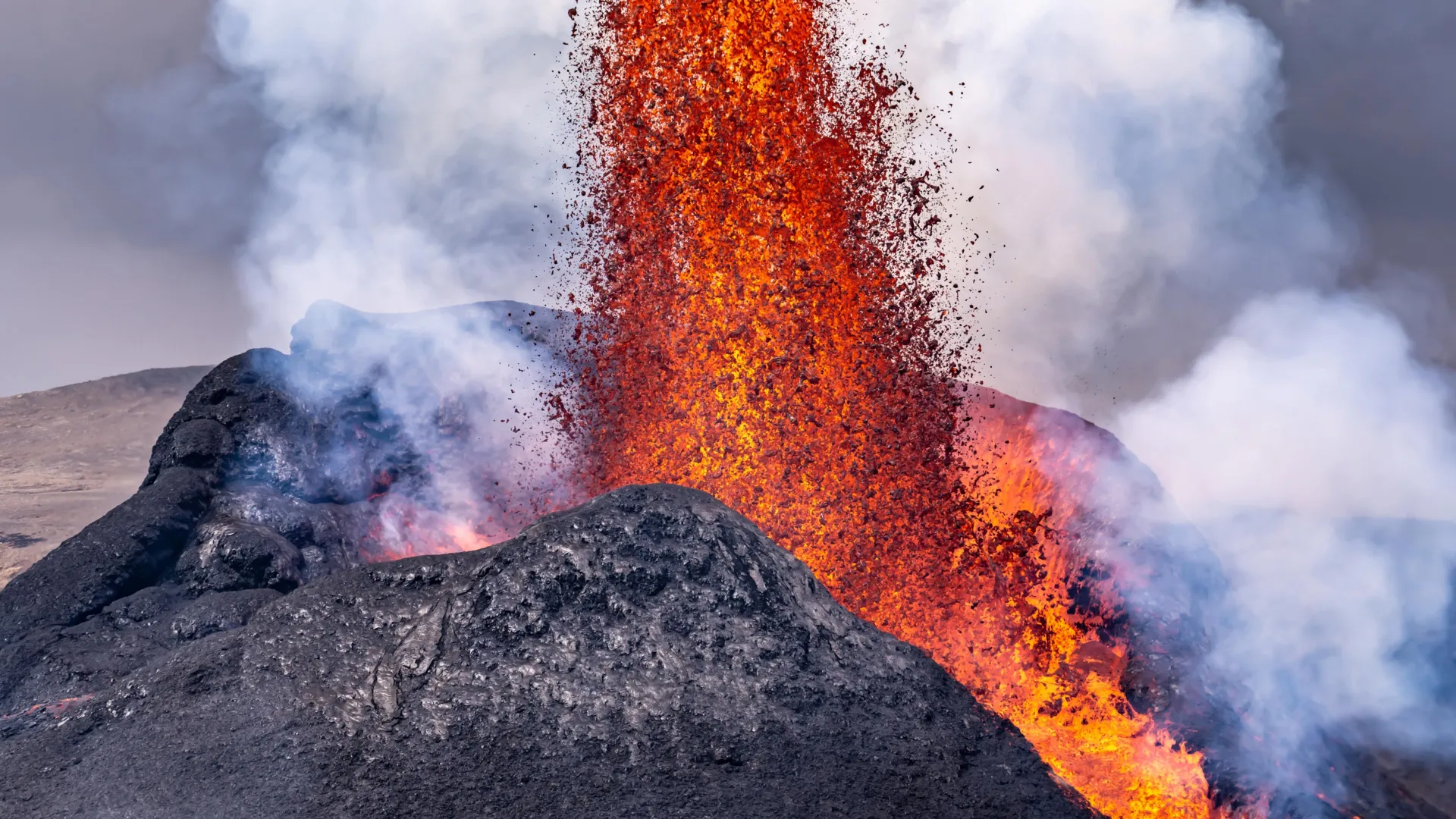
Ancient rocks from Western Australia suggest water was reaching deep inside Earth more than three billion years ago, long before modern plate tectonics may have fully developed. Researchers propose that water-rich pieces of crust periodically sank into the mantle through a process they call “dripduction.” The buried water then helped produce magma and volcanic eruptions.
Exact coordinates
australia: -25.270, 133.780
germany: 51.170, 10.450
Read it at ScienceDaily See this on the map
What might happen next? AI-generated
These scenarios are written by an AI language model from the headline and summary above. They are not predictions from the newsroom, and they are not evidence of anything. Every one is given a deadline and checked against later coverage, and the score is published on the ledger — including the ones that miss.
-
Awaiting deadline 40% Scientific paradigm shift confirmation
The findings are quickly validated by a follow-up study from a different geological site. This lends significant weight to the 'dripduction' theory in the broader scientific community, leading to rapid textbook revisions. Funding for related deep-earth research increases immediately.
Watch for: A major international geoscience conference announces a keynote on 'Dripduction' mechanisms · A peer-reviewed journal publishes a rapid validation paper on the Western Australian rock samples
-
Awaiting deadline 30% Skepticism and dismissal
The initial findings face immediate, high-profile criticism from established geologists who question the methodology or the dating of the rocks. The mainstream media largely ignores the study, labeling it as an anomaly, and the research team is forced to issue a formal rebuttal to counter the noise.
Watch for: A prominent university professor publishes a critical white paper detailing flaws in the dripduction methodology · The original research team issues a public statement addressing specific critiques from the scientific community
-
Awaiting deadline 20% Unexpected technological application
A mining or energy conglomerate sees immediate commercial potential in understanding subsurface water migration. They announce a partnership with the research team to apply the principles of dripduction to predict deep-earth fluid movement for resource extraction.
Watch for: A major energy company announces a joint venture with the researchers to model subsurface fluid flow · A patent application is filed specifically on a method mimicking 'dripduction' for mineral prospecting
-
Awaiting deadline 10% Counter-intuitive funding pivot (The outlier)
Instead of focusing on deep geological processes, a sudden government grant is awarded to study the historical impact of water on *surface* weather patterns during the Precambrian era, effectively sidelining the deep-earth 'dripduction' hypothesis in favor of a more immediate, observable climate focus.
Watch for: A national science foundation announces a $XX million grant specifically for Pre-Cambrian surface climate modeling · The lead researcher shifts their public focus in a press release to surface-level atmospheric evidence
Generated by llama
on 2026-09-13. Checked against later coverage after 2026-09-20.
See how these forecasts score.
ForecastGeo shows the headline and summary published by the newsroom and places the story on a map. The full article lives at the source.