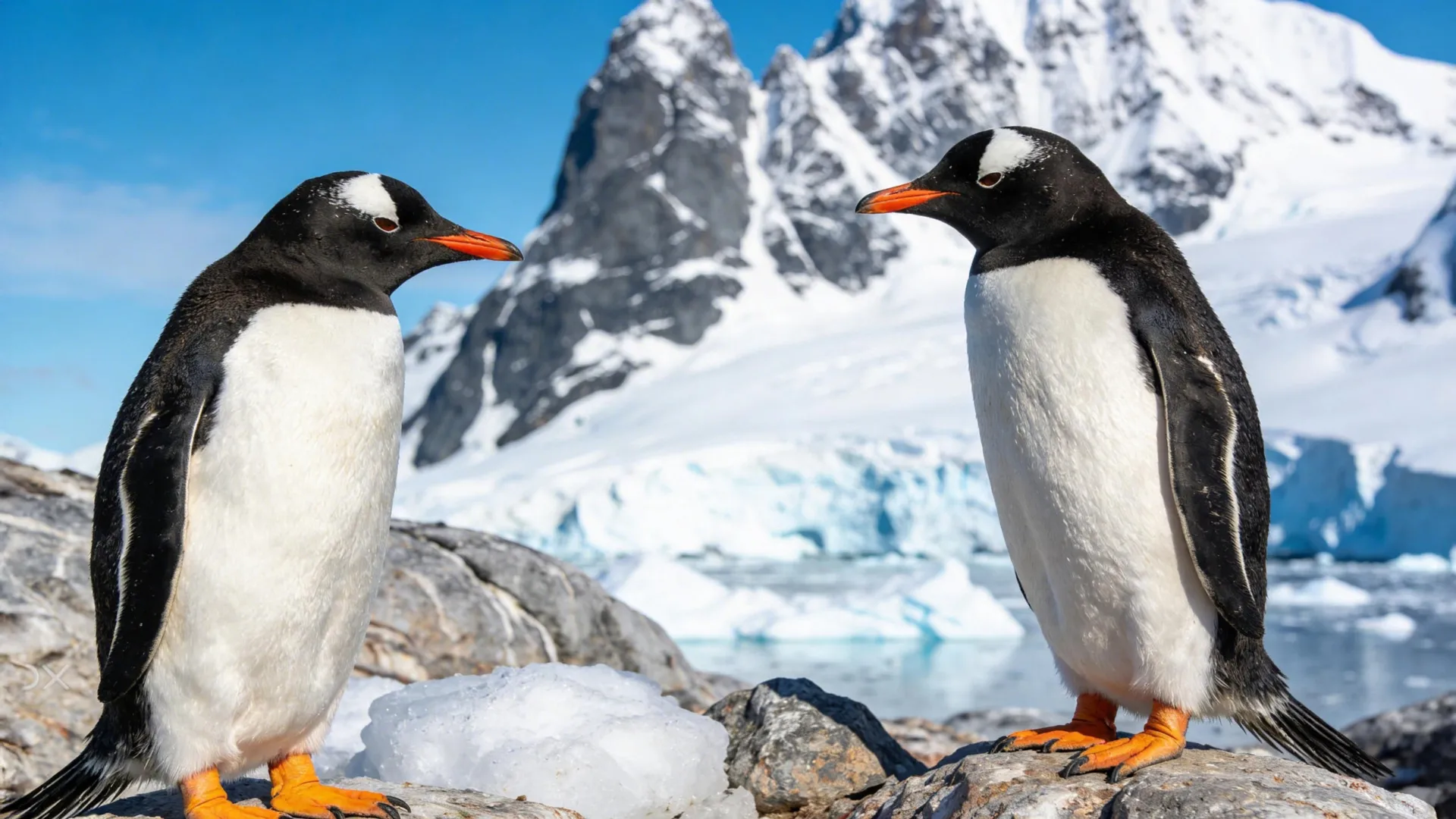
Scientists discover first new penguin species in more than 100 years
Genetic evidence has revealed a previously unknown gentoo penguin species on the remote Kerguelen Islands and shown that gentoos actually consist of four distinct species. The discovery also highlights a growing threat, as warming oceans could leave several island populations with little suitable habitat by 2050.
Where: New Zealand, Argentina, South Africa, Australia, Brazil, Georgia, California, Spain, France, Netherlands, United Kingdom
Exact coordinates
new zealand: -40.900, 174.890
argentina: -38.420, -63.620
south africa: -30.560, 22.940
australia: -25.270, 133.780
brazil: -14.240, -51.930
georgia: 32.170, -82.910
california: 36.780, -119.420
spain: 40.460, -3.750
france: 46.230, 2.210
netherlands: 52.130, 5.290
united kingdom: 55.380, -3.440
Read it at ScienceDaily See this on the map
What might happen next? AI-generated
These scenarios are written by an AI language model from the headline and summary above. They are not predictions from the newsroom, and they are not evidence of anything. Every one is given a deadline and checked against later coverage, and the score is published on the ledger — including the ones that miss.
-
Awaiting deadline 40% Scientific Validation & Public Focus
The discovery gains major traction in the scientific community, leading to immediate calls for further study. Media focus shifts heavily onto the genetic diversity of the new species while the warming ocean threat remains a background concern.
Watch for: The International Union for Conservation of Nature (IUCN) officially lists the new gentoo subspecies as 'Data Deficient' or similar status. · A major scientific journal publishes a peer-reviewed article confirming the genetic divergence of the new species within the first 7 days.
-
Awaiting deadline 30% Immediate Conservation Action
The news triggers an immediate, high-profile international response focused on habitat protection. A coalition of environmental NGOs successfully lobbies for an emergency designation of the Kerguelen Islands as a protected marine sanctuary.
Watch for: The French Ministry of Ecological Transition announces a temporary moratorium on all commercial fishing within a 100-nautical mile radius of the Kerguelen Islands. · A major climate advocacy group (e.g., Greenpeace) secures a formal meeting with the UN Secretary-General to demand immediate protective measures.
-
Awaiting deadline 15% Economic Impact & Resource Conflict
The discovery is used by commercial entities to argue for resource exploitation rights, directly contradicting conservation efforts. A major fishing or mining conglomerate announces plans to conduct preliminary surveys in the Kerguelen waters.
Watch for: A press release from a large international corporation (e.g., a resource extraction company) announces 'feasibility studies' for deep-sea mineral extraction near the archipelago. · Local or regional governments in the Southern Ocean assert new jurisdictional claims based on the biological significance of the discovery.
-
Awaiting deadline 15% Political Diversion & Scientific Setback (Counter-intuitive)
Instead of driving immediate action, the complex genetic findings are used politically to muddy the waters regarding climate change policy. A regional government claims the discovery proves climate change impacts are 'localized' or 'manageable' in specific island pockets, thereby slowing global climate negotiations.
Watch for: A government official from a major regional bloc (e.g., an EU member state) issues a statement suggesting that the biological findings should be prioritized over broader global emissions targets. · A UN committee meeting agenda is altered to place the penguin discovery in a 'minor ecological note' section rather than a primary climate discussion.
Generated by llama
on 2026-09-22. Checked against later coverage after 2026-09-29.
See how these forecasts score.
ForecastGeo shows the headline and summary published by the newsroom and places the story on a map. The full article lives at the source.