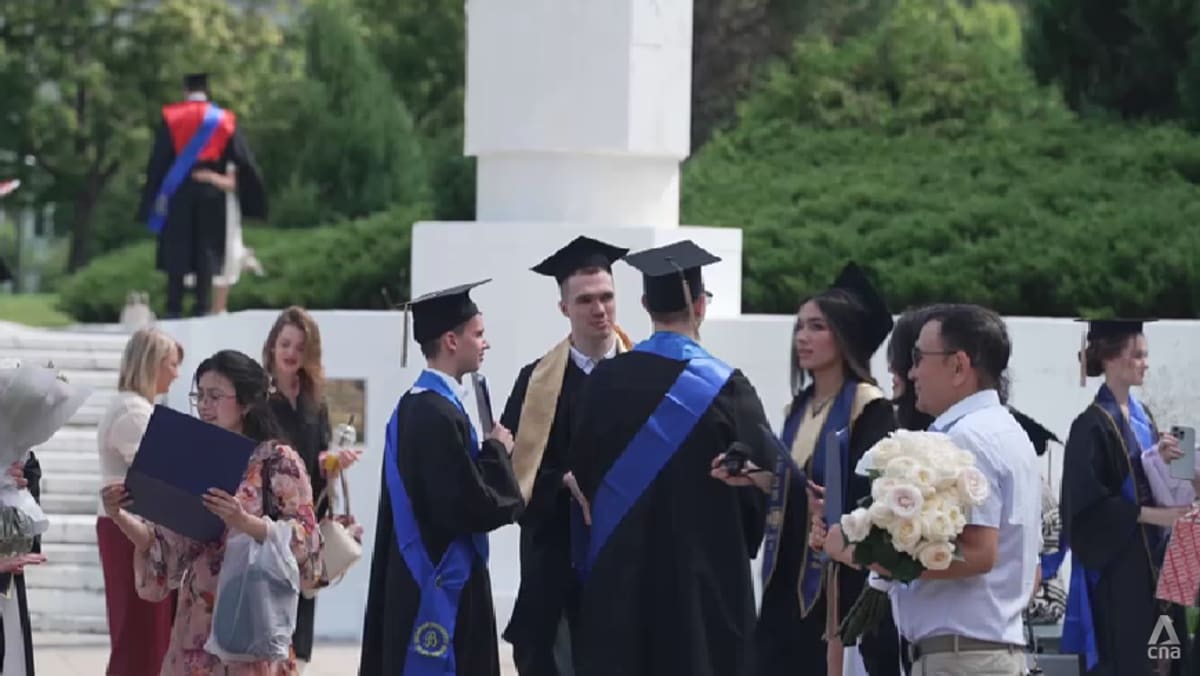
Russia turns to higher education to build ties beyond the West
Moscow aims to attract 500,000 international students by 2030 as it seeks to strengthen long-term partnerships with countries across Asia, Africa, the Middle East and South America.
Places named in this report: Moscow
Exact coordinates
moscow: 55.760, 37.620
Read it at Channel NewsAsia See this on the map
What might happen next? AI-generated
These scenarios are written by an AI language model from the headline and summary above. They are not predictions from the newsroom, and they are not evidence of anything. Every one is given a deadline and checked against later coverage, and the score is published on the ledger — including the ones that miss.
-
Unresolved 45% Stagnant Implementation
Russia fails to meet the 500,000 target due to logistical bottlenecks, visa restrictions, and the ongoing economic impact of sanctions on student mobility. While enrollment in key partner states like China and India grows, it remains insufficient to offset the loss of Western educational ties, leaving the program as a symbolic rather than strategic success.
Watch for: Rosstat reports total international student enrollment in Russia remains below 400,000 for the 2024 academic year · Russian Ministry of Education announces a 10% reduction in scholarship quotas for non-aligned countries
-
Unresolved 30% Regional Consolidation
Russia successfully pivots its higher education sector, concentrating the majority of new international enrollments from specific allied nations such as Iran, Syria, and Belarus. These students integrate into technical and military-focused curricula, creating a long-term cohort of professionals loyal to Moscow's geopolitical bloc, effectively isolating the West from Russian academic influence.
Watch for: Russian universities report a 200% year-over-year increase in enrollment from Iranian and Syrian nationals · The Kremlin signs a bilateral agreement with Iran to standardize degree recognition for engineering and defense studies
-
Unresolved 15% Diplomatic Re-engagement
Amidst a broader thaw in East-West relations, Russia leverages its educational diplomacy to re-enter global academic circles. Western universities begin re-establishing exchange programs with Russian counterparts, and the 500,000 target is achieved through a mix of non-Western partners and a renewed influx of students from Europe and North America.
Watch for: Major European universities announce the resumption of direct student exchange programs with Moscow State University · The US State Department lifts travel bans for American graduate students attending accredited Russian institutions
-
Unresolved 10% Program Collapse
The initiative collapses due to severe budget cuts within the Russian Ministry of Science and Higher Education, exacerbated by the reallocation of funds to the war effort. Scholarship programs are suspended entirely, leading to a mass exodus of existing international students and a complete halt to recruitment efforts.
Watch for: Rosobrnadzor announces the immediate suspension of all state-funded scholarships for foreign citizens · Leading Russian universities report a 50% drop in new international applications within the first quarter
Generated by Qwen3.6-35B-A3B-UD-Q5_K_M.gguf
on 2026-07-31. Checked against later coverage after 2026-08-14.
See how these forecasts score.
ForecastGeo shows the headline and summary published by the newsroom and places the story on a map. The full article lives at the source.