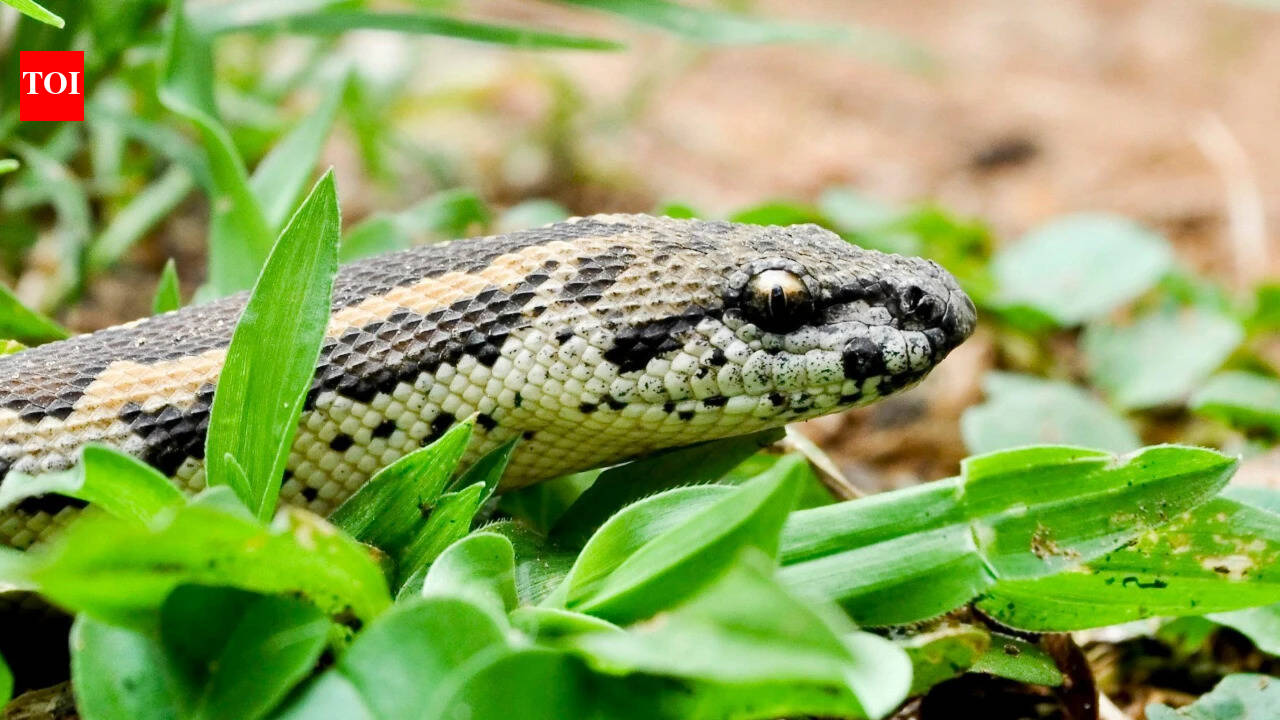
Rare Sistan sand boa, known from Iran and Pakistan, documented in India
In a groundbreaking discovery, three Sistan sand boas have been identified in Sikar district, Rajasthan, a first for the nation. Researchers pointed out unique characteristics that set this species apart from the Indian red sand boa. Interestingly, these snakes inhabit urban and agricultural regions, deviating from their usual sand dune habitats.
Places named in this report: India, Pakistan, Iran
Exact coordinates
india: 20.590, 78.960
pakistan: 30.380, 69.350
iran: 32.430, 53.690
Read it at The Times of India See this on the map
What might happen next? AI-generated
These scenarios are written by an AI language model from the headline and summary above. They are not predictions from the newsroom, and they are not evidence of anything. Every one is given a deadline and checked against later coverage, and the score is published on the ledger — including the ones that miss.
-
Awaiting deadline 45% Academic validation and species clarification
Genetic analysis confirms the three snakes are a distinct Sistan sand boa population rather than misidentified Indian red sand boas. A co-authored paper or press release from the research institute corroborates the Times of India report, and herbarium/museum specimens are deposited for verification.
Watch for: A university or research institute issues a press release confirming the genetic identification · Specimens are documented as deposited in a national museum collection · A peer-reviewed abstract is published naming Boa constrictor syriacus or Eryx sistanensis
-
Awaiting deadline 25% Legal scrutiny over collecting legality
Authorities question how the specimens were collected, as Indian wildlife law restricts taking protected reptiles. Forest department or wildlife crime officials open an inquiry into the researchers or collectors, casting doubt on the find's handling even if the species ID stands.
Watch for: State forest department issues a notice to the research team over specimen collection · A wildlife crime case FIR is filed · Authorities seize the preserved snakes as evidence
-
Awaiting deadline 20% Range reassessment sparks conservation interest
The discovery prompts calls to survey Rajasthan's urban-agricultural zones for a wider established population, reframing the boa as a range-expander rather than an oddity. Local media and conservation bodies push for documentation before development threatens the sites.
Watch for: An official survey or transt study is announced in Sikar district · A conservation NGO files a petition or note urging habitat protection · The species is added to a state wildlife monitoring list
-
Awaiting deadline 10% Report retracted or corrected as error
The identification is challenged, with experts asserting the snakes are actually Indian red sand boas or that the report overstates novelty. A correction or expert rebuttal undermines the original claim before follow-up verification.
Watch for: A herpetologist publicly disputes the species identification · The outlet publishes a correction clarifying the snakes are native red sand boas · The research institute distances itself from the report
Generated by tiel-coder-35b-a3b-ud-q4_k_xl
on 2026-11-12. Checked against later coverage after 2026-11-19.
See how these forecasts score.
ForecastGeo shows the headline and summary published by the newsroom and places the story on a map. The full article lives at the source.