Privacy fears drive ‘patriotic Americans’ to destroy licence plate cameras
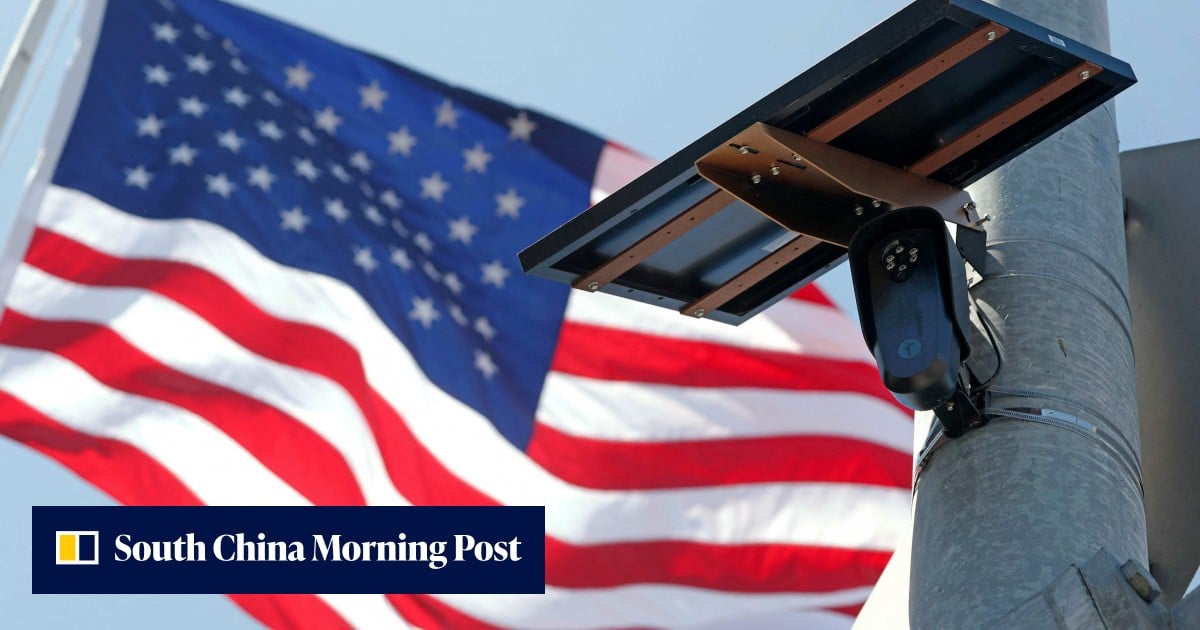
In only a few years, the surveillance start-up Flock has installed more than 100,000 licence plate reader cameras across the United States. But a grass-roots movement upset over privacy concerns is fighting back – even going so far as systematically vandalising the equipment. The first time he decided to trash one of the cameras, a self-styled vigilante wearing all black and known as Nomark, says he was “super nervous”. Now, after disabling about 30 of the devices near his home in the...
Places named in this report: United States
Exact coordinates
united states: 37.090, -95.710
Read it at South China Morning Post See this on the map
What might happen next? AI-generated
These scenarios are written by an AI language model from the headline and summary above. They are not predictions from the newsroom, and they are not evidence of anything. Every one is given a deadline and checked against later coverage, and the score is published on the ledger — including the ones that miss.
-
Unresolved 40% Corporate/Legal Crackdown
Flock or its corporate partners respond aggressively to the vandalism by initiating rapid, high-profile legal action against known individuals. This includes swift coordination with local law enforcement to identify and apprehend the 'Nomark' figure or other active vandals. The incident serves as a catalyst for a formal public warning campaign from the technology provider.
Watch for: Flock releases a public statement detailing a partnership with federal law enforcement to prosecute vandalism. · A local police department issues a bulletin specifically regarding 'license plate reader interference' under state statute.
-
Unresolved 30% Grassroots Counter-Mobilization
The vandalism inspires a larger, more organized anti-surveillance movement that moves beyond property destruction. Instead of individual acts, the movement coordinates coordinated, non-violent protests or digital 'doxxing' campaigns against Flock's corporate board or investors. The focus shifts from physical destruction to economic or reputational pressure.
Watch for: A national digital petition against Flock is signed by over 50,000 users in one week. · A major civil liberties organization hosts a televised town hall specifically addressing the Flock deployment.
-
Unresolved 15% Regulatory Intervention
State or municipal regulators, concerned about the public backlash and the physical damage, step in to temporarily suspend the deployment of new cameras pending review. This intervention forces a public dialogue on data collection standards rather than just vandalism. The initial deployment halts while oversight is established.
Watch for: A city council passes an emergency ordinance temporarily limiting the operational scope of private surveillance technology. · The Department of Justice announces a review into the legality of private entity camera deployment in public spaces.
-
Unresolved 15% Unexpected Industry Pivot (Counter-Trajectory)
Instead of reacting defensively, Flock publicly pivots its narrative to address privacy concerns, perhaps by announcing a new, heavily encrypted, opt-in service. They could offer a 'privacy mode' that allows for necessary functions without logging specific plate data, effectively neutralizing the privacy critique without stopping the technology entirely.
Watch for: Flock announces a new product feature named 'Privacy Shield' with a guaranteed opt-out mechanism. · A major tech news outlet reports Flock successfully negotiating a new data handling protocol with a major city government.
Generated by gemma-4-E4B-it-qat-UD-Q4_K_XL.gguf
on 2026-08-09. Checked against later coverage after 2026-08-19.
See how these forecasts score.
ForecastGeo shows the headline and summary published by the newsroom and places the story on a map. The full article lives at the source.