Philippine poverty falls to record low, but many still feel insecure
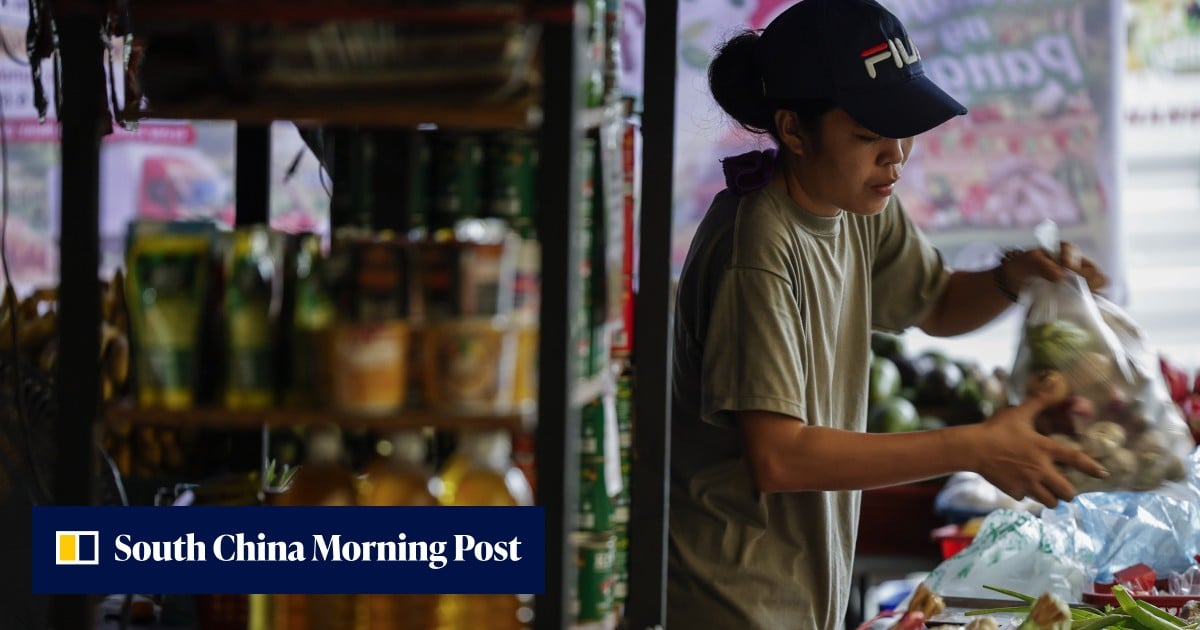
The Philippines has cut its official poverty rate to below 10 per cent for the first time, a milestone officials hailed as proof that millions of Filipinos are climbing the economic ladder. Yet for families like Vhan Castro’s, there is a big difference between being officially counted as middle class and actually feeling financially secure. The 34-year-old earns an average of 40,000 pesos (US$650) a month for his family of four through a patchwork of side hustles – from renting out a van for...
Places named in this report: Philippines
Exact coordinates
philippines: 12.880, 121.770
Read it at South China Morning Post See this on the map
What might happen next? AI-generated
These scenarios are written by an AI language model from the headline and summary above. They are not predictions from the newsroom, and they are not evidence of anything. Every one is given a deadline and checked against later coverage, and the score is published on the ledger — including the ones that miss.
-
Unresolved 40% Rapid Economic Improvement Momentum
The government capitalizes on the poverty reduction to launch a highly visible, immediate subsidy program for low-income workers. This immediate action bridges the gap between official statistics and lived experience.
Watch for: The Department of Social Welfare and Development announces a nationwide, immediate cash transfer program. · The Philippine Stock Exchange reports a surge in SME investment related to social enterprises.
-
Unresolved 30% Public Disillusionment and Policy Scrutiny
The gap between official poverty metrics and the reality of precarious labor fuels a surge in public dissatisfaction. A major social movement begins demanding a comprehensive wage floor adjustment.
Watch for: The Senate Committee on Labor holds a high-profile, televised hearing specifically targeting the minimum wage. · A union affiliated with precarious workers files a formal petition with the Ombudsman.
-
Unresolved 20% External Economic Shocks Neutralize Gains (Counter-Trajectory)
Despite domestic improvements, a sharp, unexpected global commodity price spike (e.g., fuel or grain) hits the Philippines. This immediately inflates the cost of living, erasing the recent gains in household purchasing power.
Watch for: The Philippine Central Bank issues an emergency monetary policy statement responding to sharp inflationary pressure. · Import costs for essential goods, such as rice, increase by more than 15% in a single week.
-
Unresolved 10% Regional Economic Integration Push
To solve the precarious employment issue, the government aggressively pushes a new Free Trade Agreement framework with a major economic bloc. This aims to professionalize the informal economy.
Watch for: The Philippine Department of Trade and Industry (DTI) signs a Memorandum of Understanding with a representative from ASEAN's economic body. · The Ministry of Labor announces a new certification program for 'formalizing' gig economy workers.
Generated by gemma-4-E4B-it-qat-UD-Q4_K_XL.gguf
on 2026-08-25. Checked against later coverage after 2026-09-04.
See how these forecasts score.
ForecastGeo shows the headline and summary published by the newsroom and places the story on a map. The full article lives at the source.