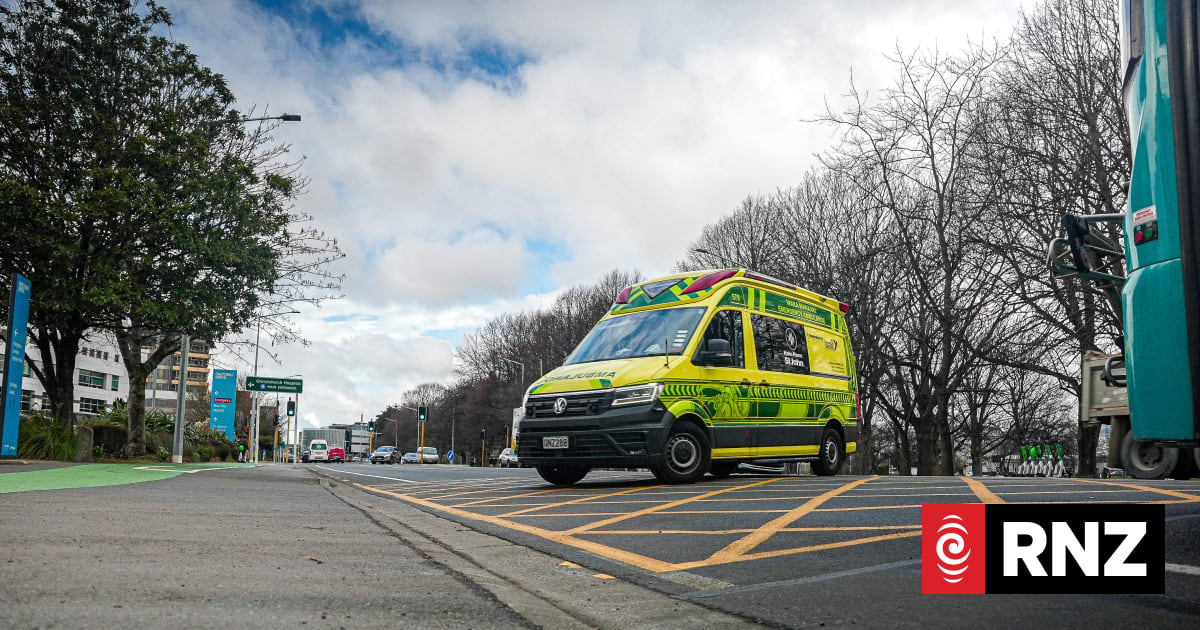
One call every 20 seconds: Current demand for ambulances 'unsustainable' - St John
Many people think most emergency calls are for accidents, but St John says demand is largely driven by older people with chronic illnesses.
Places named in this report: New Zealand
Exact coordinates
new zealand: -40.900, 174.890
Read it at RNZ See this on the map
What might happen next? AI-generated
These scenarios are written by an AI language model from the headline and summary above. They are not predictions from the newsroom, and they are not evidence of anything. Every one is given a deadline and checked against later coverage, and the score is published on the ledger — including the ones that miss.
-
Unresolved 45% Immediate Service Reform Implementation
The public outcry forces immediate action, leading the regional health authority to announce a rapid, large-scale reallocation of resources away from emergency response toward primary care pathways.
Watch for: Ministry of Health announces a temporary 'Red Alert' funding injection for community-based chronic illness management. · St John announces a specific partnership with a local GP network to divert non-acute calls starting next Monday.
-
Unresolved 30% Public Scrutiny and Political Backlash
Media coverage intensifies, leading to political pressure on the responsible government body to provide immediate answers, forcing a public hearing on the state of emergency services.
Watch for: A specific opposition party leader calls for the immediate resignation of the regional health director. · The government announces a 'State of Emergency' consultation period regarding ambulance capacity.
-
Unresolved 15% System Failure/Service Collapse
With demand exceeding capacity without immediate intervention, critical service failures occur, leading to a visible breakdown in emergency response times across multiple jurisdictions.
Watch for: A major news outlet reports a documented case of an ambulance failing to reach a patient within the mandated critical response window. · Emergency dispatch centers announce they are implementing a 'triage lockdown' to prioritize only life-threatening calls.
-
Unresolved 10% Counter-Intuitive Demand Shift
A surprising, short-term public health campaign focusing on preventative measures or lifestyle changes manages to significantly lower non-critical calls immediately.
Watch for: St John reports a measurable 20% drop in non-cardiac, non-trauma emergency calls within the first week of a new public awareness campaign. · A major national health organization releases a rapid, successful pilot program for chronic illness self-management that sees high adoption rates.
Generated by gemma-4-E4B-it-qat-UD-Q4_K_XL.gguf
on 2026-08-10. Checked against later coverage after 2026-08-17.
See how these forecasts score.
ForecastGeo shows the headline and summary published by the newsroom and places the story on a map. The full article lives at the source.