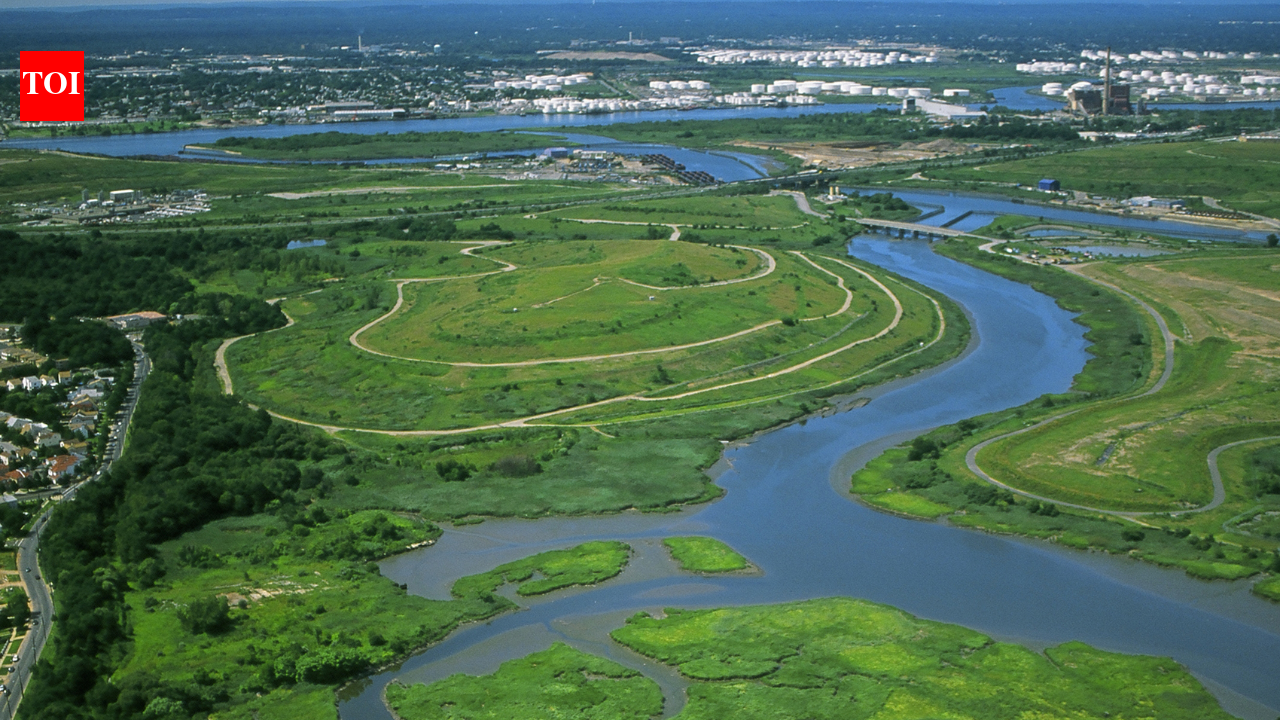
New York's Bluebelt wetlands saved $80 million in infrastructure costs
In an innovative move, New York City has turned to its natural wetlands for stormwater management, resulting in significant cost savings. The Bluebelt initiative has replaced expensive underground drainage systems with revitalized waterways, integrating both green and grey infrastructure to manage runoff efficiently. This strategic framework not only safeguards and extends essential wetland areas but also boosts the city's resilience against the impacts of climate change and pollution.
Places named in this report: New York
Exact coordinates
new york: 40.710, -74.010
Read it at The Times of India See this on the map
What might happen next? AI-generated
These scenarios are written by an AI language model from the headline and summary above. They are not predictions from the newsroom, and they are not evidence of anything. Every one is given a deadline and checked against later coverage, and the score is published on the ledger — including the ones that miss.
-
Unresolved 35% Immediate Project Expansion Approval
The success of the Bluebelt project is quickly leveraged for further city planning. The Mayor announces a public-private partnership to replicate the model in another critical NYC watershed, bypassing usual bureaucratic hurdles due to demonstrated ROI.
Watch for: NYC Department of Environmental Protection announces a new funding round specifically for 'Bluebelt Replication Projects' · The City Council passes a resolution dedicating a specific municipal bond to wetland infrastructure expansion
-
Unresolved 25% Legal/Environmental Challenge Filed
Despite the cost savings, a local environmental advocacy group or a property rights organization challenges the Bluebelt's encroachment on existing land or its long-term ecological impact, initiating litigation.
Watch for: A lawsuit is filed in New York State Supreme Court naming the NYC Department of Parks and Recreation as a defendant · A public hearing is scheduled by the City Planning Commission specifically to address 'Bluebelt Zoning Controversies'
-
Unresolved 20% Intergovernmental Funding Competition
The positive outcome attracts attention from state or federal agencies interested in green infrastructure. NYC begins a high-level lobbying effort to secure matching funds for the next phase of the initiative.
Watch for: The EPA or NY State DEC issues a formal Request for Proposals (RFP) directly referencing NYC's Bluebelt success · A senior state legislator holds a press conference praising NYC's sustainability model
-
Unresolved 20% Contingency: Infrastructure Reversion
Due to unforeseen subsurface contamination or unforeseen utility conflicts discovered during the transition, the city is forced to halt the green infrastructure rollout and temporarily revert to traditional grey drainage methods in affected zones.
Watch for: The NYC Department of Water announces a temporary moratorium on new wetland conversions in the Bluebelt area · A revised engineering feasibility study is published, noting 'unacceptable contamination risks' in the wetland substrate
Generated by gemma-4-E4B-it-qat-UD-Q4_K_XL.gguf
on 2026-08-09. Checked against later coverage after 2026-08-23.
See how these forecasts score.
ForecastGeo shows the headline and summary published by the newsroom and places the story on a map. The full article lives at the source.