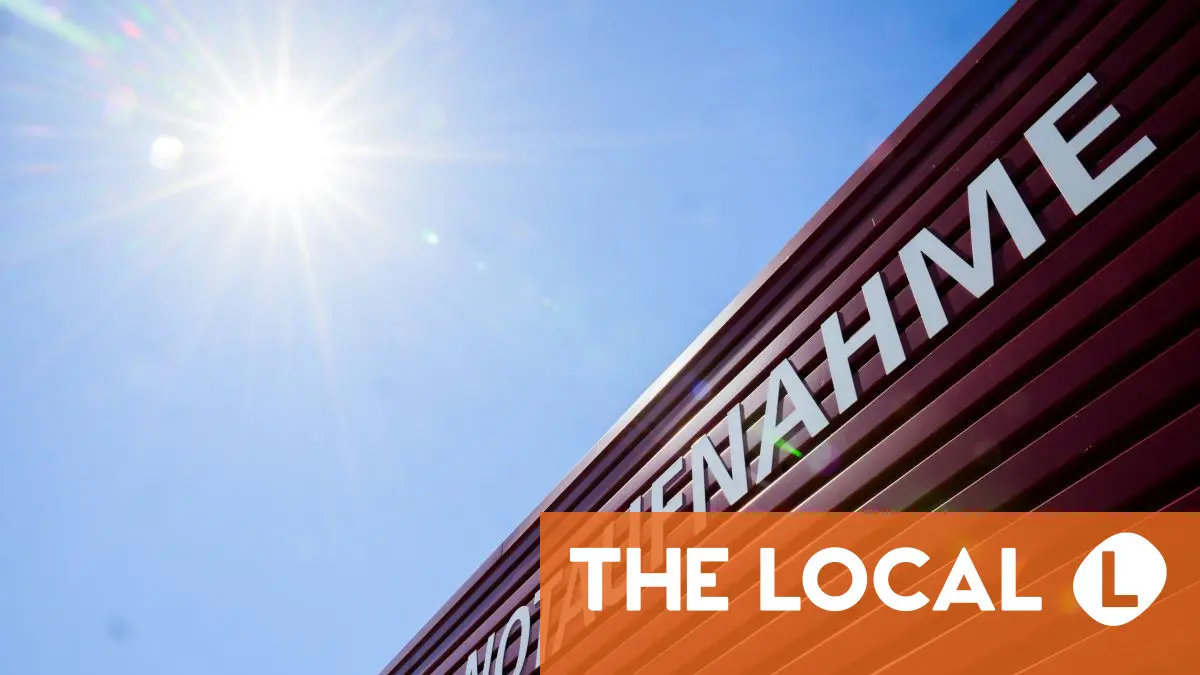
Nearly 10,000 heat-related deaths in Germany recorded so far this year
Approximately 9,800 people died due to high temperatures in Germany up to mid-July, according to the Robert Koch Institute, putting this year's total already above any single year in the past decade.
Where: Germany
Exact coordinates
germany: 51.170, 10.450
Read it at The Local (Germany) See this on the map
What might happen next? AI-generated
These scenarios are written by an AI language model from the headline and summary above. They are not predictions from the newsroom, and they are not evidence of anything. Every one is given a deadline and checked against later coverage, and the score is published on the ledger — including the ones that miss.
-
Unresolved 40% Immediate Public Health Overhaul
The government responds decisively to the crisis, recognizing the failure of current infrastructure. Significant legislative changes are fast-tracked to mandate urban greening and improve public cooling centers across all major cities.
Watch for: The Bundestag passes the 'National Heat Resilience Act' with a majority vote. · Federal funding for municipal air conditioning initiatives increases by 30% in the upcoming budget.
-
Unresolved 30% Bureaucratic Incremental Change
The government acknowledges the problem but prioritizes cost-benefit analysis over urgent intervention. Minor regulatory adjustments are made, such as revised construction codes for new buildings, but systemic change is slow and fragmented.
Watch for: The Ministry of Health releases a guideline recommending increased hydration but without mandatory infrastructure requirements. · A federal committee is established to 'study long-term climate adaptation' but fails to recommend binding legislation within 9 months.
-
Unresolved 15% Climate Migration & Strain
The recurring heatwaves trigger internal displacement, as vulnerable populations flee heavily impacted urban areas to cooler, perhaps rural, regions. This strains local resources and creates localized political friction.
Watch for: Local municipal reports indicate a measurable 10% increase in residents applying for relocation assistance in Southern Germany. · The Federal Ministry of the Environment publishes an emergency report detailing increased internal migration patterns correlated with heat indices.
-
Unresolved 15% Abolition of Summer Restrictions (Counter-Intuitive)
In a political bid to appear less reactive or to test the market's willingness to absorb the risk, a conservative coalition pushes through legislation to reduce certain public health mandates during heatwaves.
Watch for: The Federal Ministry of Health issues a statement stating that 'voluntary public compliance' is the preferred mechanism for heat management over mandatory restrictions. · A major German retailer launches a massive, subsidized 'Heat Survival Kit' promotion, implying governmental risk acceptance.
Generated by gemma-4-E4B-it-qat-UD-Q4_K_XL.gguf
on 2026-07-30. Checked against later coverage after 2026-08-13.
See how these forecasts score.
ForecastGeo shows the headline and summary published by the newsroom and places the story on a map. The full article lives at the source.