NASA spacecraft discovers moon crater bigger than Roman Colosseum
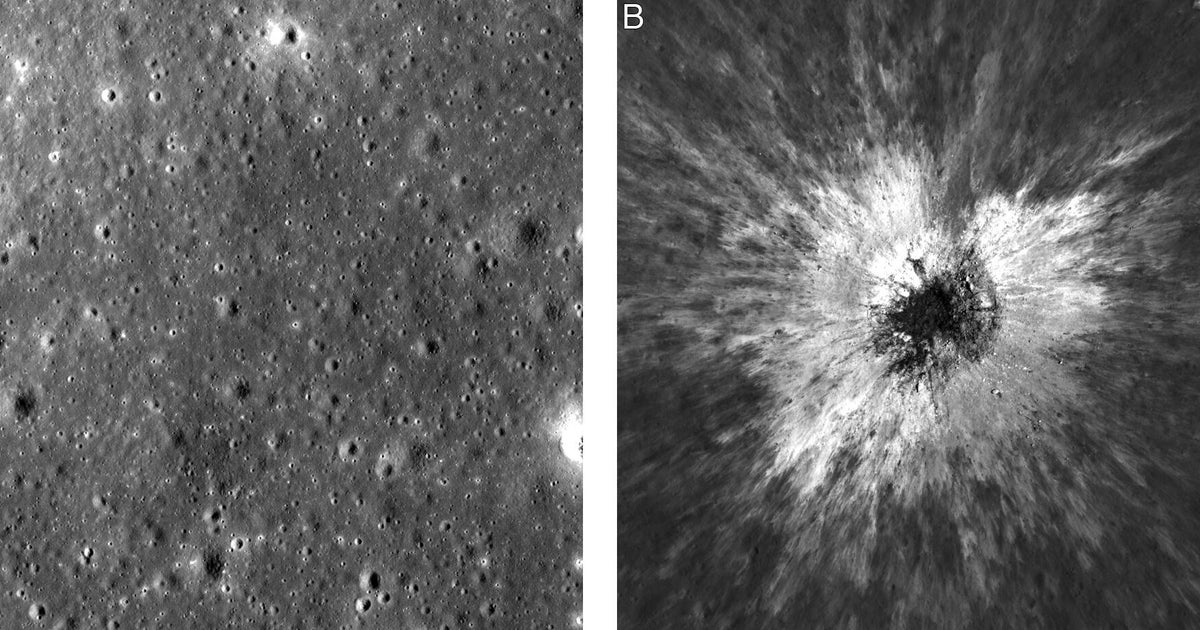
Scientists have discovered a crater on the moon that's bigger than the Roman Colosseum, the result of a powerful impact two years ago.
Where: Houston, Louisiana, Los Angeles, China, California, Russia
Exact coordinates
houston: 29.760, -95.370
louisiana: 30.980, -91.960
los angeles: 34.050, -118.240
china: 35.860, 104.200
california: 36.780, -119.420
russia: 61.520, 105.320
Read it at CBS News See this on the map
What might happen next? AI-generated
These scenarios are written by an AI language model from the headline and summary above. They are not predictions from the newsroom, and they are not evidence of anything. Every one is given a deadline and checked against later coverage, and the score is published on the ledger — including the ones that miss.
-
Awaiting deadline 40% Scientific Hype Cycle
The discovery generates massive public and media interest, leading NASA to organize a series of public outreach events. This surge in visibility results in the release of a high-resolution, publicly accessible data packet on the impact event's physics.
Watch for: NASA hosts a live global press conference detailing crater topography. · A university announces a new, grant-funded research consortium specifically targeting lunar impact physics.
-
Awaiting deadline 25% Immediate Technical Pivot
The data from the impact proves to be highly significant for future mission planning. NASA immediately reallocates a portion of its upcoming Artemis budget to fund a rapid-response reconnaissance probe design study, bypassing standard bureaucratic timelines.
Watch for: A government agency official issues a press release confirming budget reallocation for lunar reconnaissance. · The 'Artemis Program Task Force' issues a revised, expedited timeline for future landing site assessments.
-
Awaiting deadline 20% International Collaboration Initiative (Counter-Trajectory)
Despite the lunar focus, the unique nature of the impact triggers unexpected geopolitical discussions about shared space resources. A major international space agency (e.g., ESA, JAXA) proposes a joint, non-competitive mission to study the crater's composition.
Watch for: A joint statement is released by NASA and a specific international partner proposing a joint mission framework. · A specific international governmental body (e.g., UN Committee on the Peaceful Uses of Outer Space) holds an emergency session regarding 'lunar impact science data sharing'.
-
Awaiting deadline 15% Skepticism and Data Scrubbing
A competing, smaller research group or national space agency begins to question the validity of the initial data, claiming the crater size estimates are flawed or misinterpreted. This leads to a formal request from a rival body for independent verification of the findings.
Watch for: A specific national space agency publishes a technical rebuttal to the CBSNews data. · An independent scientific body officially announces its intent to re-analyze the raw telemetry data.
Generated by llama
on 2026-09-16. Checked against later coverage after 2026-09-23.
See how these forecasts score.
ForecastGeo shows the headline and summary published by the newsroom and places the story on a map. The full article lives at the source.