Iran downed at least 2 unmanned American aircraft in recent days, U.S. officials say
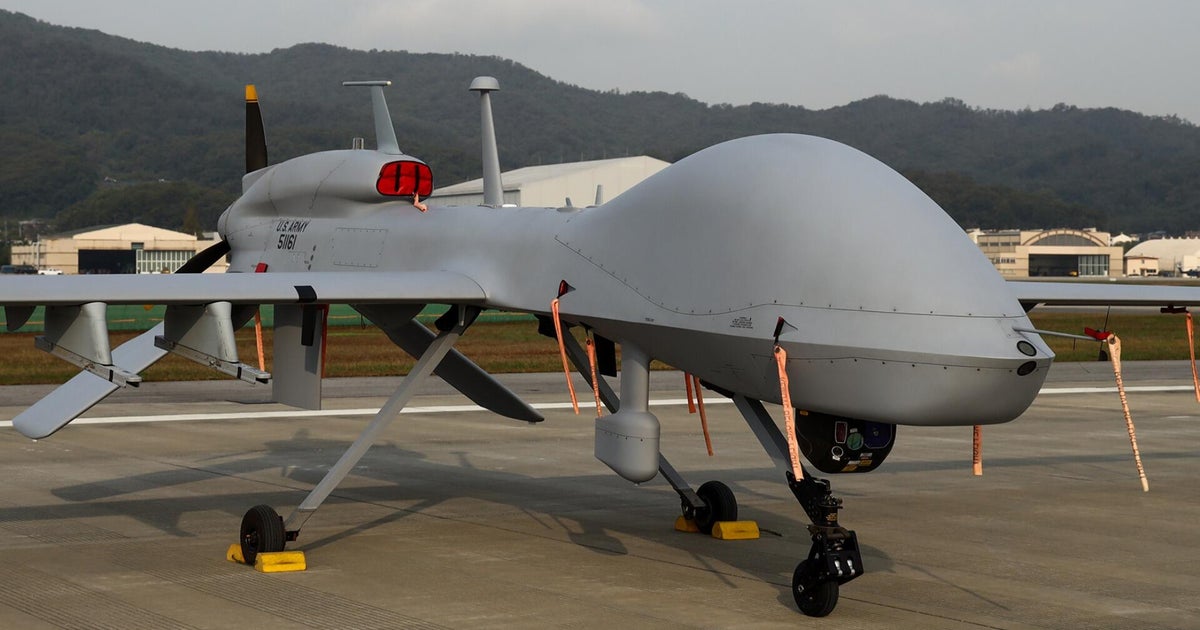
CBS News has learned that Iranian forces took down at least two American MQ-1 unmanned aircraft in recent days, according to U.S. officials familiar with the incident. CBS News' James LaPorta has more.
Places named in this report: Iran
Exact coordinates
iran: 32.430, 53.690
Read it at CBS News See this on the map
What might happen next? AI-generated
These scenarios are written by an AI language model from the headline and summary above. They are not predictions from the newsroom, and they are not evidence of anything. Every one is given a deadline and checked against later coverage, and the score is published on the ledger — including the ones that miss.
-
Confirmed 35% Measured Diplomatic De-escalation
The U.S. decides to avoid a direct kinetic response to prevent further regional instability. Instead, Washington pressures a third party, potentially an EU nation, to initiate direct, private talks with Tehran. This signals a shift from military confrontation to political negotiation. The immediate aftermath sees a temporary reduction in high-level military posturing by both sides.
Watch for: A specific diplomatic envoy, such as the EU High Representative, announces bilateral meetings with Iranian counterparts. · US State Department issues a statement emphasizing 'dialogue over escalation' in response to the downed drones.
-
Did not happen 30% Targeted Kinetic Retaliation
In response to the loss of MQ-1 drones, the U.S. executes a limited, precise military strike against an identified Iranian command or control node within Iran. This is a clear 'punishment' action designed to send a message without triggering a full-scale war. The goal is to deter future incidents while demonstrating the capacity for retaliation.
Watch for: U.S. Department of Defense releases a public statement confirming an 'interdiction mission' targeting Iranian infrastructure. · Iranian state media broadcasts a response detailing defensive measures taken after the alleged U.S. strike.
-
Did not happen 20% Diplomatic Freeze and Stalemate
Both Washington and Tehran react to the incident with public condemnation but choose to remain in strategic ambiguity. No immediate military action is taken by the U.S, and Iran does not claim a broader military campaign. Instead, the incident becomes a talking point in regional summits, leading to a period where tensions simmer beneath the surface without a clear catalyst for change.
Watch for: A major regional security forum, like the GCC summit, issues a joint statement explicitly addressing 'drone incidents' without naming actors. · US Ambassador to Iran maintains a public, non-committal stance during scheduled press briefings.
-
Did not happen 15% Unforeseen Regional Spillover (Counter-Trajectory)
Contrary to the expected U.S.-Iran confrontation, the incident triggers an immediate, panicked response from a third-party regional proxy group (e.g., Hezbollah or a specific militia) that interprets the incident as a sign of weakness. This proxy group launches an unprovoked, small-scale attack on a U.S. facility in a neighboring country, forcing the U.S to respond regionally instead of focusing solely on Iran.
Watch for: A specific, non-Iranian proxy militia launches an attack against a U.S. installation in Lebanon or Iraq. · U.S. military assets are deployed to the disputed border area between the proxy nation and the US presence.
Generated by llama
on 2026-09-18. Checked against later coverage after 2026-09-25.
See how these forecasts score.
ForecastGeo shows the headline and summary published by the newsroom and places the story on a map. The full article lives at the source.