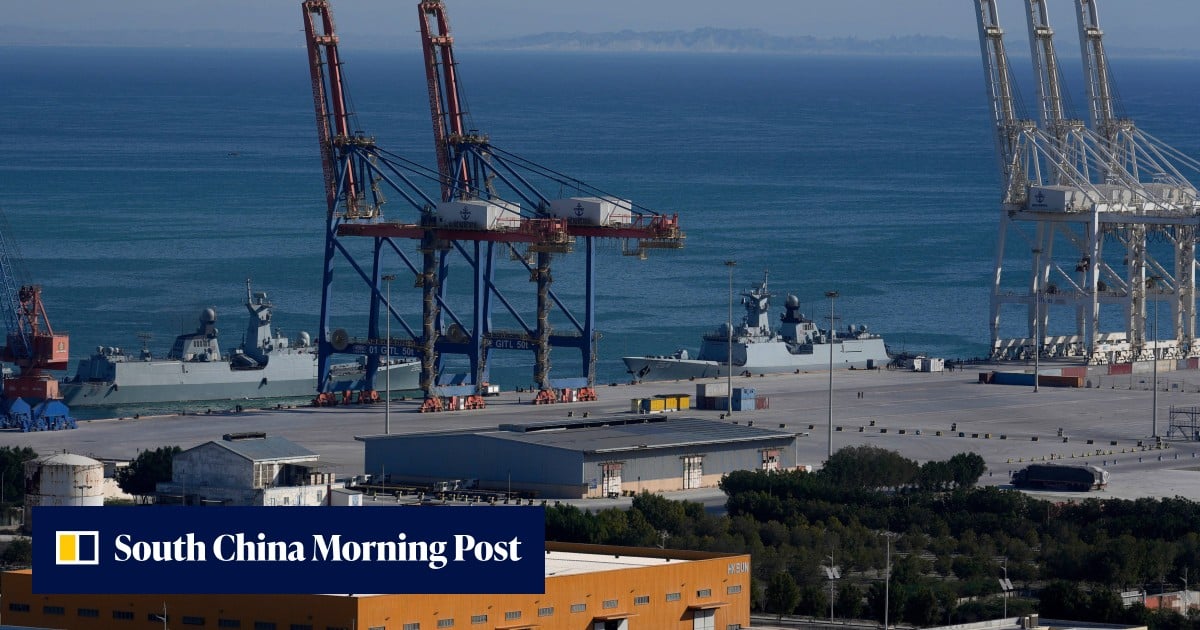
India, Pakistan summon each other’s diplomats after naval ships collide in Arabian Sea
New Delhi and Islamabad summoned each other’s top diplomats to lodge strong protests after an Indian and a Pakistani naval vessel collided in international waters. India’s foreign ministry said that it had called in Pakistan’s senior envoy to formally register a strong objection over what it said was “unacceptable and unprofessional conduct” of Pakistani naval units that led to a collision with an Indian warship. Pakistan’s foreign ministry also said it had officially called upon the charge...
Places named in this report: Delhi
Exact coordinates
delhi: 28.700, 77.100
Read it at South China Morning Post See this on the map
What might happen next? AI-generated
These scenarios are written by an AI language model from the headline and summary above. They are not predictions from the newsroom, and they are not evidence of anything. Every one is given a deadline and checked against later coverage, and the score is published on the ledger — including the ones that miss.
-
Unresolved 45% Immediate De-escalation
Both foreign ministries issue joint statements acknowledging the accident was due to poor seamanship rather than hostile intent. High-level military commanders from both nations initiate direct communication channels to prevent further miscalculation. This allows the immediate diplomatic pressure to ease and focus on maritime safety protocols.
Watch for: Both New Delhi and Islamabad release joint statements acknowledging 'navigational error' in the collision · Joint ministerial briefing held by both countries' defense attachés
-
Unresolved 30% Diplomatic Confrontation
The diplomatic exchanges intensify, with official letters demanding specific punitive action against the responsible naval personnel. Both sides refuse to apologize, leading to a public diplomatic standoff. This could involve a highly visible meeting with a third-party mediator like the US or China.
Watch for: A senior diplomat from the US or China is publicly invited to mediate the naval dispute · India or Pakistan issues a detailed public indictment of the other's naval operational standards
-
Unresolved 15% Limited Escalation
While diplomatic protests are lodged, one nation responds with a limited military demonstration, such as increasing naval patrols in the area of the collision or conducting a large-scale air exercise near the Arabian Sea. This serves as a subtle 'warning' without initiating kinetic combat. This moves the conflict from the diplomatic table to the operational front.
Watch for: India announces a 72-hour heightened alert in the Arabian Sea sector · Pakistan conducts a live-fire naval exercise in the region
-
Unresolved 10% Unforeseen Accidental Escalation (Counter-Intuitive)
In a highly improbable turn, a secondary, unrelated naval maneuver by one side (e.g., an aggressive sonar sweep) is misinterpreted by the opposing ship's AI or crew. This misinterpretation leads to an unplanned, minor engagement or exchange of warning shots, rapidly escalating the tension beyond the scope of the initial diplomatic dispute. This moves the conflict from a political spat to an immediate military confrontation.
Watch for: A news report details a 'minor exchange of warning shots' between naval vessels · The Indian or Pakistani Navy issues a public statement regarding 'unidentified aggressive maneuvers' by the other
Generated by llama
on 2026-09-17. Checked against later coverage after 2026-09-19.
See how these forecasts score.
ForecastGeo shows the headline and summary published by the newsroom and places the story on a map. The full article lives at the source.