How China is seeking to transform the meaning of great power
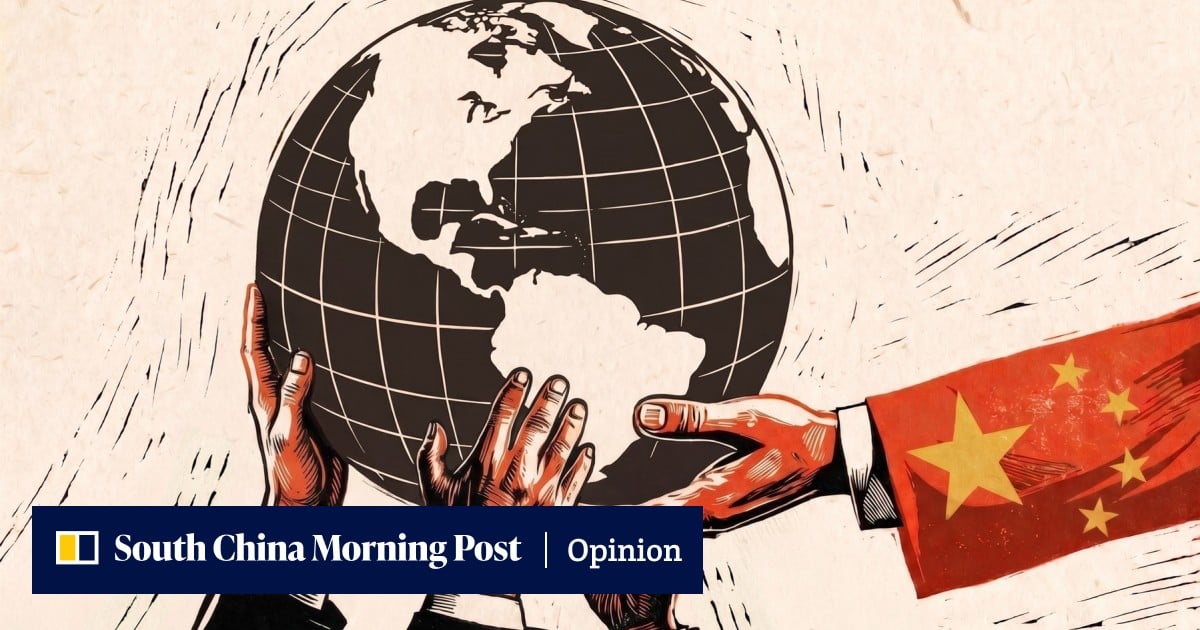
As China has emerged as a peer competitor to the United States in many areas, an increasingly familiar question is whether it has become a superpower. The question, however, may rest on a definition of power that belongs to another era. China possesses many attributes traditionally associated with great powers: a large population, vast territory, a major economy, advanced technological capabilities and growing military strength. Yet Beijing describes China as a “major country” rather than a...
Where: China, United States, Beijing
Exact coordinates
china: 35.860, 104.200
united states: 37.090, -95.710
beijing: 39.900, 116.400
Read it at South China Morning Post See this on the map
27 outlets covered this story — see how their framing differs
What might happen next? AI-generated
These scenarios are written by an AI language model from the headline and summary above. They are not predictions from the newsroom, and they are not evidence of anything. Every one is given a deadline and checked against later coverage, and the score is published on the ledger — including the ones that miss.
-
Awaiting deadline 30% Strategic De-escalation through Dialogue
Facing global economic pressure regarding its 'major country' status, Beijing pivots to international diplomacy to solidify its image as a responsible global leader. This involves an accelerated series of bilateral meetings aimed at framing China's current trajectory as mutually beneficial rather than confrontational.
Watch for: China announces a high-level economic summit with a G7 nation within 14 days. · Beijing issues a statement clarifying its 'major country' status as 'responsible global stakeholder' in a state media broadcast.
-
Awaiting deadline 35% Increased Assertiveness and Sovereignty Claims
Beijing decides that traditional Western definitions of 'superpower' are irrelevant and uses its growing technological and military strength to aggressively push back against perceived foreign interference. This manifests as a tangible assertion of power in a disputed maritime or territorial zone.
Watch for: China increases naval presence or conducts a large-scale military exercise near a contested international waterway. · A named official from the Chinese Ministry of Foreign Affairs issues a direct rebuttal to a Western 'great power' assessment.
-
Awaiting deadline 25% Internal Policy Shift to 'National Resilience' Focus
Rather than focusing on external great power competition, China prioritizes domestic stability by announcing sweeping internal economic and social reforms. The focus shifts entirely to bolstering the domestic supply chain and achieving self-sufficiency, effectively sidestepping the geopolitical debate for a period.
Watch for: The Chinese National People's Congress passes legislation prioritizing domestic technological autonomy. · A major state-run bank announces a substantial, targeted stimulus package aimed at domestic industry resilience.
-
Awaiting deadline 10% Unexpected Western Recognition/Accommodation
Counter to the narrative of growing competition, a significant Western power unexpectedly concedes to a Chinese demand or recognizes a specific PRC policy framework. This suggests a pragmatic realignment where the perceived gap between 'major country' and 'superpower' is bridged by political compromise.
Watch for: A major Western legislative body passes a resolution explicitly acknowledging China's regional influence or technological achievements. · The U.S. Department of State issues a statement citing 'constructive engagement' in a specific, previously contested domain involving China.
Generated by llama
on 2026-09-26. Checked against later coverage after 2026-10-06.
See how these forecasts score.
ForecastGeo shows the headline and summary published by the newsroom and places the story on a map. The full article lives at the source.