Hoover Dam submerged a town in 1935; Lake Mead is revealing it again
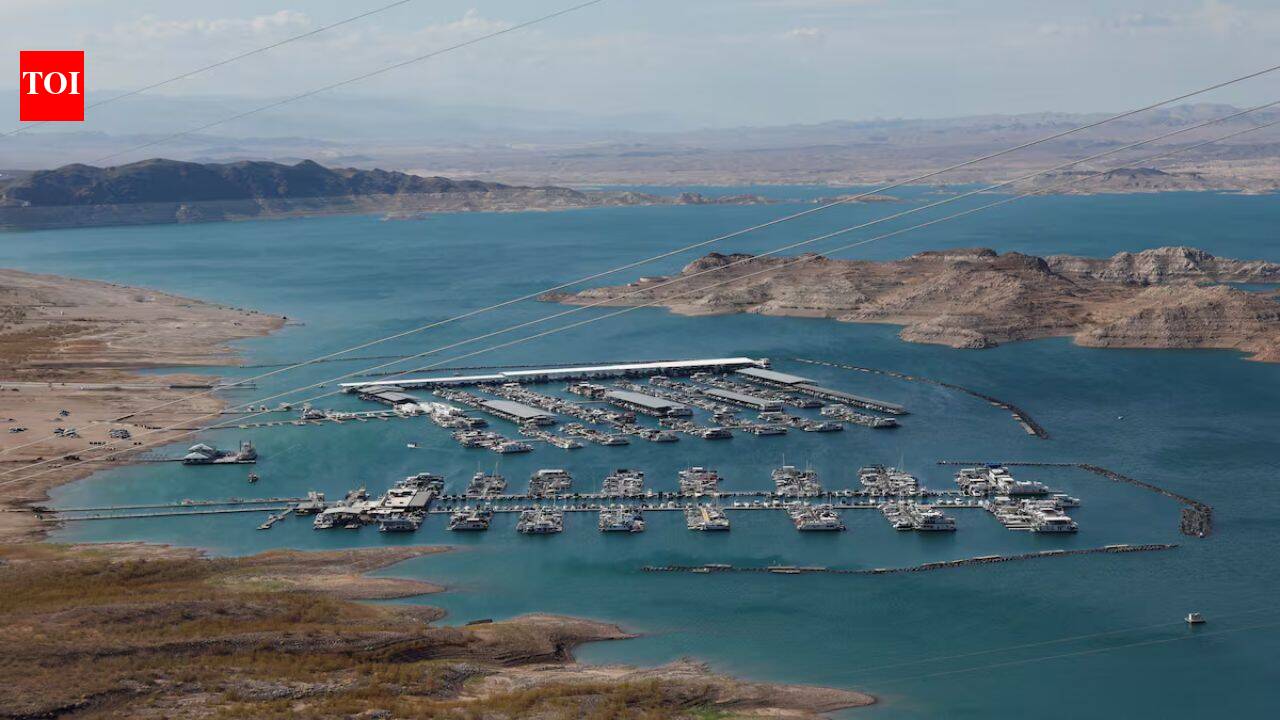
The receding waters of Lake Mead have unveiled the eerie remnants of St. Thomas, a ghost town in Nevada. Originally a thriving Mormon settlement founded in 1865, it was swallowed by rising waters after the Hoover Dam was built in 1938. Now, the lakebed displays its foundations, allowing history enthusiasts a rare opportunity to connect with a bygone era of agricultural significance.
Places named in this report: Nevada
Exact coordinates
nevada: 38.800, -116.420
Read it at The Times of India See this on the map
What might happen next? AI-generated
These scenarios are written by an AI language model from the headline and summary above. They are not predictions from the newsroom, and they are not evidence of anything. Every one is given a deadline and checked against later coverage, and the score is published on the ledger — including the ones that miss.
-
Did not happen 45% Increased Tourism and Preservation Push
The discovery of St. Thomas's foundations triggers immediate local and state interest in historical preservation. Regulatory bodies quickly establish a designated archaeological site, potentially limiting public access to the most sensitive areas.
Watch for: Nevada State Historic Preservation Office announces emergency designation for the St. Thomas site · Local tourism board releases a new, officially sanctioned guided tour schedule for the lakebed
-
Confirmed 30% Water Management Crisis Escalation
The receding water levels provide a visible, tangible metric of drought severity, leading to an emergency meeting regarding downstream allocation. Federal agencies issue a new, restrictive water use directive impacting regional agriculture.
Watch for: Bureau of Reclamation issues a formal 'Level 3' shortage advisory for the Southwest · A press conference is held by the Nevada Governor announcing mandatory irrigation restrictions
-
Did not happen 15% Private Salvage/Commercial Interest Dominance
A private developer or salvage company bypasses initial regulatory hurdles by offering a lucrative, fast-tracked contract to document or remove artifacts. This leads to immediate conflict between heritage groups and the commercial entity.
Watch for: A major construction firm signs a public contract for 'Lake Mead Archaeological Survey' with a start date within 14 days · Local historians issue a public protest against the proposed commercial extraction of lakebed materials
-
Did not happen 10% Submerged Discovery Re-evaluation (Counter-Intuitive)
Instead of revealing historical artifacts, new sonar or geological surveys reveal that the current low-water erosion is actually revealing a previously unknown, stable, and untapped aquifer beneath the exposed town site. Water management priorities immediately shift away from drought mitigation toward resource exploitation.
Watch for: US Geological Survey publishes preliminary data indicating subterranean water flow at the St. Thomas coordinates · State engineers announce a feasibility study for a new deep-well extraction point near the exposed town foundations
Generated by gemma-4-E4B-it-qat-UD-Q4_K_XL.gguf
on 2026-08-10. Checked against later coverage after 2026-08-24.
See how these forecasts score.
ForecastGeo shows the headline and summary published by the newsroom and places the story on a map. The full article lives at the source.