Heatstroke fears rise as Japan quake victims face El Nino weather without power, water
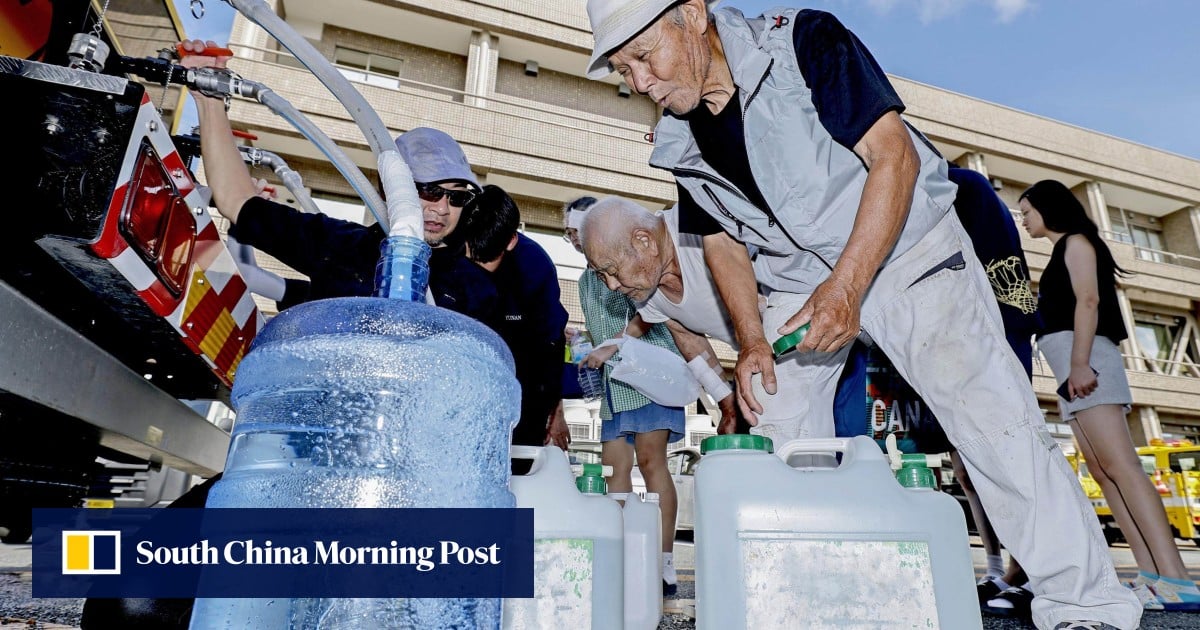
The 7.1-magnitude earthquake that struck southern Japan toppled houses and split open streets in the small city of Yatsushiro, but town official Akio Matsushita is most worried about the invisible threats from the lack of water and power amid the punishing summer heat. Many of the port city’s roughly 58,000 households were still without running water or power on Thursday, two days since the quake hit Kumamoto prefecture, killing at least 17 people. Matsushita, who is helping lead relief...
Where: Japan
Exact coordinates
japan: 36.200, 138.250
Read it at South China Morning Post See this on the map
What might happen next? AI-generated
These scenarios are written by an AI language model from the headline and summary above. They are not predictions from the newsroom, and they are not evidence of anything. Every one is given a deadline and checked against later coverage, and the score is published on the ledger — including the ones that miss.
-
Unresolved 50% Rapid Infrastructure Recovery
Emergency response teams rapidly deploy mobile power and water units, prioritizing the most vulnerable neighborhoods. Local government secures immediate, high-level aid from neighboring prefectures and national agencies, mitigating the immediate health crisis.
Watch for: The Ministry of Internal Affairs and Communications announces that 80% of Yatsushiro households have regained electricity and water access. · A televised press conference by Governor of Kumamoto highlights the successful coordination between private utility companies and local fire departments.
-
Unresolved 25% Public Health Crisis Escalation
The combination of heat, lack of sanitation, and compromised infrastructure leads to a significant public health event. Authorities struggle to manage cases of heatstroke and waterborne illnesses, requiring external medical support.
Watch for: The Kumamoto prefectural government issues an emergency appeal for mobile medical units due to 'unprecedented surge in heat-related illnesses'. · A report from the Japanese Ministry of Health confirms the establishment of temporary field hospitals in Yatsushiro.
-
Unresolved 15% Resource Scarcity and Local Strain
Due to El Nino and damaged regional grids, external aid proves insufficient or delayed. Local water rationing becomes stricter, leading to localized civil unrest or heightened community tension over remaining resources.
Watch for: Local media reports on scheduled 'emergency water rationing' being implemented across multiple districts of Yatsushiro. · A local council meeting minutes detail increased police patrols in areas facing severe water shortages.
-
Unresolved 10% Counter-intuitive Technological Pivot (Less Likely)
Instead of relying on slow utility restoration, a private tech/NGO consortium arrives to implement decentralized, off-grid solutions. They install solar-powered filtration and micro-grids within 48 hours to bypass damaged main lines.
Watch for: A press release from a non-government organization (e.g., a robotics or sustainable energy startup) announces the deployment of 'emergency modular micro-grids' in Yatsushiro. · The local news reports that utility companies are temporarily bypassed by private 'rapid deployment solutions'.
Generated by gemma-4-E4B-it-qat-UD-Q4_K_XL.gguf
on 2026-07-30. Checked against later coverage after 2026-08-06.
See how these forecasts score.
ForecastGeo shows the headline and summary published by the newsroom and places the story on a map. The full article lives at the source.