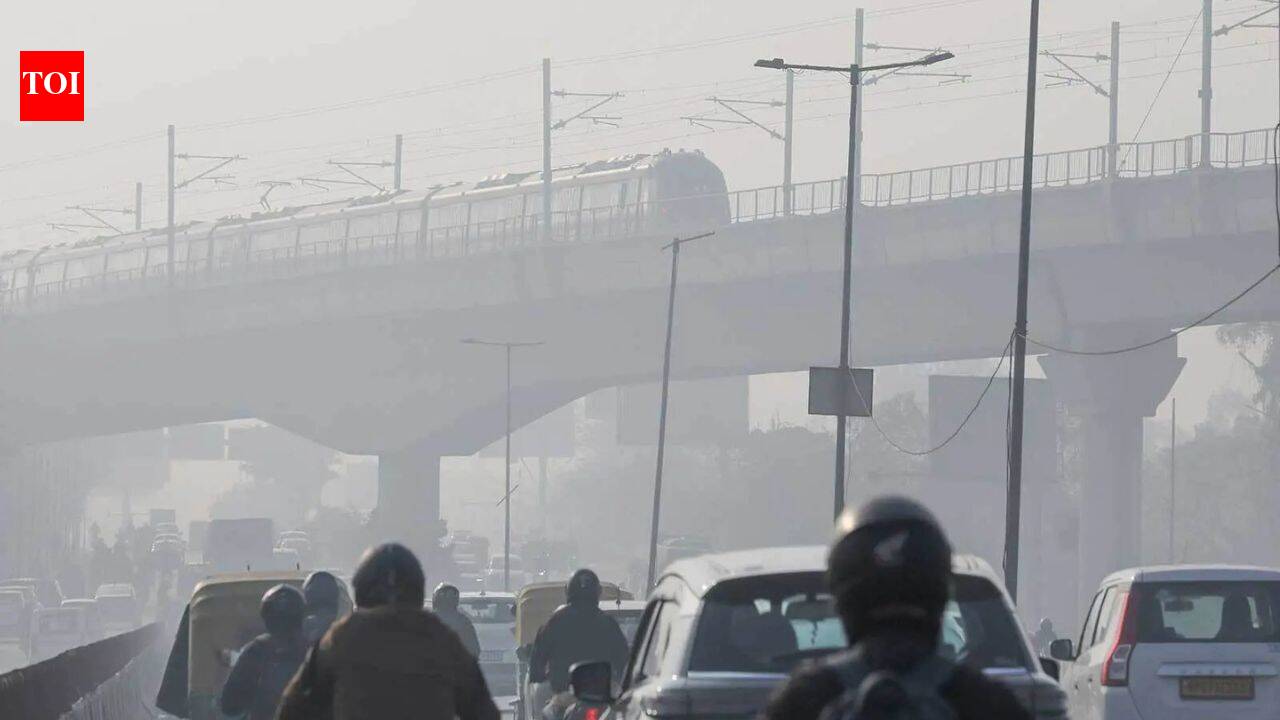
Gujarat to global: How idea to fix pollution has lessons for Delhi
An Indian emissions trading scheme is now inspiring global environmental solutions. This innovative approach incentivizes industries to reduce pollution effectively. Gujarat's successful pilot program demonstrated significant emission reductions and cost savings. The scheme is now expanding across India and attracting international interest. This model offers a competitive advantage for industries embracing cleaner practices.
Places named in this report: Delhi
Exact coordinates
delhi: 28.700, 77.100
Read it at The Times of India See this on the map
What might happen next? AI-generated
These scenarios are written by an AI language model from the headline and summary above. They are not predictions from the newsroom, and they are not evidence of anything. Every one is given a deadline and checked against later coverage, and the score is published on the ledger — including the ones that miss.
-
Unresolved 35% Rapid Regulatory Adoption
The central government quickly streamlines bureaucracy to allow Gujarat’s model to be mandated in a high-pollution state like Delhi. Key industry leaders publicly endorse the scheme, viewing it as a long-term cost-saver. This rapid uptake signals a strong political will to push environmental change quickly.
Watch for: The Ministry of Environment announces a deadline for state-level implementation of the emissions trading scheme. · The Delhi Pollution Control Committee publishes an official guideline adopting the Gujarat model.
-
Unresolved 30% International Partnership Formation
A foreign multinational corporation (MNC) interested in sustainable manufacturing signs a memorandum of understanding with a state government. This partnership involves technology transfer and investment into Gujarat’s infrastructure, validating the scheme on a global scale. This validates the model's competitiveness internationally.
Watch for: The Ministry of External Affairs announces a bilateral agreement with a specific EU or US entity regarding carbon credit exchange. · A major international industry publication runs a feature on the 'Gujarat Model' being adopted by a foreign entity.
-
Unresolved 20% Skepticism and Stalling
Political resistance from entrenched industrial lobbies leads to a public delay in the scheme's expansion. Opposing industry bodies release a formal white paper questioning the scheme's long-term economic viability. This resistance forces a re-evaluation of the scheme's rollout timeline.
Watch for: The National Chamber of Industry releases a formal statement calling for a review of the emissions trading mechanism. · A high-level parliamentary committee announces an inquiry into the scheme's initial economic projections.
-
Unresolved 15% Localized Niche Success (Counter-Trajectory)
Instead of broad national expansion, the Gujarat model is adopted by only one very small, isolated industrial zone. This is a niche success that fails to gain traction or influence policy debates nationally. The initial international buzz fizzles out without broader legislative backing.
Watch for: The Ministry of Corporate Affairs issues a press release detailing the expansion only to a single industrial cluster in Gujarat. · A prominent national economic news analyst publishes a column arguing that the scheme lacks scalability beyond its initial pilot zone.
Generated by llama
on 2026-09-16. Checked against later coverage after 2026-09-23.
See how these forecasts score.
ForecastGeo shows the headline and summary published by the newsroom and places the story on a map. The full article lives at the source.