Growing impact of extreme heat on informal workers in Asia's cities
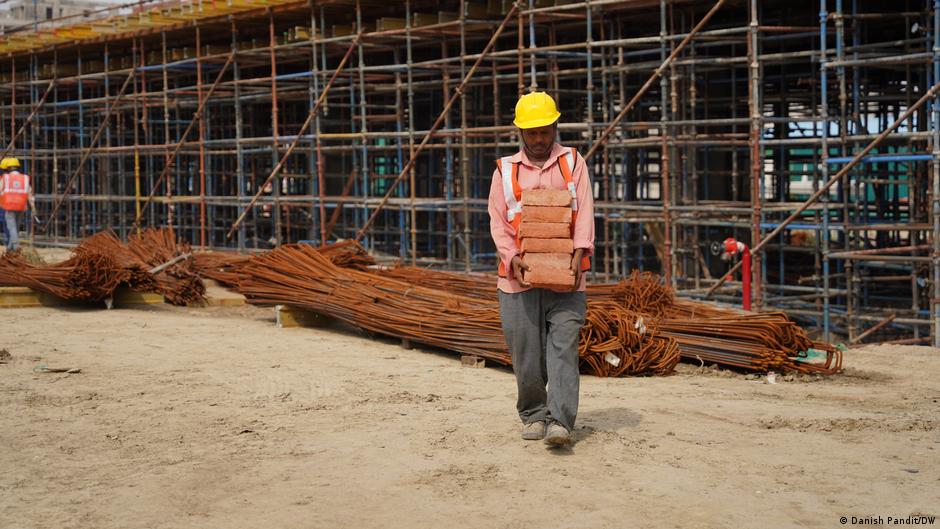
When temperatures soar across Asia's cities, informal workers face a choice: risk their health or lose their income. For many, the effects don't end when the workday is over.
Places named in this report: Delhi
Exact coordinates
delhi: 28.700, 77.100
Read it at Deutsche Welle See this on the map
What might happen next? AI-generated
These scenarios are written by an AI language model from the headline and summary above. They are not predictions from the newsroom, and they are not evidence of anything. Every one is given a deadline and checked against later coverage, and the score is published on the ledger — including the ones that miss.
-
Unresolved 35% Immediate Labor Reform Adoption
Facing international scrutiny and mounting public health crises, several major Asian metropolitan governments implement rapid regulatory changes to protect informal sectors. This includes subsidized cooling stations and mandated rest intervals during peak heat.
Watch for: The Ministry of Labor in [Specific Asian Capital] publishes a new 'Heat Vulnerability Mitigation Act'. · A coalition of labor unions announces a partnership with the municipal government to monitor heat safety compliance.
-
Unresolved 30% Localized Social Unrest
In densely populated, under-resourced areas, the inability to earn a living during extreme heat triggers localized protests. These demonstrations focus specifically on the government's failure to provide basic infrastructure protection.
Watch for: A major public health clinic reports a 40% spike in heatstroke admissions traced to informal worker neighborhoods. · Local police issue warnings regarding 'unauthorized gatherings' in specific street-side marketplaces.
-
Unresolved 20% Technological Adaptation & Privatization
Instead of government intervention, private tech companies begin offering 'heat-shield' IoT solutions or subsidized, climate-controlled micro-hubs to informal vendors. This creates a tiered labor system where only those who can afford tech solutions are protected.
Watch for: A venture capital firm announces a $50M investment in an 'Agri-Climate Tech' startup specializing in urban shade solutions. · Informal worker associations begin negotiating directly with private tech providers for subsidized cooling equipment.
-
Unresolved 15% Global Supply Chain Shifting
Major multinational corporations operating in these Asian cities begin actively lobbying for the relocation of labor-intensive, high-risk supply chain activities to cooler climates or automated facilities, bypassing the informal economy entirely.
Watch for: A Fortune 100 company announces the closure of its primary outdoor assembly line in [Specific Asian Port City]. · An international trade body releases a report linking extreme heat to 'labor risk premiums' in regional export markets.
Generated by gemma-4-E4B-it-qat-UD-Q4_K_XL.gguf
on 2026-08-03. Checked against later coverage after 2026-08-17.
See how these forecasts score.
ForecastGeo shows the headline and summary published by the newsroom and places the story on a map. The full article lives at the source.