Government spending on education below Unesco's 15% standard
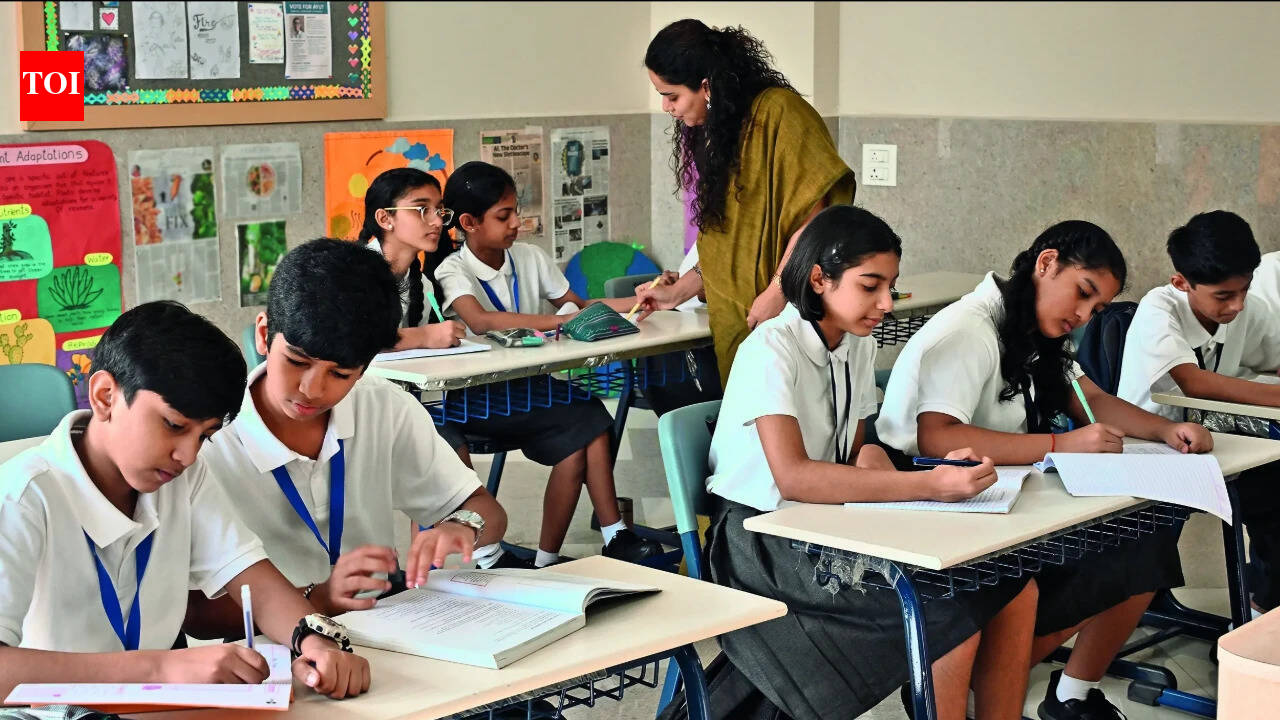
India's education funding aligns with GDP standards but falls short of public spending goals. Completion rates for secondary schools lag behind national and UNESCO guidelines. This funding pattern emerges as countries shift focus from education financial targets. India's extensive education initiatives benefit millions of students, yet the sector continues to grapple with persistent challenges despite increased program deployment.
Places named in this report: India
Exact coordinates
india: 20.590, 78.960
Read it at The Times of India See this on the map
What might happen next? AI-generated
These scenarios are written by an AI language model from the headline and summary above. They are not predictions from the newsroom, and they are not evidence of anything. Every one is given a deadline and checked against later coverage, and the score is published on the ledger — including the ones that miss.
-
Unresolved 40% Immediate Budget Revision Push
Facing renewed domestic pressure regarding educational deficits, the ruling party announces an immediate, albeit targeted, reallocation of existing non-defense capital funds to bolster secondary school completion programs. This is framed as a mid-year corrective measure rather than a full policy overhaul.
Watch for: A Ministry of Finance statement releases a supplementary budget allocation specifically earmarked for secondary education infrastructure. · The Finance Minister announces a revised timeline for the next legislative budget review.
-
Unresolved 30% Focus Shift to Digital Infrastructure
The government formally accepts the current spending constraints but pivots its strategy to heavily subsidize remote learning and digital content delivery to bypass physical infrastructure bottlenecks. This reduces immediate reliance on physical capital spending.
Watch for: The Ministry of Education launches a nationwide 'Digital Classroom Initiative' with a specific 20% funding increase. · A major national telecom operator announces a subsidized data package for students via government partnership.
-
Unresolved 20% Civil Society Advocacy Surge
Unable to secure immediate governmental action, major teacher unions and advocacy groups organize high-profile, non-violent protests in state capitals. The resulting media focus forces a high-level administrative response.
Watch for: A national press conference is held by a major education union demanding a specific legislative amendment regarding funding mandates. · The Education Secretary issues a public acknowledgment of the funding shortfall in a press briefing.
-
Unresolved 10% Delayed/Stalled Reform (Counter-Intuitive)
Political inertia prevails as the ruling coalition prioritizes macroeconomic stability over sector-specific funding increases, leading to a formal deferral of the completion rate review until the next fiscal year. This signals continued prioritization of other national economic indicators.
Watch for: The National Planning Commission releases a report stating that detailed secondary school metrics will be reviewed in the 'FY+1' cycle. · No new departmental budgetary announcements are made by the Ministry of Education in the current quarter.
Generated by gemma-4-E4B-it-qat-UD-Q4_K_XL.gguf
on 2026-08-08. Checked against later coverage after 2026-08-18.
See how these forecasts score.
ForecastGeo shows the headline and summary published by the newsroom and places the story on a map. The full article lives at the source.