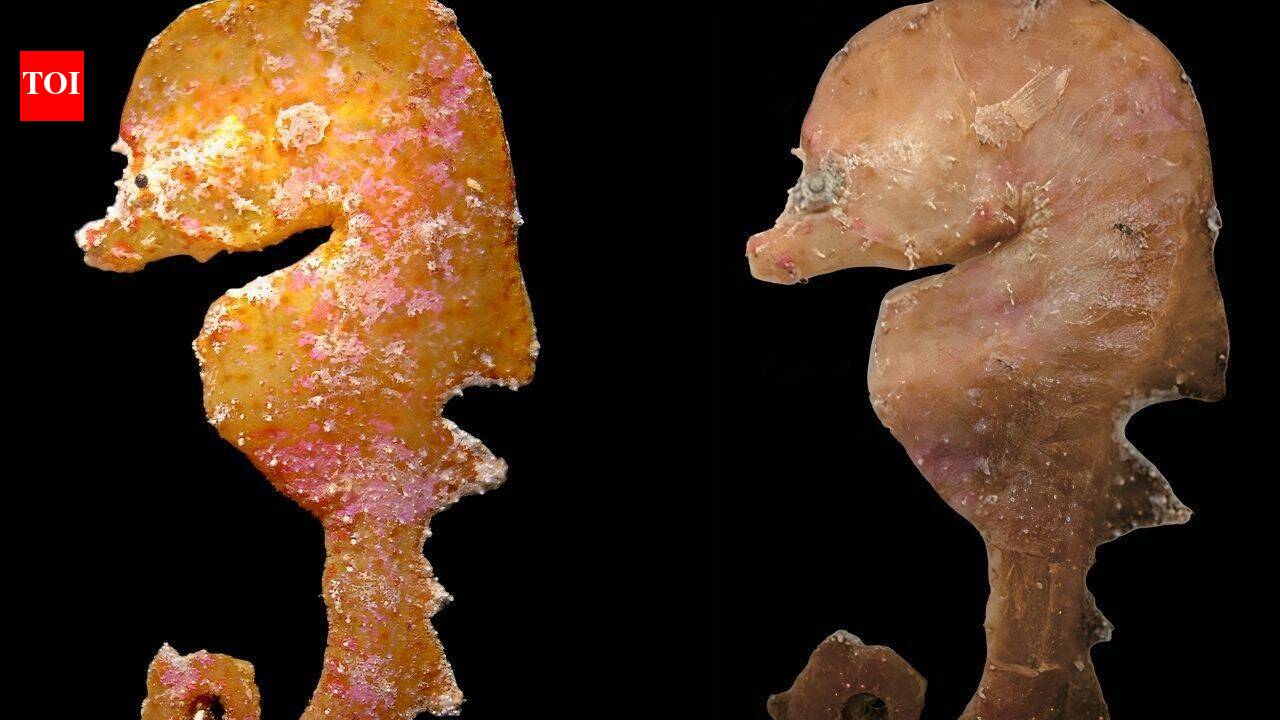
Fish misidentified in 2006 recognised as new species 20 years later
A newly identified species of deep-reef fish, collected back in 2006, has intrigued scientists after spending nearly twenty years in a museum's vault due to a mix-up. A thorough re-examination unveiled unique physical traits that highlight the significance of museum collections in preserving and unveiling hidden biodiversity. This find serves as a reminder of the untapped potential awaiting discovery within scientific archives.
Places named in this report: India
Exact coordinates
india: 20.590, 78.960
Read it at The Times of India See this on the map
What might happen next? AI-generated
These scenarios are written by an AI language model from the headline and summary above. They are not predictions from the newsroom, and they are not evidence of anything. Every one is given a deadline and checked against later coverage, and the score is published on the ledger — including the ones that miss.
-
Unresolved 60% Routine Scientific Publication
The discovery will be published in a major peer-reviewed marine biology journal, leading to standard scientific discussion. This will reinforce the value of museum curation but will have no significant public or policy impact.
Watch for: A peer-reviewed article titled 'Re-evaluating Deep-Reef Ichthyofauna: The [New Species Name]' is published in Nature or Science. · The museum hosting the specimen issues a press release detailing the taxonomic revision.
-
Unresolved 25% Conservation Policy Impact
The identification of a previously unknown, unique species will trigger heightened international interest in its habitat. Governments may begin drafting new marine protected areas to safeguard the reef ecosystem.
Watch for: An international body like IUCN issues an alert regarding the critical habitat of the newly identified species. · A national environmental agency announces a moratorium on deep-sea resource extraction in the relevant region.
-
Unresolved 10% Museum Digitization Initiative
The success of this find will spur a global movement to digitize and catalog decades of museum specimens that are currently overlooked. This will lead to significant funding increases for natural history institutions.
Watch for: A major international grant program, such as the UNESCO Science Fund, is announced specifically to digitize museum archives. · A consortium of global museums signs a digital preservation partnership agreement.
-
Unresolved 5% Contrarian Commercial Exploitation
Counter to the purely scientific narrative, a private biotech firm, alerted to the unique genetic makeup of the fish, attempts to patent or commercially exploit its unique biological traits before conservation efforts can solidify.
Watch for: A patent application is filed by a private corporation referencing the unique genomic markers of the newly identified species. · A high-profile environmental activist issues a public statement criticizing a corporation for seeking to 'mine' the fish's DNA.
Generated by gemma-4-E4B-it-qat-UD-Q4_K_XL.gguf
on 2026-08-05. Checked against later coverage after 2026-08-19.
See how these forecasts score.
ForecastGeo shows the headline and summary published by the newsroom and places the story on a map. The full article lives at the source.