EU aims to build AI gigafactories of its own
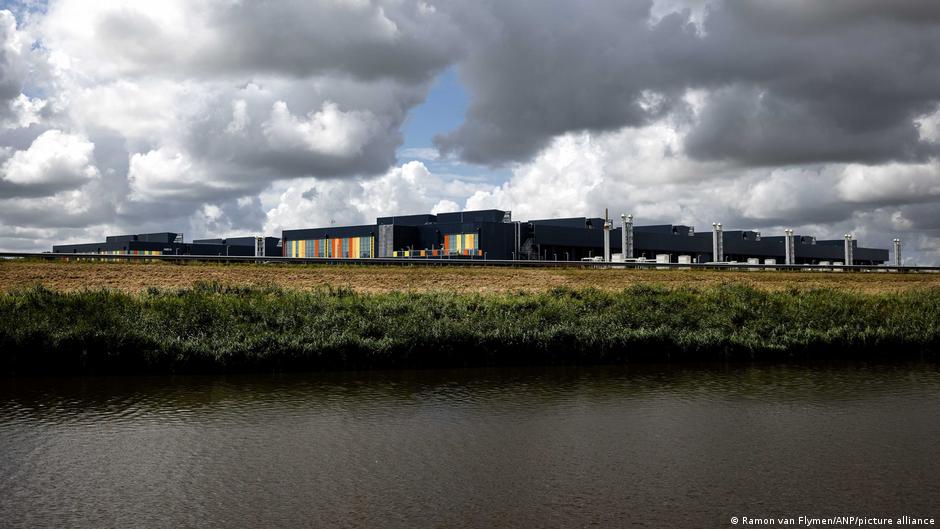
The EU has unveiled a plan to raise state and private funds to hyperscale AI capabilities and gain independence from non-European governments. The plan calls for the construction of seven new sites across the bloc.
Where: China, Spain, Germany, Finland
Exact coordinates
china: 35.860, 104.200
spain: 40.460, -3.750
germany: 51.170, 10.450
finland: 61.920, 25.750
Read it at Deutsche Welle See this on the map
What might happen next? AI-generated
These scenarios are written by an AI language model from the headline and summary above. They are not predictions from the newsroom, and they are not evidence of anything. Every one is given a deadline and checked against later coverage, and the score is published on the ledger — including the ones that miss.
-
Unresolved 40% Successful Regional Integration
The EU successfully coordinates funding and regulatory frameworks across member states. The construction begins on several sites, leading to a measurable increase in EU-owned AI compute capacity. This solidifies the EU's status as a major AI power, reducing reliance on US and Chinese providers.
Watch for: European Commission announces the first major EU-funded AI gigafactory construction milestone in 'X' member states. · A specific EU regulatory body publishes a standardized certification for AI hardware manufactured within the new EU facilities.
-
Unresolved 35% Geopolitical Competition & Fragmentation
National industrial policies clash with the overarching EU plan, leading to fragmented implementation. Member states prioritize domestic security or existing corporate relationships, slowing progress. The EU may end up with seven sites, but they operate under seven different regulatory standards.
Watch for: A specific national government, like Germany or France, publicly announces a major industrial subsidy that bypasses the centralized EU funding mechanism for AI hardware. · The European Parliament passes a resolution expressing concern over uneven distribution of AI investment across member states.
-
Unresolved 15% Stalled Implementation due to Regulatory Hurdles
The complex interplay between national security concerns, environmental regulations (especially for energy-intensive AI training), and fragmented governance stalls the project. Political inertia and permitting delays slow the rollout to a crawl, leaving the EU still reliant on external suppliers.
Watch for: A major EU energy agency reports significant delays in securing the necessary power infrastructure permits for the first planned gigafactory site. · The European Commission issues a formal review identifying 'unforeseen cross-border bureaucratic bottlenecks' as the primary impediment to AI sovereignty.
-
Unresolved 10% Sudden US/China Technological Convergence
A breakthrough in a foundational AI architecture occurs globally that is instantly adopted by both major US and Chinese tech giants. This renders the race for sovereign EU hardware less critical, allowing the EU to pivot its funding toward specialized AI application development instead.
Watch for: A major US or Chinese tech firm announces a 'unified global standard' for a specific class of foundational AI model. · The EU's annual budget proposal shows a significant re-allocation of funds away from 'hardware construction' toward 'AI application research and deployment' in the following fiscal year.
Generated by gemma-4-E4B-it-qat-UD-Q4_K_XL.gguf
on 2026-07-30. Checked against later coverage after 2026-08-13.
See how these forecasts score.
ForecastGeo shows the headline and summary published by the newsroom and places the story on a map. The full article lives at the source.