Election 2026: Do young people understand the power of the youth vote?
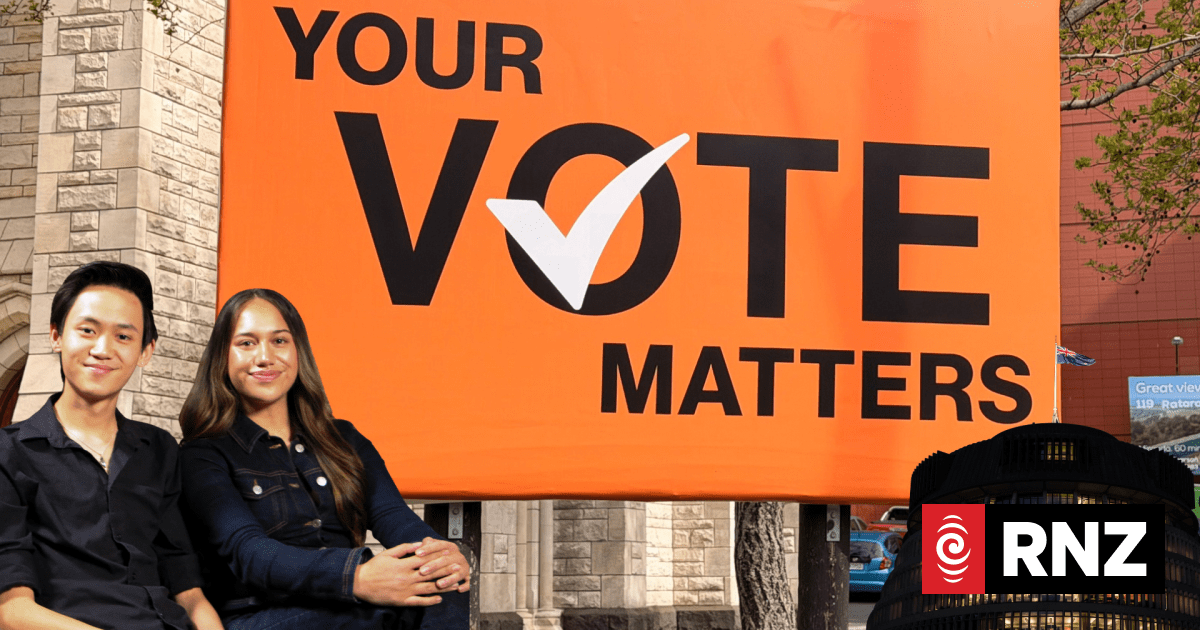
Young people aren't apathetic - but they need a reason to believe their vote matters, say two student leaders.
Where: New Zealand
Exact coordinates
new zealand: -40.900, 174.890
Read it at RNZ See this on the map
What might happen next? AI-generated
These scenarios are written by an AI language model from the headline and summary above. They are not predictions from the newsroom, and they are not evidence of anything. Every one is given a deadline and checked against later coverage, and the score is published on the ledger — including the ones that miss.
-
Awaiting deadline 45% Political Breakthrough
In response to the calls from student leaders, one major party quickly adopts a highly visible, specific policy aimed directly at youth concerns. This policy becomes the central focus of the upcoming campaign. The youth vote gains a measurable surge in engagement within the first week of the policy's announcement.
Watch for: Prime Minister's office issues a formal statement detailing a new 'Youth Empowerment Act' within 7 days. · Polling shows a statistically significant shift (e.g., >3 percentage points) in 18-25 age demographics favoring the proponent party.
-
Awaiting deadline 30% Campaign Disconnect
Despite the awareness of youth concerns, established political parties fail to articulate a compelling, distinct message tailored to this demographic. Young voters remain skeptical, resulting in low turnout among the 18-25 age group in the initial election polling cycle.
Watch for: A youth voter advocacy group releases a report criticizing the lack of specific policy promises from all major parties by Day 14. · Upcoming political advertising spend heavily features broad, non-specific messages targeting older demographics.
-
Awaiting deadline 15% Grassroots Mobilization Surge (Counter-Intuitive)
Instead of waiting for politicians to change, the student leaders and youth activists take control of the narrative. They organize a series of highly visible, localized 'vote-drive' events that generate viral social media momentum. This non-partisan pressure forces a sudden, unexpected change in party platforms by the end of the 14-day window.
Watch for: A coordinated stream of tweets or social media posts using a specific, unique hashtag reaches a threshold (e.g., 1 million uses) within 72 hours. · A major news outlet runs a front-page interview with a student leader demanding specific policy commitments.
-
Awaiting deadline 10% Political Apathy Solidified
The underlying apathy, rather than being a temporary hurdle, proves insurmountable in the near term. The student leaders' concerns are met with polite but dismissive responses from politicians, confirming the perception that their vote lacks meaningful leverage. Activism stalls after the initial push.
Watch for: A televised panel discussion featuring politicians concludes with all speakers attributing youth engagement issues to general economic headwinds, not systemic political failures. · A major youth-focused blog publishes a 'State of Youth Engagement' article reporting no concrete changes in political discourse.
Generated by llama
on 2026-10-06. Checked against later coverage after 2026-10-13.
See how these forecasts score.
ForecastGeo shows the headline and summary published by the newsroom and places the story on a map. The full article lives at the source.