East Coast farmers push back against pines in return to livestock farming
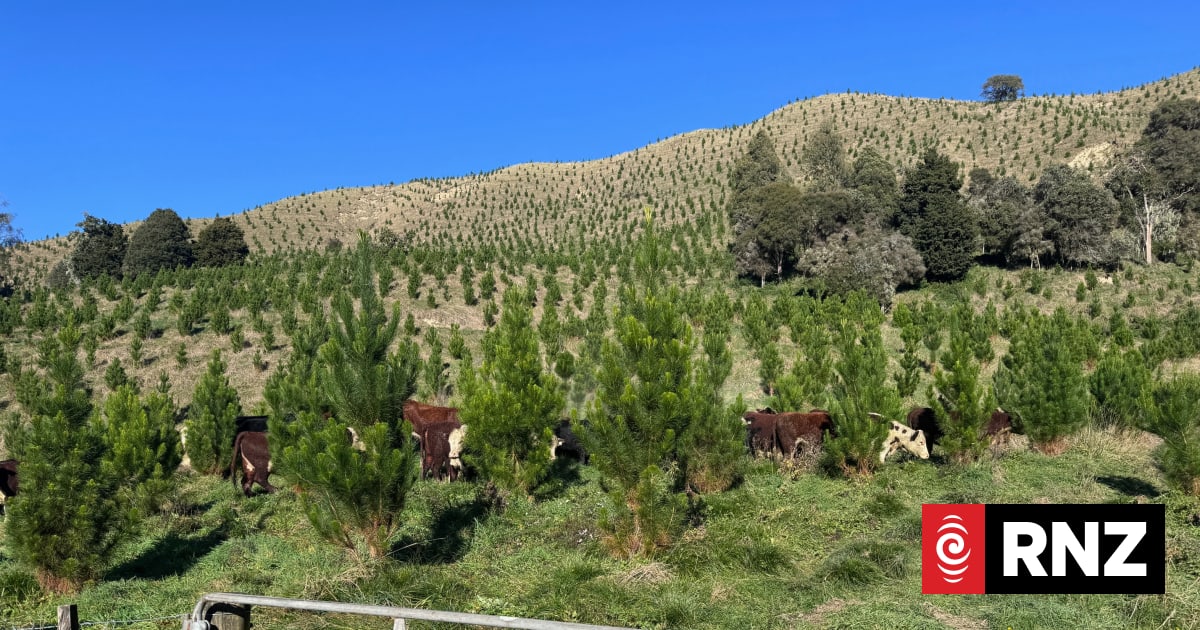
Two farmers are transforming a forest planted near Gisborne on an original sheep and beef farm four years ago back into a livestock farm.
Places named in this report: New Zealand
Exact coordinates
new zealand: -40.900, 174.890
Read it at RNZ See this on the map
What might happen next? AI-generated
These scenarios are written by an AI language model from the headline and summary above. They are not predictions from the newsroom, and they are not evidence of anything. Every one is given a deadline and checked against later coverage, and the score is published on the ledger — including the ones that miss.
-
Unresolved 50% Sustainable Land Conversion Success
The farmers successfully reintroduce appropriate grazing regimes, demonstrating viable economic and ecological returns from the former pine plantation. They secure regional sustainability grants to support their transition, becoming a local case study for land use change.
Watch for: Gisborne Regional Council publishes a report noting a 20% increase in local biodiversity index metrics at the farm site. · The farmers secure a government subsidy specifically earmarked for transitioning monoculture plantations to regenerative grazing.
-
Unresolved 30% Regulatory/Environmental Backlash
Environmental advocacy groups challenge the conversion, citing concerns over soil erosion or habitat loss despite the farmers' efforts. Local council imposes stricter runoff regulations, forcing the farmers to invest heavily in mitigation infrastructure.
Watch for: A petition is formally lodged with the Ministry for the Environment regarding nutrient runoff from the farm. · The farmers are required by the local authority to install a specific type of riparian planting buffer along a local waterway.
-
Unresolved 15% Economic Viability Failure & Reversion
The market price for livestock drops unexpectedly, or the conversion proves less profitable than anticipated, leading the farmers to reconsider their land use. They begin preliminary talks with an agribusiness interested in the original forestry potential.
Watch for: A local commercial forestry firm submits a formal inquiry to the farmers regarding the viability of resuming pine planting on the site. · The farmers announce a strategic pivot, indicating they are selling off some of their livestock assets.
-
Unresolved 5% Unforeseen Ecological Feedback Loop (Counter-Intuitive)
The grazing, combined with the established root structure of the remaining pines, creates an unexpected, resilient micro-ecosystem. An academic institution begins studying the unique blend of managed forest and pasture, leading to national interest in the specific site.
Watch for: A university research department publishes a peer-reviewed paper focusing specifically on the 'mixed agroforestry model' at the Gisborne farm. · A national science foundation awards a grant specifically mentioning the unique ecological dynamics of the farm's land use.
Generated by gemma-4-E4B-it-qat-UD-Q4_K_XL.gguf
on 2026-08-06. Checked against later coverage after 2026-08-20.
See how these forecasts score.
ForecastGeo shows the headline and summary published by the newsroom and places the story on a map. The full article lives at the source.