Clean power push: India hits 300 GW non-fossil capacity milestone ahead of 2030 target
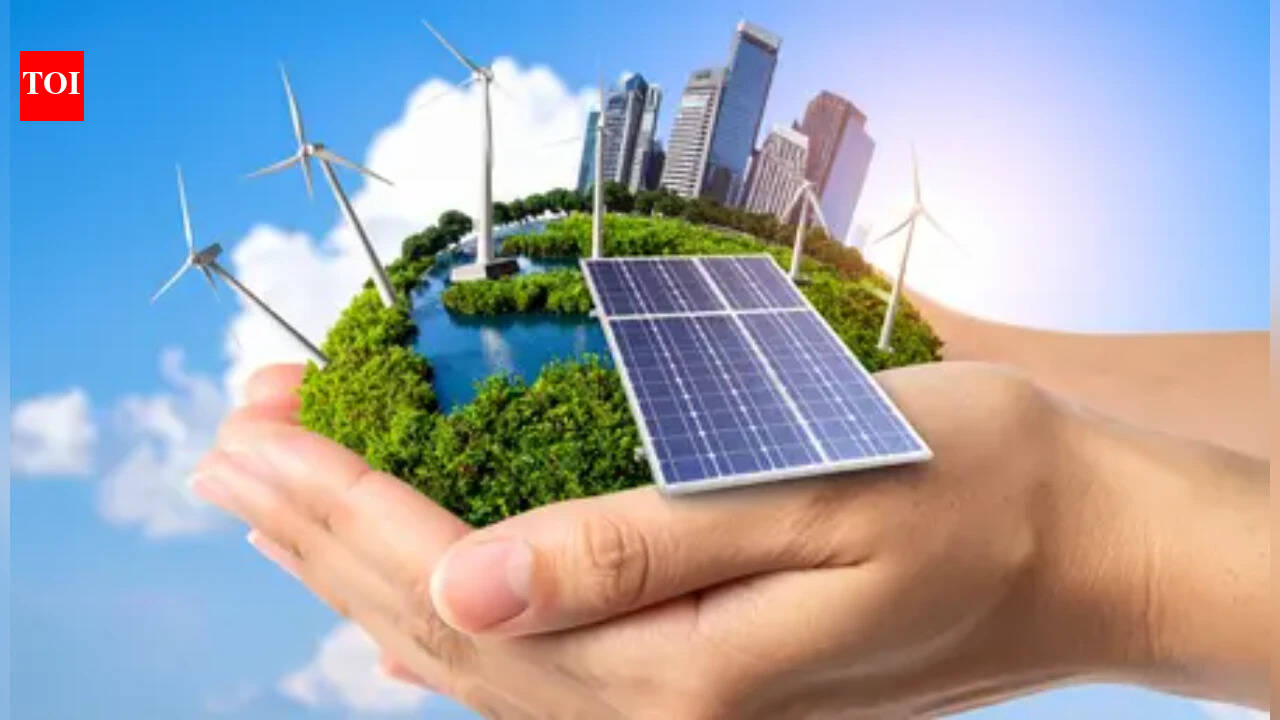
India has now achieved over 300 GW of non-fossil fuel electricity generation capacity. This significant milestone represents more than half of the nation's total installed power capacity. Solar power leads this expansion, followed by wind and hydro energy sources. The country aims to reach 500 GW of non-fossil capacity by the year 2030. Domestic manufacturing for solar equipment has also seen substantial growth.
Where: India
Exact coordinates
india: 20.590, 78.960
Read it at The Times of India See this on the map
2 outlets covered this story — see how their framing differs
What might happen next? AI-generated
These scenarios are written by an AI language model from the headline and summary above. They are not predictions from the newsroom, and they are not evidence of anything. Every one is given a deadline and checked against later coverage, and the score is published on the ledger — including the ones that miss.
-
Unresolved 45% Accelerated Grid Integration & Policy Push
The momentum from the 300 GW milestone leads to immediate, aggressive policy implementation to address transmission bottlenecks. Government agencies announce a massive, expedited tender for high-voltage DC transmission lines to accommodate the new solar influx. This ensures the capacity is not just installed, but efficiently integrated into the national grid.
Watch for: The Ministry of Power announces an immediate, accelerated auction schedule for 50 GW of green transmission capacity. · A cabinet committee is formed specifically to fast-track renewable energy integration laws.
-
Unresolved 25% Domestic Manufacturing Hurdles Surface
Despite domestic growth, reliance on imported components for next-generation solar cell manufacturing causes a temporary supply chain shock. Major domestic solar firms issue an urgent press release detailing unforeseen delays in semiconductor imports, leading to a brief slowdown in planned projects.
Watch for: The Ministry of Commerce issues a temporary directive to prioritize domestic sourcing for photovoltaic inverters. · A major domestic solar manufacturer announces a 15-day production halt due to component shortages.
-
Unresolved 15% Policy Pivot: Focus on Energy Storage
Realizing that intermittent solar/wind capacity requires balancing mechanisms, the government quickly shifts its primary focus toward battery storage procurement. A high-level directive is issued mandating that all new utility-scale solar projects must incorporate a minimum of 5% energy storage capacity.
Watch for: The National Grid operator releases a new technical standard mandating energy storage integration for all new renewable projects. · The Energy Minister holds a press conference explicitly stating that 'storage parity' is the next key metric.
-
Unresolved 15% Counter-Trajectory: Fossil Fuel Subsidy Rebound
In a political move to balance industrial lobbies, the government unexpectedly announces a targeted subsidy extension or tax rebate for select domestic coal and natural gas power plants. This signals a short-term tempering of the 'clean power' narrative in the immediate policy sphere.
Watch for: A specific state-level power utility announces a 90-day extension of existing coal plant operational permits with zero penalty. · The Finance Ministry releases an amended tax schedule showing increased incentives for fossil fuel infrastructure investment.
Generated by gemma-4-E4B-it-qat-UD-Q4_K_XL.gguf
on 2026-08-09. Checked against later coverage after 2026-08-19.
See how these forecasts score.
ForecastGeo shows the headline and summary published by the newsroom and places the story on a map. The full article lives at the source.