Chinese surgical robots break into Vietnam market as Beijing takes aim at US dominance
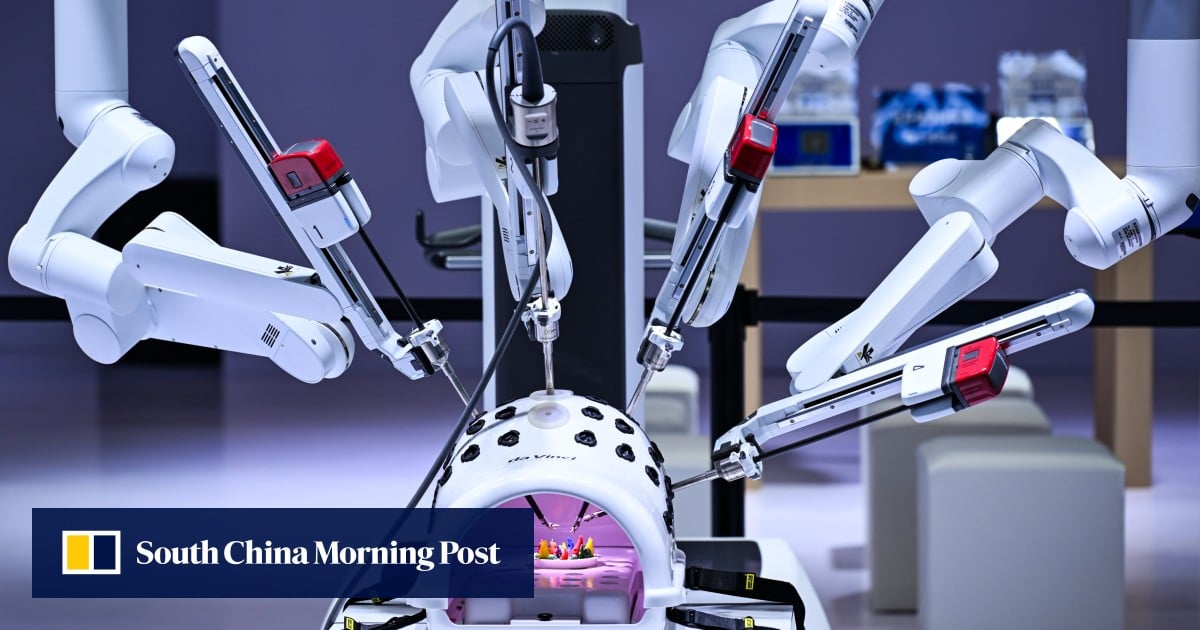
China has won approval for domestically developed surgical robots to be used in Vietnamese hospitals, marking a major step forward as the country’s high-end medical equipment makers push to challenge Western dominance overseas. The Chinese-made surgical robots had been registered and installed at several leading medical facilities in the Southeast Asian nation, according to China’s National Healthcare Security Administration (NHSA). The two countries would also deepen cooperation in robotic...
Where: Vietnam, China, Beijing
Exact coordinates
vietnam: 14.060, 108.280
china: 35.860, 104.200
beijing: 39.900, 116.400
Read it at South China Morning Post See this on the map
What might happen next? AI-generated
These scenarios are written by an AI language model from the headline and summary above. They are not predictions from the newsroom, and they are not evidence of anything. Every one is given a deadline and checked against later coverage, and the score is published on the ledger — including the ones that miss.
-
Unresolved 45% Market Penetration & Regional Diffusion
Following the initial approvals, Chinese surgical robot manufacturers secure contracts with at least three major hospital networks in Vietnam, citing significant cost advantages over US and European rivals. This success serves as a springboard, leading to regulatory approvals in neighboring Malaysia and Thailand within the same year, effectively establishing a Chinese-dominated medical tech corridor in ASEAN. The US State Department issues non-binding guidelines but takes no direct regulatory action, focusing instead on broader trade negotiations.
Watch for: Vietnam's Ministry of Health announces a tender requiring local content for 30% of medical equipment purchases · A leading Vietnamese hospital chain signs a $50 million deal with United Imaging Healthcare · US FDA places Chinese medical device firms on a watchlist for data security concerns
-
Unresolved 25% Regulatory Backlash & Safety Scrutiny
Vietnamese medical professionals and patient advocacy groups raise concerns about data security and long-term maintenance support for Chinese robots, leading to a temporary pause in new installations. The Vietnamese government initiates a formal audit of the devices' cybersecurity protocols, influenced by lobbying from US-based tech firms. While no ban is imposed, the approval process for future Chinese devices is delayed by at least six months pending independent security reviews.
Watch for: Vietnam’s National Assembly holds a hearing on cybersecurity risks in imported medical technology · The US Embassy in Hanoi issues a travel advisory warning citizens about data privacy risks at specific Chinese clinics · A prominent Vietnamese surgeon publicly resigns from a Chinese hospital due to concerns over robotic system reliability
-
Unresolved 20% Strategic Joint Venture Formation
To mitigate geopolitical risks and leverage local market knowledge, a major Chinese robotics firm announces a 50-50 joint venture with a Vietnamese state-owned enterprise to manufacture and service surgical robots locally. This partnership includes technology transfer agreements and the establishment of a regional training center in Ho Chi Minh City. The US and EU respond by accelerating their own partnerships with Vietnamese healthcare providers to counterbalance the Chinese presence.
Watch for: Foxconn Vietnam and a Chinese robotics firm sign a Memorandum of Understanding for local assembly of surgical arms · The Vietnamese government grants tax exemptions to foreign firms investing in domestic medical device manufacturing · A US-based competitor announces a partnership with Vietnam's largest private hospital group
-
Unresolved 10% Geopolitical Sanctions & Import Ban
Under intense pressure from Washington regarding supply chain decoupling and national security, Vietnam abruptly suspends the registration of new Chinese surgical robots, citing 'unforeseen technical compliance issues.' The move is part of a broader, quiet diplomatic agreement to limit Chinese high-tech imports in critical sectors. Existing machines remain operational but without warranty support, forcing hospitals to revert to older Western or Japanese models.
Watch for: Vietnam’s National Healthcare Security Administration abruptly cancels the licenses of five Chinese medical device companies · The US Treasury Department adds a Vietnamese logistics firm to its sanctions list for facilitating Chinese military-civilian fusion technology · A leaked diplomatic cable reveals a US-Vietnam agreement to restrict Chinese AI and robotics exports
Generated by Qwen3.6-35B-A3B-UD-Q5_K_M.gguf
on 2026-07-31. Checked against later coverage after 2026-08-14.
See how these forecasts score.
ForecastGeo shows the headline and summary published by the newsroom and places the story on a map. The full article lives at the source.