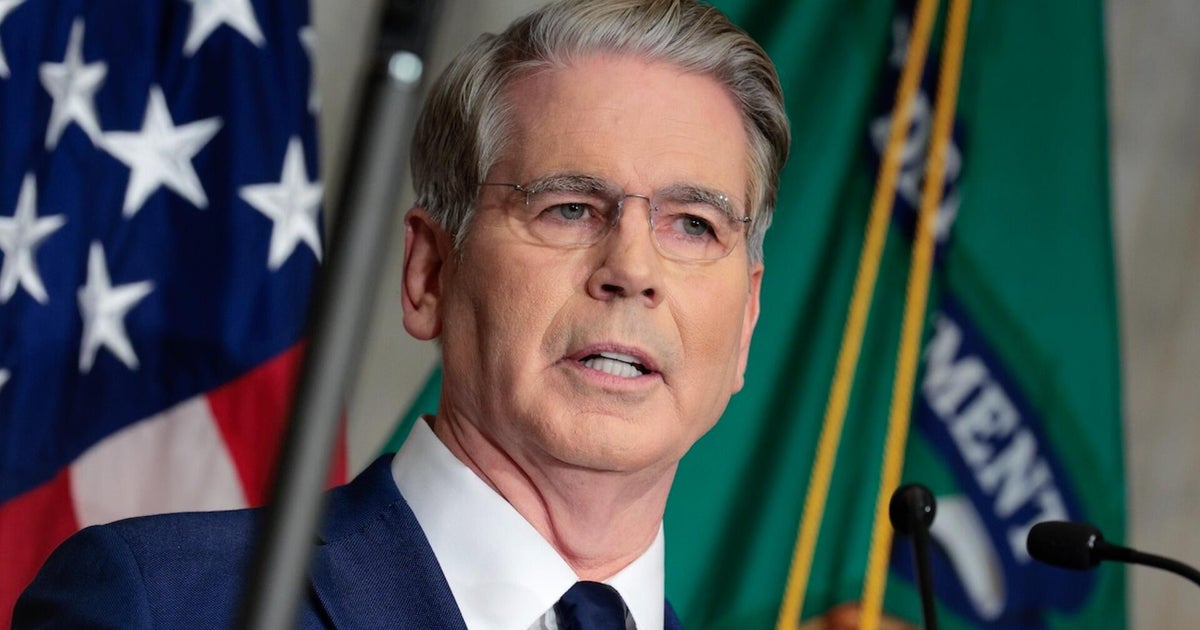
Breaking down Scott Bessent's comments on Canada, tariffs, Mark Carney
The U.S. is imposing a 50% tariff on $20 billion in Canadian goods. Canada vowed to retaliate with tariffs of their own that would go into effect on Sept. 8. Rob Russo, a Canadian correspondent for The Economist, joins CBS News to discuss.
Places named in this report: Canada
Exact coordinates
canada: 56.130, -106.350
Read it at CBS News See this on the map
What might happen next? AI-generated
These scenarios are written by an AI language model from the headline and summary above. They are not predictions from the newsroom, and they are not evidence of anything. Every one is given a deadline and checked against later coverage, and the score is published on the ledger — including the ones that miss.
-
Unresolved 40% Imminent Trade War Escalation
The retaliatory tariffs take full effect on September 8th without immediate counter-negotiation, leading to a sharp decline in bilateral trade volume. Political leaders from both sides issue joint statements condemning the escalating trade war.
Watch for: Canadian Ministry of Finance issues a formal advisory regarding supply chain disruptions from U.S. goods. · U.S. Commerce Secretary announces a review of the 50% tariff enforcement mechanism.
-
Unresolved 30% Emergency Bilateral De-escalation
Under pressure from business lobbies, a high-level call occurs between the U.S. President and the Canadian Prime Minister. They agree to delay the retaliatory tariffs pending a technical review of the trade dispute.
Watch for: A joint press release is issued stating 'both nations commit to dialogue on trade frameworks.' · The date for the September 8th tariff implementation is officially postponed by one week.
-
Unresolved 20% Targeted Sector Negotiation
Instead of broad tariffs, the two nations agree to negotiate specific exemptions for critical sectors like energy or agriculture. A working group, including Scott Bessent, is established to map tariff exclusions.
Watch for: A named U.S. State Department official confirms the establishment of a 'Joint Trade Working Group'. · Canada announces specific carve-outs for certain Canadian exports from the initial retaliatory list.
-
Unresolved 10% Unilateral US Action/Bypass
The U.S. government, rather than negotiating, decides to leverage the situation to force specific regulatory changes in Canada regarding trade compliance. The tariffs are applied, but enforcement targets specific Canadian corporations rather than broad categories.
Watch for: The U.S. Treasury announces a new compliance standard that Canadian businesses must meet immediately to avoid penalties. · Scott Bessent publicly pivots his focus to specific regulatory hurdles in the Canadian market.
Generated by gemma-4-E4B-it-qat-UD-Q4_K_XL.gguf
on 2026-08-25. Checked against later coverage after 2026-08-28.
See how these forecasts score.
ForecastGeo shows the headline and summary published by the newsroom and places the story on a map. The full article lives at the source.