Afghanistan: Only 5% of labor market are women under Taliban
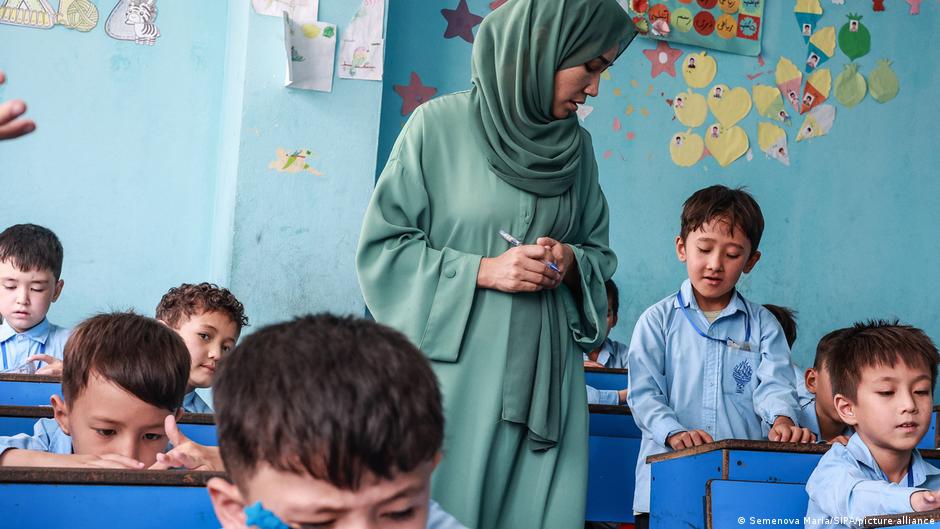
The International Labour Organization estimates that only 5.1% of workers in Afghanistan are women, five years after the Taliban's return to power. That's less than a third of the proportion in 2019 and 2020.
Where: Pakistan, Iran, Afghanistan
Exact coordinates
pakistan: 30.380, 69.350
iran: 32.430, 53.690
afghanistan: 33.930, 67.710
Read it at Deutsche Welle See this on the map
2 outlets covered this story — see how their framing differs
What might happen next? AI-generated
These scenarios are written by an AI language model from the headline and summary above. They are not predictions from the newsroom, and they are not evidence of anything. Every one is given a deadline and checked against later coverage, and the score is published on the ledger — including the ones that miss.
-
Unresolved 40% Limited Internal Reform Initiative
Facing international isolation, the Taliban leadership quietly approves a highly restricted pilot program allowing women access to specific, state-sanctioned vocational training in Kabul. This move is framed internally as 'modernization' but remains heavily monitored by local authorities.
Watch for: Taliban Ministry of Education releases a press release announcing a 'Women's Skills Training Pilot Program' · International aid organizations report the first small-scale registration for female vocational courses in Kabul
-
Unresolved 30% Heightened External Pressure & Repercussions
Western nations issue a formal, unified ultimatum regarding economic sanctions unless concrete, measurable steps toward women's employment are taken within a short window. This leads to immediate, visible disruptions in international financial transfers to Kabul.
Watch for: US Treasury announces the targeted freezing of specific assets belonging to the Afghan Ministry of Labor · A major international financial institution pauses all non-essential banking transactions with Afghan state entities
-
Unresolved 20% Socio-Economic Collapse & Passive Acceptance
The severe economic downturn, exacerbated by the labor shortage, forces desperate families to rely on informal, unregulated labor markets where women are increasingly hired for essential, low-level domestic or agricultural work. This is not a policy shift, but a survival response.
Watch for: Local news reports increase coverage of informal markets in Herat or Kandahar with women engaged in trade · A local NGO releases a report detailing a spike in demand for low-skilled female domestic help in provincial towns
-
Unresolved 10% Sudden, Radical Policy Reversal (Counter-Intuitive)
In a surprising move aimed at appeasing a specific regional power or stabilizing internal security, the Taliban leadership suddenly reinstates a specific, high-profile sector for women, such as telecommunications or basic medical support, effective immediately.
Watch for: A high-ranking official from the Afghan Ministry of Security is seen making a televised statement endorsing female participation in a specific industry · A major international telecom provider announces the resumption of services in a previously restricted area
Generated by gemma-4-E4B-it-qat-UD-Q4_K_XL.gguf
on 2026-08-18. Checked against later coverage after 2026-08-28.
See how these forecasts score.
ForecastGeo shows the headline and summary published by the newsroom and places the story on a map. The full article lives at the source.