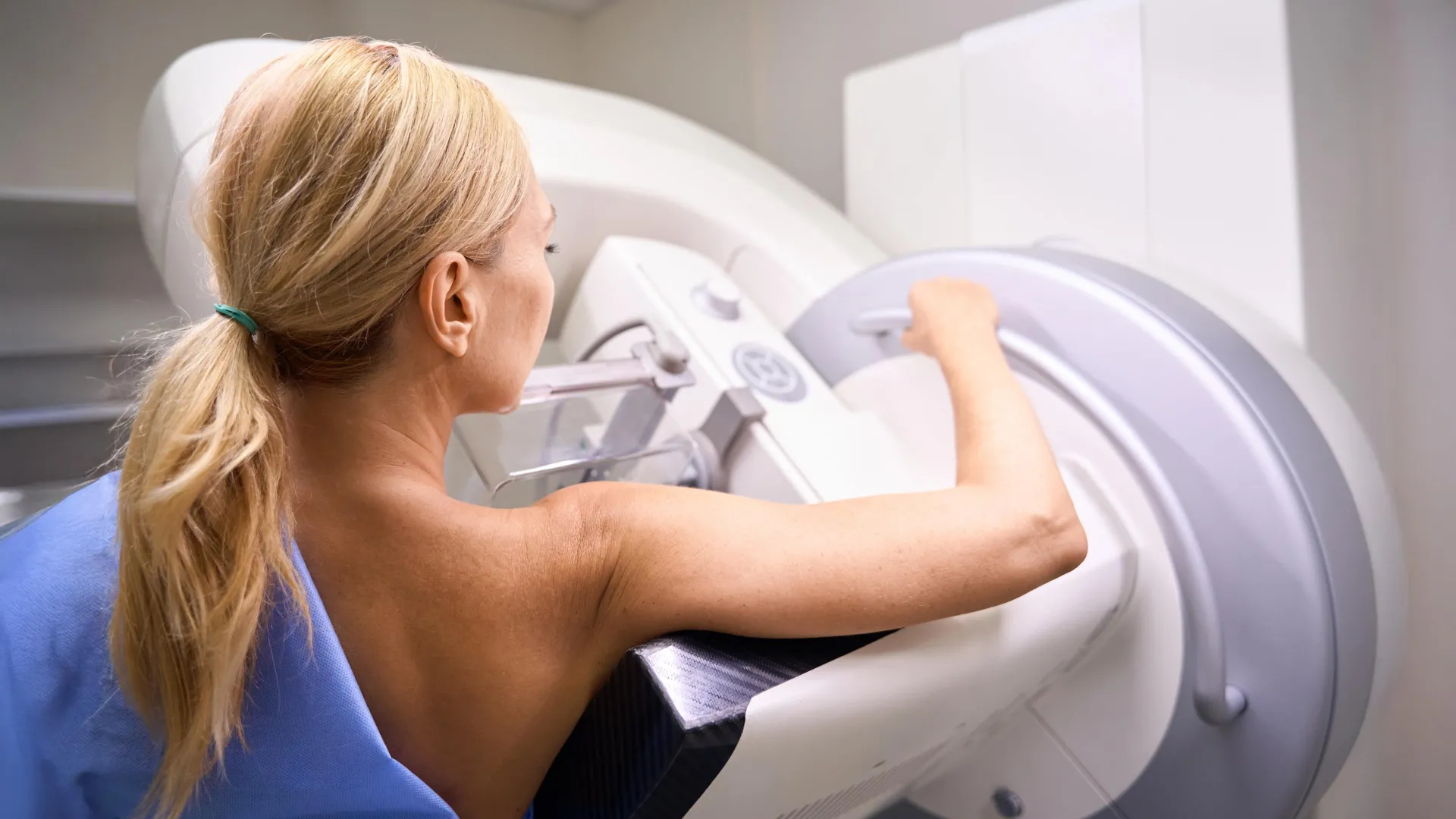
A major risk of breast cancer screening may have been overestimated for decades
A new analysis suggests mammograms may lead to far less breast cancer overdiagnosis than some earlier studies indicated. Researchers reexamined all eight major randomized screening trials and accounted for differences in follow-up time, screening frequency, and screening after trials ended. Their results were consistent with an overdiagnosis rate below 5%, rather than estimates approaching 30% to 50%.
Places named in this report: New York, London, Copenhagen, Stockholm
Exact coordinates
new york: 40.710, -74.010
london: 51.510, -0.130
copenhagen: 55.680, 12.570
stockholm: 59.330, 18.070
Read it at ScienceDaily See this on the map
What might happen next? AI-generated
These scenarios are written by an AI language model from the headline and summary above. They are not predictions from the newsroom, and they are not evidence of anything. Every one is given a deadline and checked against later coverage, and the score is published on the ledger — including the ones that miss.
-
Unresolved 35% Institutional Reassessment
Medical and public health organizations begin an official review of current national screening guidelines in light of the new data. This could lead to cautious adjustments in the recommendation for screening frequency or target age ranges. Public discourse starts to shift from 'mass screening' to 'risk-stratified screening.'
Watch for: The American Cancer Society publishes a revised statement on the efficacy of mammography. · The FDA issues a public advisory regarding mammogram interpretation standards. · A major national medical society (e.g., ACS or NCCN) hosts a press conference discussing the findings.
-
Unresolved 30% Status Quo Confirmation
Despite the new findings, major screening bodies maintain their current recommendations, citing the statistical power of their existing large-scale trials. The focus remains on the known benefits of early detection, and the scientific community accepts the nuance without immediate policy overhaul. Public uptake of screening remains high.
Watch for: The National Cancer Institute issues a statement reaffirming the current screening guidelines. · Leading healthcare providers publish editorials defending the current screening protocols. · A major public health campaign continues without modification.
-
Unresolved 25% Aggressive Advocacy and Reform
Patient advocacy groups and dissenting researchers use the data to aggressively lobby for a reduction in mammogram frequency or a shift toward molecular testing. They push for an immediate, sweeping change in healthcare policy, leading to immediate public debate and perhaps a trial program in one state or country.
Watch for: A state-level health department announces a pilot program testing alternative screening modalities. · A national patient advocacy group issues a formal policy brief demanding guideline changes within 14 days. · A prominent physician publicly calls for the immediate cessation of routine mammography.
-
Unresolved 10% Scientific Marginalization (Counter-Intuitive)
The new data is quickly dismissed by the scientific establishment as 'outliers' or 'unrepresentative' of the overall benefit-to-risk ratio. Major journals delay or reject submissions citing the need for more validation. The original overestimation figures remain the dominant narrative in the press.
Watch for: The Journal of Clinical Oncology publishes a letter questioning the methodology of the recent analysis. · Major industry stakeholders issue a joint statement emphasizing the established efficacy of current screening protocols. · No follow-up studies are published regarding the research within the first two weeks.
Generated by llama
on 2026-09-26. Checked against later coverage after 2026-10-10.
See how these forecasts score.
ForecastGeo shows the headline and summary published by the newsroom and places the story on a map. The full article lives at the source.