3D-printed replacements let conservators monitor damage inside ancient pottery
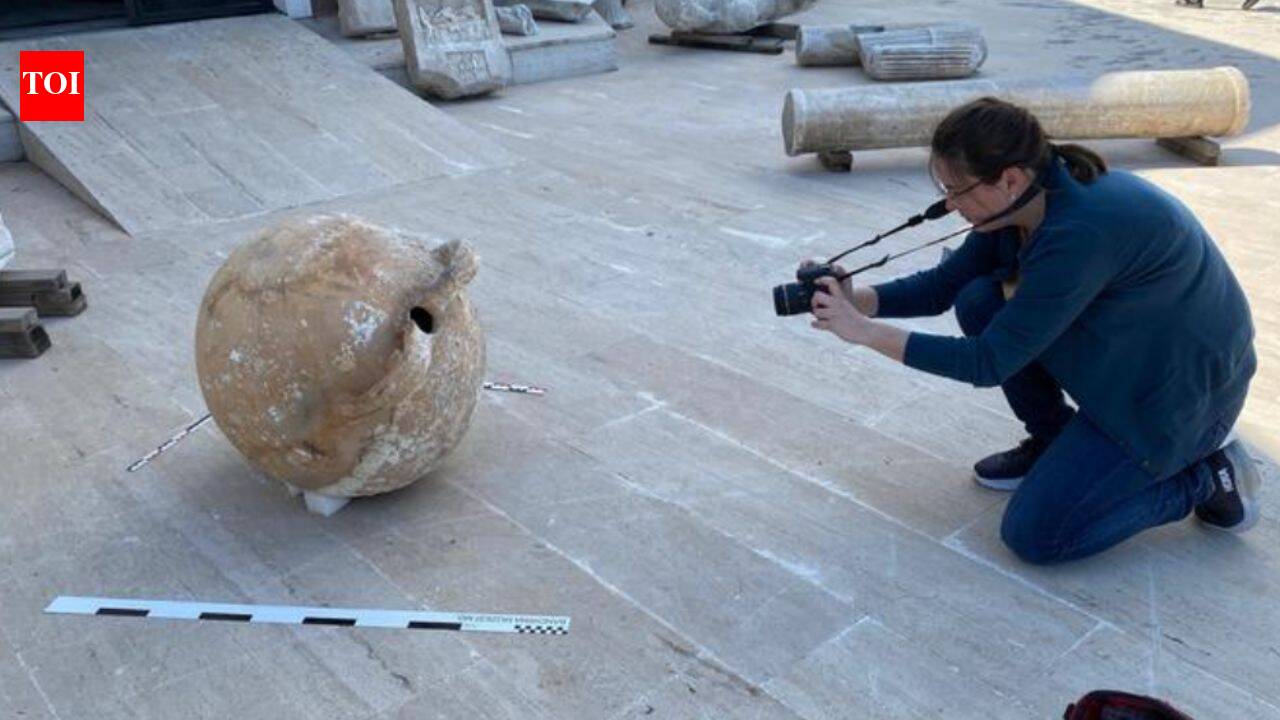
Researchers at Koc University have developed a method that uses photogrammetry, 3D printing and embedded sensors to repair damaged ancient pottery. The customised 3D-printed sections can replace missing parts while monitoring temperature, humidity, pH and physical stress. Tested on maritime amphorae from Türkiye and Italy, the approach could help conservators track changes and support long-term preservation.
Places named in this report: Italy
Exact coordinates
italy: 41.870, 12.570
Read it at The Times of India See this on the map
What might happen next? AI-generated
These scenarios are written by an AI language model from the headline and summary above. They are not predictions from the newsroom, and they are not evidence of anything. Every one is given a deadline and checked against later coverage, and the score is published on the ledger — including the ones that miss.
-
Unresolved 40% Immediate International Pilot Adoption
A major international museum or UNESCO body issues a joint statement endorsing the technology for immediate field testing. This rapid validation drives initial funding and interest beyond the university lab. Conservators globally begin applying the technology to high-profile, vulnerable pieces.
Watch for: UNESCO issues a press release announcing the adoption of the 3D-printing monitoring technique for a specific heritage site. · A consortium of European and Turkish museums signs a Memorandum of Understanding (MOU) to pilot the technology within 14 days.
-
Unresolved 25% Academic Replication and Validation Bottleneck
The complexity of embedding sensors and the specialized materials required slow down the transition from lab proof-of-concept to standardized tool. Initial attempts by external researchers to replicate the precise environmental controls fail, leading to a cautious delay in commercialization.
Watch for: A technical white paper published by a competing university details the specific material failure encountered during replication attempts. · Koc University researchers announce a formal extension to their next grant cycle due to 'optimization challenges.'
-
Unresolved 20% Market Niche Specialization (Boutique Conservators)
Instead of mass adoption, the technology is quickly adopted by a small, high-end niche of private art dealers and wealthy collectors interested in preserving unique, priceless artifacts. This creates a high-value, low-volume market segment.
Watch for: A specialized auction house announces the first sale of an artifact utilizing the 3D-printed sensor replacement technology. · A private investment firm releases a press release specifically targeting the 'heritage monitoring tech' sector.
-
Unresolved 15% Regulatory Stagnation (Counter-Intuitive)
Despite the technological advancement, the primary obstacle becomes bureaucratic. Heritage preservation laws in major importing nations (like Italy or Türkiye) are slow to update, leading to regulatory red tape blocking the initial movement of the new hardware/pieces into established conservation frameworks.
Watch for: A legislative committee in a major European capital holds a public hearing specifically regarding the certification standards for sensor-embedded ancient artifacts. · Customized customs documentation for the '3D-printed replacement parts' is flagged with a 'Pending Review' status at a major international port.
Generated by gemma-4-E4B-it-qat-UD-Q4_K_XL.gguf
on 2026-08-24. Checked against later coverage after 2026-09-07.
See how these forecasts score.
ForecastGeo shows the headline and summary published by the newsroom and places the story on a map. The full article lives at the source.