'Neither officer using excessive force, nor criminal protester should be protected': SC
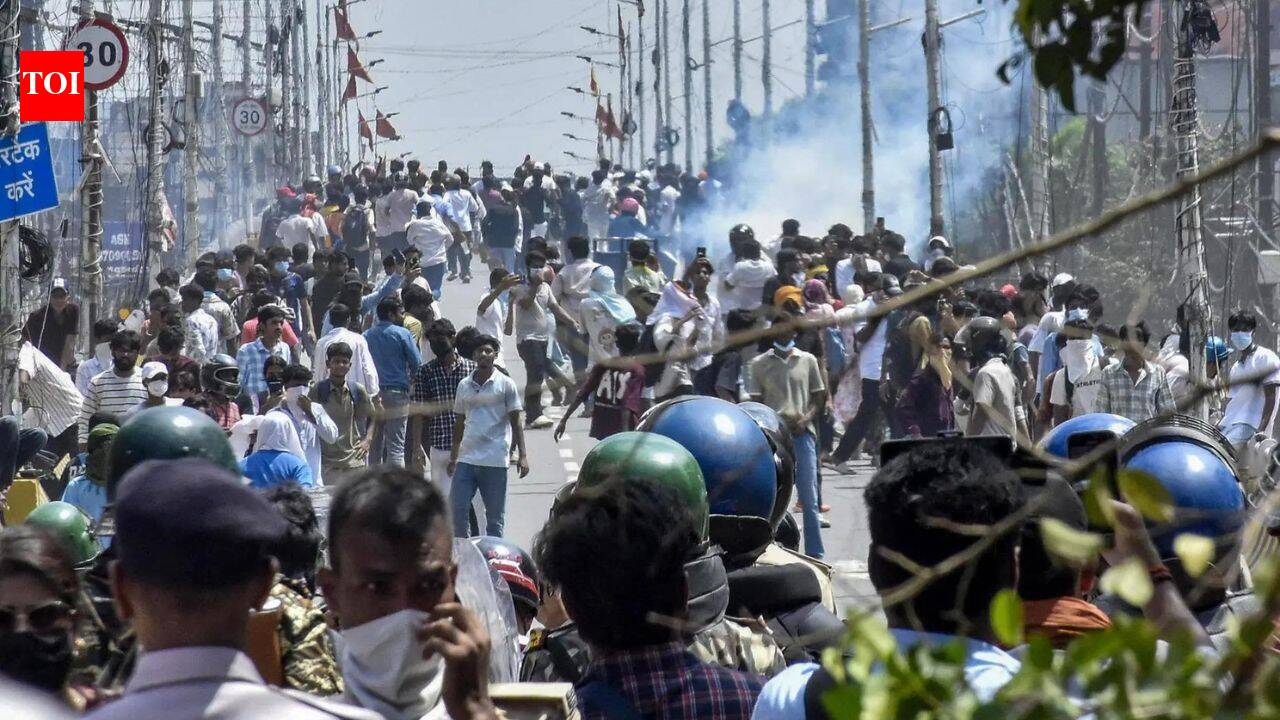
The Supreme Court stated police using excessive force and hardened criminals will not be protected. States can withdraw FIRs against students from the NEET-UG protest as per law. The court may issue guidelines on pellet gun usage during protests. "Criminal antecedents" will only cover grave and heinous offences, not minor cases. The matter has been listed for further hearing on August eighteenth.
Places named in this report: India
Exact coordinates
india: 20.590, 78.960
Read it at The Times of India See this on the map
What might happen next? AI-generated
These scenarios are written by an AI language model from the headline and summary above. They are not predictions from the newsroom, and they are not evidence of anything. Every one is given a deadline and checked against later coverage, and the score is published on the ledger — including the ones that miss.
-
Unresolved 40% Measured De-escalation via Judicial Oversight
The Supreme Court issues specific guidelines regarding the use of pellet guns, which are subsequently adopted by state police forces nationwide. States begin selectively withdrawing minor FIR(s) against peaceful protesters based on court guidance, leading to a public reduction in protest-related arrests.
Watch for: Union Home Secretary issues directive mandating adherence to SC guidelines on crowd control equipment. · State Government X announces the withdrawal of FIR against 50 student protesters.
-
Unresolved 30% Government Consolidation and Hardline Policy
The ruling government interprets the SC's focus on 'criminal antecedents' narrowly, leading to the swift arrest of high-profile student leaders under existing, less-defined police powers. The political narrative shifts to framing the protests as an organized disruption rather than a legitimate grievance.
Watch for: Police announce the arrest of prominent student organizers on charges related to 'public order disturbance'. · A Parliamentary committee is formed to investigate the 'law and order' challenges posed by the protest.
-
Unresolved 15% Prolonged Legal Gridlock and Stalemate
The issue remains highly polarized, and the Court's guidance proves insufficient to resolve the underlying policy conflict. State governments ignore or selectively implement the court's suggestions, leading to cyclical protests and increasing litigation against both police actions and government inaction.
Watch for: A new Public Interest Litigation (PIL) is filed directly challenging the scope of the Supreme Court's jurisdiction on state policing. · Protest leaders announce a nationwide 'Sit-in' action outside a national legislative body.
-
Unresolved 15% Counter-Trajectory: Rapid Policy Shift
Counter to the current trajectory of legal friction, the ruling party announces a major, expedited policy overhaul for the NEET-UG system, effectively ending the protest movement prematurely. This shift is framed as a direct response to judicial pressure to find a resolution.
Watch for: The Minister of Health announces a new, officially sanctioned amendment to the NEET-UG examination structure. · The Chief Minister of a major protest-heavy state announces a 'Protest Resolution Committee' meeting.
Generated by gemma-4-E4B-it-qat-UD-Q4_K_XL.gguf
on 2026-08-03. Checked against later coverage after 2026-08-17.
See how these forecasts score.
ForecastGeo shows the headline and summary published by the newsroom and places the story on a map. The full article lives at the source.